
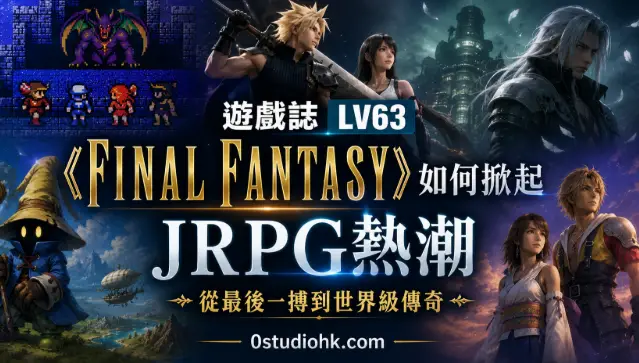
遊戲誌 LV63|《Final Fantasy》如何掀起JRPG熱潮:從最後一搏到世界級傳奇|Game Magazine LV63 | How Final Fantasy Sparked the JRPG Boom: From a Last Gamble to a Global Legend
1987年,《Final Fantasy》誕生於一家瀕臨困境的日本遊戲公司。誰也沒有想到,這款原本被視為「最後一搏」的作品,不但成功挽救了公司命運,更開創了日式角色扮演遊戲(JRPG)的黃金時代,成為全球最具影響力的遊戲系列之一。
In 1987, a struggling Japanese game developer released what many believed would be its final project. Instead, Final Fantasy became one of the most influential role-playing franchises in gaming history, transforming Square into an industry giant and helping define the golden age of Japanese RPGs.
中文
1980年代中期,日本遊戲市場競爭日益激烈,Square(史克威爾)當時仍是一家規模不大的遊戲公司,多款作品銷售未如理想,公司經營陷入困境。年輕遊戲設計師坂口博信原本已打算離開遊戲業,回到大學繼續學業,因此決定傾盡全力完成最後一部角色扮演遊戲,希望為自己的遊戲生涯畫下一個句號。這部作品便命名為《Final Fantasy》,除了代表「最後的幻想」,亦象徵團隊背水一戰的決心。
1987年12月,《Final Fantasy》於任天堂紅白機(Famicom)推出。雖然當時《Dragon Quest》已成功建立日式RPG市場,但《Final Fantasy》並沒有選擇完全模仿,而是在遊戲系統與故事表現上作出大量創新。玩家可自由組成四人隊伍,自行選擇戰士、黑魔導士、白魔導士、僧侶等不同職業,每種職業皆擁有獨特能力,大幅提升遊戲策略性與重玩價值。
除了職業系統,《Final Fantasy》亦十分重視故事敘事。遊戲以「光之戰士」拯救水晶世界為主線,配合完整的世界觀、角色設定及史詩式冒險,成功把角色扮演遊戲由單純打怪升級,提升至富有戲劇性的冒險旅程。
音樂亦是《Final Fantasy》成功的重要因素之一。作曲家植松伸夫創作大量優美旋律,成功塑造系列獨有的音樂風格,包括後來成為系列代表的《Prelude》、《Victory Fanfare》及《Main Theme》等經典樂曲,至今仍經常於世界各地交響音樂會演出。
1991年,《Final Fantasy IV》首次引入「Active Time Battle(ATB)」即時戰鬥系統,由伊藤裕之設計,把回合制戰鬥加入時間流動概念,令戰鬥節奏更緊湊、更具臨場感。ATB系統其後成為系列標誌之一,亦深深影響許多後來的JRPG作品。
1994年的《Final Fantasy VI》進一步提升劇情深度與角色描寫,塑造出凱夫卡(Kefka)這位被不少玩家認為是遊戲史上最經典的反派之一。作品探討戰爭、犧牲、人性與希望,被譽為16位元時代最偉大的角色扮演遊戲之一。
真正讓《Final Fantasy》走向世界巔峰的,是1997年的《Final Fantasy VII》。Square毅然放棄任天堂平台,轉投Sony PlayStation,利用CD-ROM大容量儲存空間,首次大量運用CG動畫、電影式運鏡及全3D角色建模。主角克勞德、蒂法、艾莉絲及宿敵薩菲羅斯迅速風靡全球,而艾莉絲之死更成為遊戲史上最具震撼力的經典橋段之一。《Final Fantasy VII》不僅成功打開歐美市場,更讓JRPG首次成為全球主流遊戲類型。
踏入21世紀,《Final Fantasy》持續突破技術極限。《Final Fantasy X》首次全面加入角色配音與高品質面部演出;《Final Fantasy XI》與《Final Fantasy XIV》先後進軍大型多人線上角色扮演遊戲(MMORPG)領域,其中《Final Fantasy XIV》更在重製後成功逆轉口碑,成為全球最成功的MMORPG之一。近年的《Final Fantasy XVI》則重新融合高速動作戰鬥與電影化敘事,再次展現系列持續創新的能力。
回顧近四十年的發展,《Final Fantasy》不僅拯救了一家瀕臨倒閉的公司,更建立了JRPG的世界標準。從水晶傳說、職業系統、ATB戰鬥,到電影級CG、交響樂配樂與龐大的世界觀,《Final Fantasy》一次又一次改變玩家對角色扮演遊戲的想像。今天,它早已不只是Square Enix最具代表性的品牌,更是全球電子遊戲歷史上最重要、最具影響力的系列之一。
English Version
In the mid-1980s, Square was a small Japanese game developer struggling to survive. Several projects had failed to achieve commercial success, and the company’s future appeared uncertain. Believing that he might soon leave the video game industry and return to university, young game designer Hironobu Sakaguchi decided to create one final role-playing game. That project became Final Fantasy, a title symbolizing both his “final” attempt and the team’s determination to succeed against overwhelming odds.
Released for the Nintendo Famicom in December 1987, Final Fantasy entered a market already influenced by Dragon Quest. Rather than simply copying its rival, Square introduced several innovations that distinguished the game from other role-playing titles. Players could assemble a four-member party by selecting different character classes, including Fighters, Black Mages, White Mages, and Monks, allowing greater strategic freedom and replayability.
Beyond gameplay mechanics, Final Fantasy placed unprecedented emphasis on storytelling. Centered on the Warriors of Light and the restoration of the world’s elemental crystals, the game combined fantasy, character development, and epic adventure in ways that helped elevate Japanese role-playing games beyond simple dungeon exploration.
Music also became one of the franchise’s defining strengths. Composer Nobuo Uematsu created memorable melodies that would become synonymous with the series, including the iconic Prelude, Victory Fanfare, and Main Theme, many of which continue to be performed in symphony concerts around the world.
The franchise reached another milestone in 1991 with Final Fantasy IV, which introduced Hiroyuki Ito’s revolutionary Active Time Battle (ATB) system. Instead of waiting for fixed turns, characters acted according to continuously filling time gauges, creating faster, more dynamic battles. The ATB system would influence numerous Japanese RPGs for years to come.
Final Fantasy VI followed in 1994, pushing narrative storytelling even further through a large ensemble cast and one of gaming’s most memorable villains, Kefka. Its exploration of war, despair, sacrifice, and hope has earned it lasting recognition as one of the greatest 16-bit role-playing games ever created.
The true global breakthrough arrived in 1997 with Final Fantasy VII. Moving from Nintendo cartridges to Sony’s PlayStation CD-ROM format, Square embraced full-motion video, cinematic storytelling, pre-rendered backgrounds, and three-dimensional character models. Cloud Strife, Tifa Lockhart, Aerith Gainsborough, and Sephiroth quickly became international gaming icons, while Aerith’s tragic fate remains one of the most unforgettable moments in video game history. More importantly, Final Fantasy VII introduced Japanese RPGs to millions of Western players, transforming the genre into a worldwide phenomenon.
Throughout the 21st century, the franchise continued to evolve. Final Fantasy X introduced full voice acting and cinematic facial performances. Final Fantasy XI and Final Fantasy XIV successfully expanded into the MMORPG genre, with Final Fantasy XIV becoming one of the industry’s greatest comeback stories after its complete redevelopment. More recently, Final Fantasy XVI blended fast-paced action combat with cinematic storytelling, demonstrating the series’ continued willingness to reinvent itself.
Looking back over nearly four decades, Final Fantasy accomplished far more than saving a struggling company. It established many of the creative standards that define Japanese role-playing games, from deep storytelling and memorable music to innovative battle systems and cinematic presentation. Today, Final Fantasy remains not only Square Enix’s flagship franchise but also one of the most influential and celebrated series in the entire history of video games.