遊戲誌 LV48(產業與平台)|由實體遊戲碟走進線上時代|From Physical Game Discs to the Online Era

遊戲從光碟與卡帶走向下載與雲端,改變了購買方式與遊玩習慣。這不只是技術進步,更是整個遊戲文化與產業模式的轉變。
Games have moved from discs and cartridges to downloads and cloud access, reshaping how players buy and experience them. This shift reflects not just technology, but a transformation of the entire gaming culture.
中文
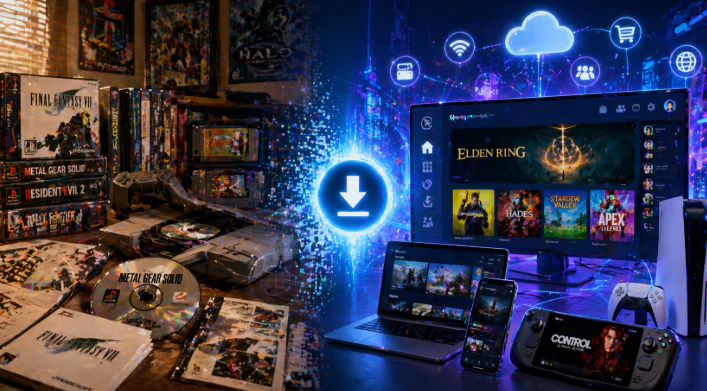
遊戲產業從實體媒介走向線上時代,是一場跨越技術與文化的深層變革。在過去,遊戲以卡帶與光碟為主要載體,玩家需要前往商店購買,將遊戲帶回家後插入主機或電腦才能開始體驗,這種形式讓「擁有」變得具體而真實,收藏盒裝、封面設計與說明書都構成了遊戲的一部分,也讓玩家與作品之間建立起物理層面的連結。發行商則依賴生產、物流與零售體系,遊戲的流通速度與範圍受到限制,市場結構相對集中。然而隨著網絡技術的發展與寬頻普及,數位下載逐漸取代實體媒介,玩家可以直接在線上購買並下載遊戲,無需等待與運輸,這種即時性改變了消費節奏,也讓遊戲更容易觸及全球市場。更重要的是,線上平台不僅提供銷售功能,還整合了更新、社群與服務,使遊戲從一次性產品轉變為持續運營的內容,開發者可以透過更新修復問題、增加內容,甚至根據玩家反饋調整設計,遊戲因此成為一種持續演變的體驗。另一方面,玩家的行為也隨之改變,從收藏與擁有轉向存取與體驗,帳號與雲端儲存取代了實體收藏,便利性提升的同時,也帶來對數位所有權與保存的討論。線上時代同時促進了多平台發展,玩家可以在不同裝置之間切換,甚至透過雲端串流直接遊玩,硬體限制逐漸被弱化,遊戲的邊界也變得模糊。然而,這種轉變並非完全取代,而是形成新舊並存的局面,實體收藏仍然具有情感與文化價值,而數位平台則提供效率與擴展性。整體而言,從實體遊戲碟走向線上時代,不只是形式的改變,而是整個產業邏輯的重組,從製作、發行到玩家體驗都被重新定義,這種轉變仍在持續深化,並將隨著技術進一步發展而展現更多可能性。
English Version
The transition from physical game media to the online era represents a profound shift that extends beyond technology into culture and industry structure. In earlier generations, games were tangible objects—cartridges and discs that players purchased in stores and brought home, creating a sense of ownership tied to physical presence. Packaging, artwork, and manuals were all part of the experience, forming a connection between player and product that went beyond gameplay. Distribution relied on manufacturing, shipping, and retail networks, limiting reach and shaping a more centralized market. As internet infrastructure improved and broadband became widespread, digital downloads emerged as the new standard. Players could instantly access games without waiting, fundamentally changing purchasing behavior and expanding global accessibility. More importantly, online platforms evolved into ecosystems that combine storefronts, updates, and community features. Games shifted from static releases into living services, where developers continuously patch, expand, and refine experiences based on player feedback. This ongoing interaction blurred the boundary between launch and post-release, making games dynamic rather than fixed. At the same time, player habits evolved from collecting physical items to accessing digital libraries, with accounts and cloud storage replacing shelves and boxes. While this increased convenience, it also raised questions about ownership, preservation, and long-term access. The online era also enabled seamless multi-platform experiences, allowing players to move across devices or even stream games without relying on high-end hardware, further dissolving traditional boundaries. Despite this transformation, physical formats have not disappeared; they coexist as cultural artifacts valued for their tactile and collectible qualities. Ultimately, the journey from discs to digital is not simply a technological upgrade—it is a restructuring of how games are produced, distributed, and experienced, and it continues to unfold as new technologies push the medium into new forms.