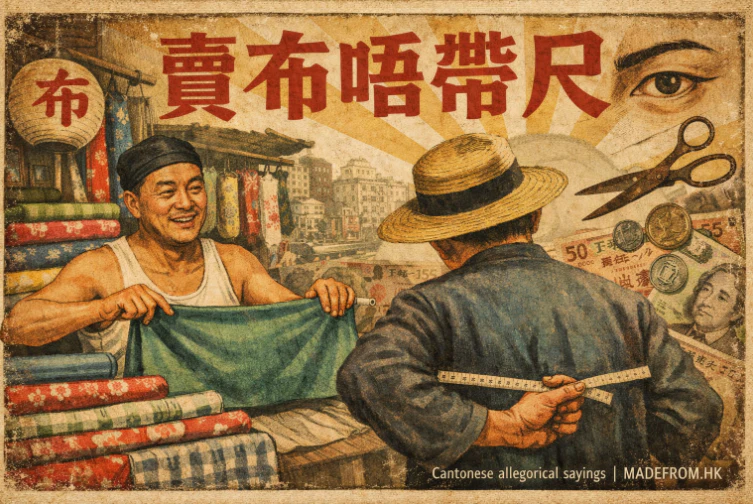
賣布唔帶尺:存心不良的精明算計|Selling Fabric Without a Ruler: Hidden Intent and Calculated Deceit|廣東話歇後語

廣東話歇後語往往以生活場景作比喻,語短而意深。「賣布唔帶尺」正是其中一個極具畫面感的說法,表面看似簡單,實則揭示人心的盤算與不誠。這句話常用來形容那些做事不光明正大、刻意留有空間去佔便宜的人,既帶有批判意味,也反映出市井智慧。
Cantonese two-part allegorical sayings often draw from everyday scenes, compressing sharp insight into a few vivid words. “Selling fabric without a ruler” is one such expression. On the surface, it describes a careless vendor, but beneath it lies a pointed critique of hidden motives and calculated dishonesty. It captures a kind of streetwise awareness—recognizing when someone deliberately leaves room to take advantage of others.
意思
「賣布唔帶尺:存心不良」這句歇後語的核心,在於「有意為之」的欺瞞。賣布本應依靠尺來量度長短,確保交易公平,但若故意不帶尺,便意味著可以隨意估量,從中獲利。這並非單純疏忽,而是一種預先設計的行為,帶有明確的動機與目的。因此,此語多用來形容那些表面看似無心,實則暗藏算計的人。他們往往利用制度漏洞、資訊不對稱,甚至人情關係來達到自身利益最大化。這種行為在日常生活中並不少見,例如做生意時刻意模糊價格、工作中推卸責任、甚至在人際交往中設下陷阱。這句歇後語提醒人們,不要只看表面現象,而要洞察背後動機。同時,它也帶有道德警示:一時的精明或許能得利,但長遠而言,信任一旦失去,代價往往更大。
English Version
The saying “selling fabric without a ruler” ultimately points to intentional deception rather than mere carelessness. A fabric seller is expected to measure accurately, ensuring fairness in every transaction. Choosing not to bring a ruler suggests a deliberate decision to estimate loosely and potentially shortchange customers. This transforms a simple act into a calculated strategy. The phrase is commonly used to describe people who appear casual or forgetful but are actually acting with hidden agendas. They exploit ambiguity, loopholes, or asymmetry of information to gain advantage. In daily life, this can show up as unclear pricing, shifting responsibilities, or subtle manipulation in relationships. The expression encourages a deeper awareness—looking beyond appearances to understand intent. It also carries a moral undertone: short-term gains achieved through cunning often come at the cost of long-term trust and credibility.
用法
這句歇後語多用於批評或提醒他人,例如當有人做事不夠坦白、或刻意模糊規則時,可以說「佢賣布唔帶尺」。語氣可輕可重,視乎情境而定。在朋友之間可作半開玩笑的提醒,在較正式或嚴肅的場合則帶有明顯指責意味。它也常見於評論商業行為或社會現象,用來指出不公平或不透明的操作。
English Version
This saying is typically used as a critique or warning. When someone behaves in a vague, non-transparent, or opportunistic way, one might remark, “He’s like selling fabric without a ruler.” The tone can range from light teasing among friends to serious criticism in professional or social contexts. It is also frequently applied in discussions of business practices or public issues to highlight unfairness or lack of transparency.
小故事:
街市裡有個賣布的老闆,生意一直不錯,但最近卻開始有人抱怨買回去的布總是短了一點。有個熟客起了疑心,某天特意帶了自己的尺去買布。老闆照樣用手比劃,說是一碼,但客人一量,果然少了幾寸。老闆見事情敗露,只好苦笑,說自己只是「憑經驗」。熟客當場回應:「做生意唔帶尺,唔係經驗,係存心。」此事很快在街市傳開,老闆的生意也一落千丈。後來他不得不改過自新,每次都用尺量得清清楚楚。這個故事正好說明,短期的取巧或許能騙過一兩次,但長遠而言,誠信才是立足之本。
English Version
In a busy market, a fabric vendor had long enjoyed steady business. Recently, however, customers began noticing that the fabric they purchased always seemed slightly shorter than expected. One regular customer grew suspicious and decided to bring his own ruler. When the vendor measured the cloth by hand as usual, the customer checked—and found it indeed fell short. Caught off guard, the vendor tried to laugh it off, claiming it was just “experience.” The customer replied bluntly, “That’s not experience—that’s intention.” Word spread quickly through the market, and the vendor’s reputation suffered. Eventually, he changed his ways, carefully measuring every piece with a proper ruler. The story illustrates a simple truth: small acts of deceit may succeed briefly, but only honesty sustains trust over time.
結語
「賣布唔帶尺」不只是對行為的批評,更是一種對人性的觀察。它提醒我們,在看似平常的細節中,往往隱藏著真正的動機。做人處事,與其精於算計,不如守住誠信,才能走得更遠。
English Version
“Selling fabric without a ruler” is more than a critique—it’s an observation about human nature. It reminds us that true intent often hides in ordinary details. In the long run, integrity outweighs clever manipulation, and trust remains the most valuable measure of all.