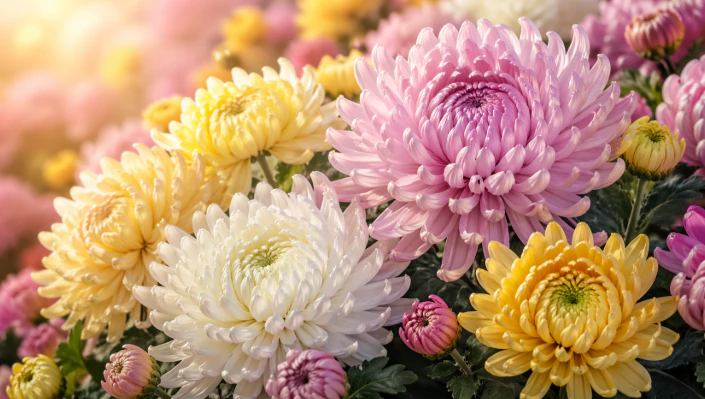
花語 017 | 菊花花語與文化象徵:純潔、思念與生命韌性 | Chrysanthemum Meaning and Symbolism: Purity, Remembrance, and Resilience
菊花在東西方文化中皆佔有重要地位,它既象徵高潔與堅韌,也承載思念與紀念的情感。從古代文人到現代生活,菊花的花語隨文化流動而轉變,呈現出多層次的象徵意義。
Chrysanthemums hold a unique place across cultures, representing both strength and delicate emotion. From ancient traditions to modern symbolism, they carry meanings of purity, remembrance, and quiet endurance, reflecting how people connect flowers with memory and identity.
中文
菊花的花語在不同文化中呈現出豐富而多變的層次,在東方文化中,菊花常被視為高潔、隱逸與堅韌的象徵,與梅、蘭、竹並稱為四君子之一,代表文人精神與不隨波逐流的品格,特別是在秋季盛開的特性,使菊花成為面對逆境仍能綻放的象徵,傳遞出堅強與從容的生命態度,而在中國文化中,菊花亦與長壽、安寧相關,重陽節賞菊更強化了其吉祥與祝福的意涵,但同時在喪葬文化中,白色或黃色菊花亦被用作悼念與追思,象徵對逝者的敬意與思念,這種雙重性使菊花成為一種既溫柔又莊重的花卉象徵,在日本文化中,菊花更被提升至國家象徵的層次,代表皇室與榮耀,其花語偏向高貴、尊嚴與永恆,顯示出文化對同一種花卉賦予不同情感價值的差異,而在西方文化中,菊花的象徵則更加分化,在歐洲部分地區,菊花與死亡與紀念相關,常見於墓地與悼念場合,但在英美文化中,菊花亦可以象徵友誼、快樂與祝福,特別是顏色的不同會影響其花語,例如白色菊花象徵純潔與誠實,黃色菊花在某些文化中代表哀悼,但在另一些地方則象徵陽光與正能量,紅色或粉色菊花則與愛與關懷相關,這種顏色與文化交織的意義,使菊花在花語系統中具有高度彈性與多義性,當我們將菊花與玫瑰等花卉進行比較時,可以發現玫瑰多半集中於愛情的象徵,而菊花則更偏向情感的延續與時間的沉澱,它不只是表達愛,更像是在表達記憶與尊重,在整體花語系統中,菊花與向日葵、百合等花形成對照,向日葵象徵追尋與光明,百合象徵純潔與新生,而菊花則站在時間的另一端,代表成熟、回望與內在的安定,因此在送花情境中,菊花常被用於表達深層情感,例如對長輩的敬重、對逝者的懷念,或對人生歷程的體悟,這也使它成為一種更內斂而富有哲思的花卉選擇,總體而言,菊花的花語並非單一,而是一種隨文化、顏色與情境變化的象徵體系,它既可以是生命的堅韌,也可以是情感的沉靜,在不同語境中展現出獨特而深刻的美學價值.
English Version
The meaning of chrysanthemum varies widely across cultures, making it one of the most symbolically complex flowers in the world, in Eastern traditions it is often associated with integrity, resilience, and a life lived with quiet dignity, as one of the Four Gentlemen it reflects the ideals of scholars who value independence and inner strength, its ability to bloom in autumn further reinforces its symbolism of endurance and calm perseverance, suggesting beauty that appears even in decline, in Chinese contexts chrysanthemums are also linked to longevity and peace, often appearing in festivals that celebrate life and continuity, yet at the same time they are deeply tied to mourning rituals, especially in white or yellow forms, where they express remembrance and respect for those who have passed, this dual symbolism gives the flower a unique emotional depth, in Japan the chrysanthemum rises to an even more elevated status as a symbol of the imperial family, representing nobility, refinement, and timeless authority, showing how cultural framing can reshape the meaning of a flower entirely, in Western cultures the interpretation becomes more divided, in parts of Europe chrysanthemums are strongly associated with death and cemeteries, while in the United States and the United Kingdom they can also represent friendship, joy, and well wishes, color plays a crucial role in these meanings, white chrysanthemums often symbolize honesty and purity, yellow can represent grief in some regions but warmth and positivity in others, and red or pink varieties are linked to affection and care, when compared to roses, which primarily symbolize romantic love, chrysanthemums tend to express something deeper and more reflective, they speak of memory, time, and emotional continuity rather than immediate passion, within the broader system of flower symbolism they contrast with sunflowers and lilies, sunflowers represent pursuit of light and optimism, lilies signify purity and renewal, while chrysanthemums embody maturity, reflection, and emotional stillness, this makes them particularly suitable for meaningful occasions such as honoring elders, expressing sympathy, or marking life transitions, overall the chrysanthemum is not defined by a single meaning but by a flexible symbolic system shaped by culture, color, and context, allowing it to convey both strength and tenderness in a uniquely profound way.