拿破崙一世|法蘭西皇帝與改變歐洲歷史的軍事天才 | Napoléon I | French Emperor and Military Genius Who Reshaped Europe | 世界名人錄

拿破崙一世是法國歷史上最具影響力的人物之一,以卓越軍事才能與政治改革改變歐洲格局,影響延續至今。
Napoléon I was one of the most influential figures in European history, whose military brilliance and political reforms reshaped nations and left a lasting global legacy.
中文
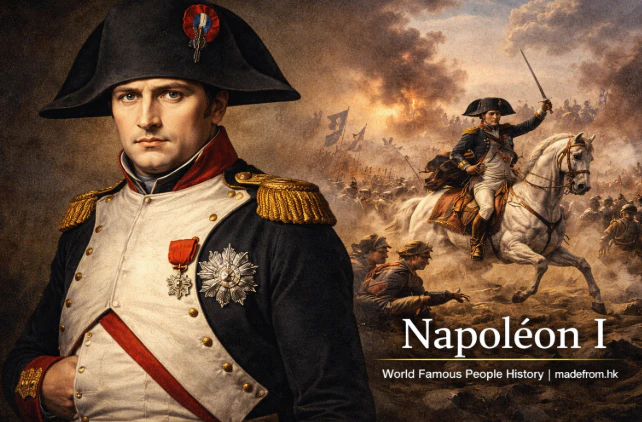
Napoleon Bonaparte生於1769年科西嘉島,是法國歷史上最具傳奇色彩的軍事與政治領袖之一。他出身於一個中產階級家庭,年輕時進入法國軍校接受訓練,並在法國大革命期間迅速崛起。憑藉出色的戰術能力與領導才能,他在義大利戰役中取得重大勝利,逐漸成為國內最具影響力的軍事人物之一。1799年,他發動政變,推翻督政府,建立執政府,自任第一執政,實際掌握國家大權。1804年,拿破崙加冕為皇帝,建立法蘭西第一帝國,開啟其統治歐洲的時代。拿破崙的軍事才能堪稱天才,他善於快速調動軍隊、集中兵力並利用地形優勢,在奧斯特里茨戰役等多場戰爭中擊敗強敵,建立法國在歐洲的霸權。他的戰爭不僅改變國界,也促進民族主義的興起,影響整個歐洲政治格局。除了軍事成就,拿破崙在內政方面亦有重大貢獻,他推行《拿破崙法典》,確立法律面前人人平等、保護私有財產等原則,對現代法律制度產生深遠影響。他同時改革教育、行政與金融制度,使法國國家機器更加高效與現代化。然而,拿破崙的野心亦帶來災難性的後果,特別是1812年遠征俄羅斯的失敗,使其軍力大幅削弱。隨後在歐洲各國聯軍的壓力下,他於1814年被迫退位並流放至厄爾巴島。1815年,他短暫復辟,史稱「百日王朝」,但最終在滑鐵盧戰役中敗於英普聯軍,再次被流放至聖赫勒拿島,並於1821年去世。拿破崙的一生充滿榮耀與爭議,他既是改革者也是征服者,其影響遍及政治、法律與軍事領域。他所建立的制度與理念至今仍在多國沿用,而他的軍事策略亦被後世研究與借鑑。拿破崙不僅改變了法國,也重塑了整個歐洲歷史,被視為近代史上最重要的人物之一。
English Version
Napoleon Bonaparte was born in 1769 on the island of Corsica and rose to become one of the most influential figures in European history. Coming from a modest family, he received military education in France and quickly distinguished himself during the French Revolution through his strategic brilliance and leadership skills. His success in the Italian campaigns elevated his status, making him one of the most prominent military leaders in the country. In 1799, Napoleon seized power through a coup d’état, establishing the Consulate and becoming First Consul, effectively controlling the French government. In 1804, he crowned himself Emperor, marking the beginning of the First French Empire. Napoleon’s military genius was evident in numerous victories, particularly the Battle of Austerlitz, where he defeated a coalition of powerful European nations. His innovative tactics, rapid troop movements, and ability to exploit enemy weaknesses allowed him to dominate much of Europe. Beyond warfare, Napoleon implemented significant domestic reforms, most notably the Napoleonic Code, which established legal equality, protected property rights, and influenced legal systems worldwide. He also restructured education, administration, and finance, modernizing the French state. However, his ambition led to overreach, especially during the disastrous invasion of Russia in 1812, which severely weakened his army. Following a series of defeats by European coalitions, he was forced to abdicate in 1814 and exiled to Elba. In 1815, he returned to power during the Hundred Days but was ultimately defeated at the Battle of Waterloo by British and Prussian forces. He was then exiled to Saint Helena, where he died in 1821. Napoleon’s legacy is complex; he was both a reformer and a conqueror whose actions reshaped Europe politically, legally, and militarily. His influence continues to be felt in modern legal systems and military strategy, securing his place as one of the most significant figures in modern history.