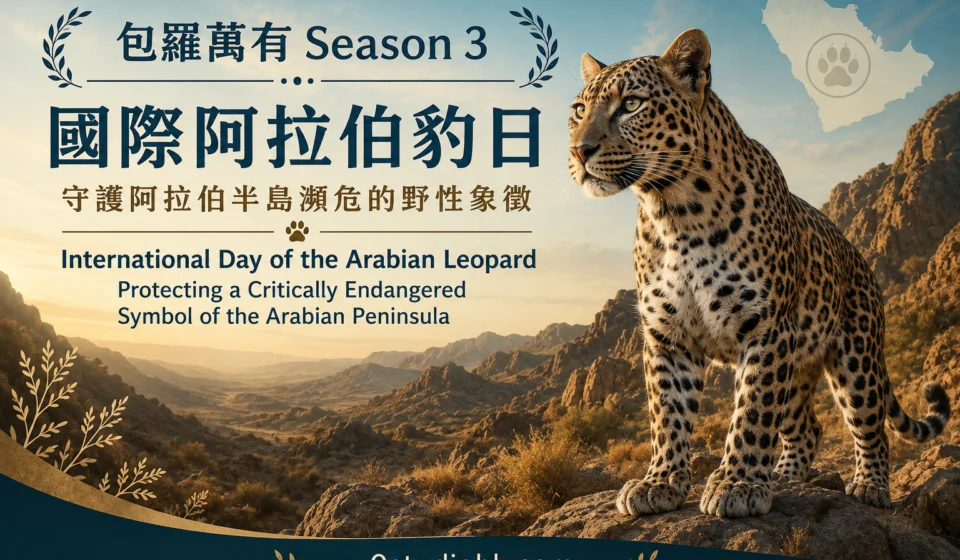
包羅萬有 Season 3 | 國際阿拉伯豹日|守護阿拉伯半島瀕危的野性象徵 | International Day of the Arabian Leopard|Protecting a Critically Endangered Symbol of the Arabian Peninsula
每年2月10日的國際阿拉伯豹日,讓世界重新看見這種瀕危猛獸,並關注棲息地、生態平衡與野生動物保育。
English:Observed every 10 February, the International Day of the Arabian Leopard draws global attention to one of the Arabian Peninsula’s most endangered animals and the ecosystems it represents.
中文版本
每年2月10日是國際阿拉伯豹日,是聯合國為提高全球對阿拉伯豹保育工作的認識而設立的重要國際日。聯合國大會於2023年6月通過第77/295號決議,正式把2月10日定為國際阿拉伯豹日,並邀請各國、聯合國系統、國際及區域組織、民間社會、非政府組織以及其他相關人士參與紀念活動,同時加強國際與區域合作,支持阿拉伯豹的長期保育。 這個日子背後所關注的,不只是一種大型貓科動物的生存,而是整個阿拉伯半島自然環境正在面對的挑戰。阿拉伯豹學名為Panthera pardus nimr,是豹的一個亞種,也是阿拉伯半島特有的大型貓科動物之一。牠們體型相對細小,毛色通常呈淡黃褐色,身上有細密而接近的玫瑰形斑紋,與其他豹亞種具有明顯特色。聯合國指出,阿拉伯豹目前被國際自然保護聯盟(IUCN)紅色名錄列為極危(Critically Endangered),野外數量已經非常有限。聯合國資料估計,目前野外可能只剩下少於200隻,而成熟個體的估算更只有約70至84隻。 對一個物種而言,數字下降本身已經是一個嚴重警號,但阿拉伯豹的問題更加複雜,因為牠們所依賴的自然環境同樣受到巨大壓力。過去阿拉伯豹的活動範圍曾經遍布阿拉伯半島更廣闊的山區,但隨着城市發展、農業活動、過度放牧、獵物減少以及非法捕獵和野生動物貿易等因素影響,牠們的棲息地逐漸縮小和分散。聯合國指出,目前已確認仍有阿拉伯豹活動的地區主要集中於阿曼佐法爾地區,以及也門部分地區;部分歷史分布地則可能已經消失或長期沒有可靠的野外紀錄。 這種「棲息地被切割」的問題,對大型肉食動物尤其危險。阿拉伯豹需要相對廣闊的活動範圍,也需要足夠的天然獵物、水源和可以躲藏及繁殖的環境。當山區道路、城市、農地或其他人類活動逐漸進入牠們原本的生活空間,豹不但失去棲息地,也可能更容易與人類產生衝突。當天然獵物數量下降時,野生動物甚至可能靠近人類聚居地尋找食物,進一步增加人與豹之間的矛盾。因此,保護阿拉伯豹不能只是在野外「找豹」,而是需要同時保護牠所依賴的整個生態系統。這也是國際阿拉伯豹日非常重要的一個訊息:保護一種動物,其實是在保護一整個自然環境。 在生態系統中,大型掠食者具有重要作用。牠們不是單純「危險的動物」,而是食物鏈的一部分。當頂級或大型掠食者逐漸消失,獵物數量和植被之間的平衡也可能受到影響,進而改變整個生態系統。阿拉伯豹所處的乾旱山地環境本身已經非常脆弱,因此牠的存在具有象徵意義:如果一個地區仍然能夠讓這種對棲息地和獵物有要求的大型掠食者生存,往往也代表當地自然環境仍然具有一定程度的完整性。聯合國因此強調,阿拉伯豹對阿拉伯半島生態系統具有重要價值,保育工作需要同時關注棲息地、獵物以及人與野生動物之間的關係。 阿拉伯豹的保育並不是最近才開始。沙特阿拉伯近年投入大量資源推動相關工作,阿拉伯豹日最初由皇家阿爾烏拉委員會(RCU)於2022年發起,之後在2023年獲聯合國正式提升為國際日。RCU及合作伙伴目前推動包括棲息地修復、恢復天然獵物數量、野生動物重新引入、保育繁殖以及公眾教育等不同工作,希望逐步改善阿拉伯豹未來重新回到自然環境的條件。 其中一個值得注意的方向,是恢復阿拉伯豹的天然獵物。對大型掠食者來說,單純保護豹本身並不足夠。如果山羊、羚羊、阿拉伯大羚羊或其他適合的天然獵物不足,即使有安全的山區,也很難支持豹群長期生存。因此,保育人員需要從整個食物鏈出發,逐步恢復自然環境的生態功能。RCU的保育計劃包括把原生獵物重新引入自然保護區,同時修復乾旱地區的棲息環境,讓阿拉伯豹未來有更完整的食物來源與活動空間。 另一個重要方向是保育繁殖。由於野外個體數量極少,人工保育繁殖可以在一定程度上保存遺傳多樣性,並為未來的野外保育提供更多可能。RCU目前亦支援位於塔伊夫的保育繁殖中心,並透過繁殖工作增加阿拉伯豹的族群及遺傳多樣性。這類工作需要非常長時間的規劃,因為大型貓科動物的繁殖、健康管理、基因管理以及未來野外放歸,都不是短期內可以完成的工程。 事實上,保育阿拉伯豹最困難的地方之一,就是時間。當一個物種只剩下很少野外個體時,每一隻動物都變得珍貴,但同時也意味着任何一次棲息地破壞、非法捕獵或獵物減少,都可能對整個族群造成更大的影響。因此,保育工作不能只在國際日當天受到關注,而需要全年持續進行。法律保護、野外監測、棲息地管理、社區教育、科學研究及跨國合作,都需要長期投入。聯合國在設立國際阿拉伯豹日的決議中,特別強調加強國際和區域合作,正是因為野生動物的生存並不受國界限制。 另一方面,社區的角色同樣重要。野生動物保育如果只由政府或保育機構單方面推動,很難長期成功。生活在豹活動範圍附近的社區,最直接面對土地利用、牧畜、野生動物以及自然資源等問題,因此他們需要被納入保育過程。教育可以讓下一代更加了解阿拉伯豹的價值,而改善人與野生動物之間的衝突,亦可以降低社區對大型掠食者的恐懼。當保育工作能夠同時為自然環境和當地社區帶來長遠利益,保護野生動物便更有可能成為共同目標,而不是單方面的限制。2026年的國際阿拉伯豹日亦延續了這種希望。皇家阿爾烏拉委員會今年以「The Journey of Hope」作為全球宣傳主題,強調保育是一段需要長期堅持的旅程,並安排教育活動、自然保護區導覽及社區參與項目,希望讓更多人認識阿拉伯豹以及保護牠們的工作。 這個概念其實很值得思考。當一種動物已經瀕臨滅絕時,「希望」並不是假設問題會自然消失,而是相信人類仍然可以透過行動改變結果。過去世界上亦曾經有一些野生動物族群在長期保育下逐步恢復,因此阿拉伯豹的未來也不應該只剩下「消失」一個答案。當然,保育工作需要面對很多現實限制,包括棲息地縮減、氣候變化、水資源、獵物數量、非法捕獵以及族群基因多樣性等問題,但正因如此,科學研究與國際合作更加重要。國際阿拉伯豹日最終希望帶來的,不只是人們認識一種漂亮的動物,而是理解一個更大的問題:當一個物種正在消失,我們失去的其實是一部分自然世界。 一隻阿拉伯豹可以代表山脈、峽谷、乾旱河谷、天然獵物以及無數其他生物之間的關係。牠不是獨立存在,而是整個生態網絡的一部分。當豹消失,表面上只是少了一種動物,但背後可能代表棲息地破碎、獵物減少和生態平衡受到干擾。反過來,如果我們成功保護阿拉伯豹,往往也意味着我們正在修復牠所需要的山地環境,恢復天然獵物,減少非法捕獵,並重新建立人與自然之間較健康的關係。這正是國際阿拉伯豹日最值得我們記住的地方。保護瀕危物種從來不是只為了「留住一張照片中的動物」,而是希望下一代仍然有機會在真正的自然環境中看到牠們。阿拉伯豹能否重新在阿拉伯半島的山區建立更穩定的野外族群,目前仍然充滿挑戰,但國際社會已經透過國際日把這個問題帶到全球視野。2026年的「希望之旅」也提醒我們,保育沒有捷徑,卻可以一步一步向前。當政府提供政策和資源,科學家提供研究,保育機構保護棲息地,社區參與日常管理,而公眾願意了解和支持,瀕危物種才真正有機會走出滅絕邊緣。阿拉伯豹的故事,最終不只是關於一隻豹,而是關於人類如何選擇對待自然。當我們願意為一種仍然非常脆弱的生命保留空間,其實也是為自己的未來保留一個更加完整、多樣和健康的地球。
English Version
The International Day of the Arabian Leopard is observed every year on 10 February, providing a global opportunity to focus attention on one of the most endangered large cats of the Arabian Peninsula. The United Nations General Assembly officially proclaimed the day through resolution 77/295 in June 2023, inviting governments, UN organizations, international and regional institutions, civil society groups, non-governmental organizations and other stakeholders to take part in the observance. The resolution also calls for stronger international and regional cooperation to support the long-term conservation of the Arabian leopard because of its importance to the ecosystem of the Arabian Peninsula. The Arabian leopard, scientifically known as Panthera pardus nimr, is a distinctive subspecies of leopard native to the Arabian Peninsula. It is relatively small compared with some other leopard subspecies, with pale, buff-coloured fur marked by closely spaced rosettes. Yet its small size does not reflect the scale of the conservation challenge surrounding it. The International Union for Conservation of Nature classifies the Arabian leopard as Critically Endangered, and the number surviving in the wild is extremely low. United Nations information estimates that fewer than 200 Arabian leopards may remain in the wild, with an estimated 70 to 84 mature individuals. The decline of the Arabian leopard is closely connected to the wider transformation of its natural environment. Historically, the species occupied a much broader range of mountainous areas across the Arabian Peninsula. Over time, however, urban development, agriculture, livestock overgrazing, declining prey populations, poaching and illegal wildlife trade have reduced and fragmented suitable habitat. The remaining confirmed populations are now concentrated in highly limited areas, particularly the Dhofar region of Oman and parts of Yemen, while some areas of the leopard’s historical range have lost the species or lack reliable evidence of continued survival. Habitat fragmentation is especially serious for a large carnivore. Arabian leopards require suitable mountains and valleys, adequate prey, access to water and places where they can shelter and reproduce. As roads, settlements, farms and other human activities expand into natural areas, wildlife can lose the space needed to survive. A decline in natural prey can make the situation even more difficult, because predators may move closer to human settlements in search of food. This can increase the possibility of conflict between people and wildlife. Protecting the Arabian leopard therefore cannot simply mean protecting individual animals. It requires protecting the wider ecosystem on which those animals depend. This is one of the most important messages behind the International Day of the Arabian Leopard: conserving one species can also mean conserving an entire landscape. Large predators play an important role within ecosystems because they are part of the natural food web. They are not merely animals that humans should fear. Their presence can help maintain ecological relationships between predators, prey and vegetation. In the fragile arid and mountainous environments of the Arabian Peninsula, the survival of a large predator such as the Arabian leopard can therefore serve as an indicator of ecological health. If an ecosystem can still support a predator with demanding habitat and food requirements, it suggests that important parts of the natural system remain functional. The United Nations has emphasized the importance of the Arabian leopard to the Arabian Peninsula ecosystem and the need to conserve its habitat, prey and wider environment. Conservation efforts did not begin with the creation of the UN international day. Saudi Arabia and regional partners have been developing long-term initiatives for years. The Arabian Leopard Day was initially launched by the Royal Commission for AlUla in 2022 before the United Nations gave the observance international recognition in 2023. Current conservation programmes include habitat regeneration, restoration of native prey, wildlife reintroduction, conservation breeding and public education. The objective is not simply to keep Arabian leopards alive in controlled environments, but to create the ecological conditions that could eventually support healthier wild populations. Restoring prey is particularly important. Protecting a predator without restoring its food supply cannot provide a complete conservation solution. If native prey becomes scarce, even protected mountains may not be able to support a viable leopard population. Conservation programmes therefore need to consider the entire food chain. The Royal Commission for AlUla’s current programme includes the release of native prey into protected areas and the regeneration of arid landscapes, helping to rebuild the ecological foundations required by the Arabian leopard and other wildlife. Conservation breeding is another part of the strategy. With so few wild animals remaining, carefully managed breeding programmes can help maintain genetic diversity and provide additional possibilities for future conservation. The Royal Commission for AlUla supports a conservation breeding centre in Taif, where breeding work is intended to increase the population and genetic diversity of Arabian leopards. Such work requires patience and scientific planning because breeding, veterinary care, genetic management and any future reintroduction into the wild are complex processes that cannot be achieved quickly. Time is one of the greatest challenges facing the species. When a population becomes extremely small, every remaining individual becomes important, while habitat loss, illegal killing or prey decline can have an even greater effect on the survival of the entire population. Conservation therefore cannot be limited to one international day each year. It requires continuous monitoring, habitat management, law enforcement, scientific research, community engagement and long-term funding. The UN resolution’s emphasis on international and regional cooperation reflects an important reality: wildlife does not recognize political borders. Local communities are equally important. Conservation programmes cannot succeed indefinitely if they operate separately from the people who live near wildlife habitats. Communities may be directly affected by livestock management, land use, water resources and interactions with wild animals. Education can help younger generations understand the ecological value of the Arabian leopard, while practical measures to reduce human-wildlife conflict can make coexistence more realistic. When conservation creates long-term benefits for both nature and local communities, protecting wildlife becomes a shared responsibility rather than simply a set of restrictions imposed from outside. The 2026 observance continues this approach through a message of hope. The Royal Commission for AlUla has chosen “The Journey of Hope” as the theme for its 2026 global campaign, reflecting the long-term nature of Arabian leopard conservation. Activities include educational programmes, guided experiences in protected landscapes and community initiatives designed to encourage greater public involvement. The idea of hope is particularly meaningful when a species is so close to extinction. Hope does not mean assuming that the problem will solve itself. It means believing that determined action can still change the outcome. Around the world, conservation programmes have demonstrated that some threatened populations can recover when habitat, prey, protection and scientific management are combined over many years. The Arabian leopard still faces enormous challenges, including habitat fragmentation, limited prey, human-wildlife conflict, illegal hunting and the need to maintain genetic diversity. These difficulties make long-term research and cooperation even more important. The International Day of the Arabian Leopard therefore has a purpose beyond celebrating an attractive animal. It asks people to recognize what is lost when a species disappears from the natural world. An Arabian leopard represents far more than one animal. It is connected to mountains, valleys, prey species, water sources, vegetation and countless other organisms that form an ecological network. When the leopard disappears, the visible loss is a single species, but the deeper story may involve damaged habitats, declining prey and weakened ecological relationships. Conversely, successful leopard conservation can mean restoring mountain landscapes, rebuilding prey populations, reducing illegal wildlife exploitation and improving the relationship between human communities and nature. That is why the international day matters. Wildlife conservation is not simply about keeping an animal alive for photographs, zoos or history books. The ultimate goal is to give future generations a chance to encounter these animals as part of functioning natural ecosystems. Whether Arabian leopards can rebuild stable wild populations remains uncertain, but the international community now has a stronger platform for focusing attention on their survival. The 2026 message of a “Journey of Hope” is a reminder that conservation has no instant solution, but progress can be built step by step. Governments can provide laws and funding, scientists can provide knowledge, conservation organizations can protect habitats, communities can participate in local stewardship, and the public can support responsible conservation. Together, these actions can create a better chance for a species standing on the edge of extinction. The story of the Arabian leopard is ultimately not only about a leopard. It is about how humanity chooses to treat the natural world. When we decide that even a small and vulnerable wild population deserves space to survive, we are also protecting biodiversity, ecological resilience and the possibility of a healthier planet for ourselves.
總評
中文版本:國際阿拉伯豹日不只是守護一種瀕危猛獸,更提醒我們保護棲息地、恢復生態平衡與維持生物多樣性,正是為未來保留自然的希望。
English:The International Day of the Arabian Leopard is more than a celebration of one endangered animal. It represents a wider commitment to restoring habitats, protecting biodiversity and keeping hope alive for future generations.