
報紙檔的黃昏:那些曾經遍佈街頭的香港報紙攤 |The Twilight of Newspaper Archives: When Printed Memory Fades into Silence | 今日回望 | 第十四章
在智能手機與網絡新聞普及之前,香港的街頭曾經有一種非常熟悉的景象。
那就是街角的報紙檔。
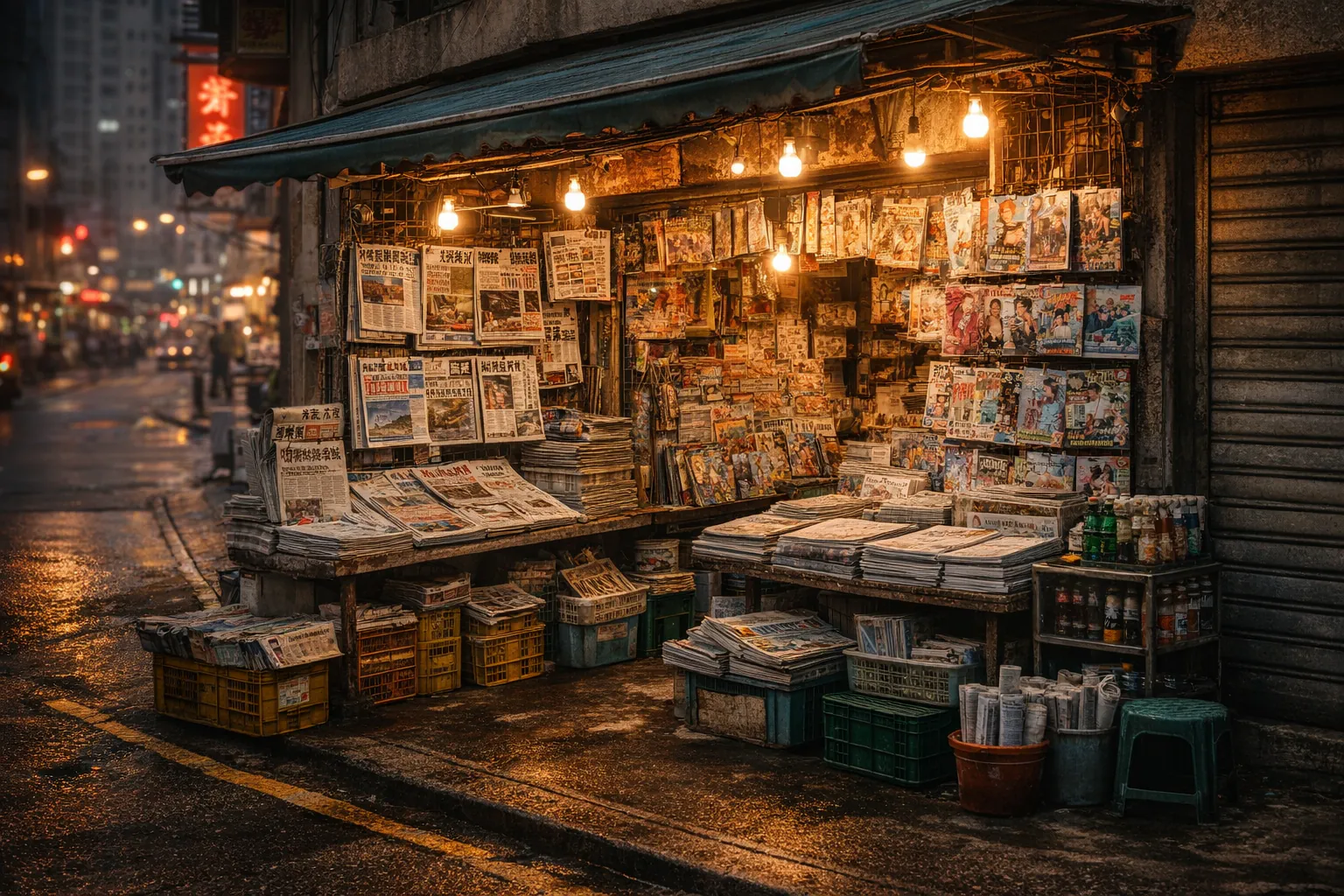
它們通常不大,有時只是一個小小的鐵架攤位,有時是一個簡單的木製亭子。報紙、雜誌、漫畫整齊地掛在架子上,封面朝外,形成一面色彩繽紛的牆。
There was a time when newspapers were more than daily information—they were the collective memory of a city. Stacked in archives, bound in volumes, they quietly recorded the pulse of society. As time moves forward, these paper records begin to fade, not only in ink but in relevance, raising questions about how we remember, preserve, and reinterpret history in a digital age.
每天清晨,當城市還未完全醒來時,報紙檔已經開始營業。
報販會把一疊疊剛送到的報紙拆開,按不同報章分類擺放。新的頭條新聞印在黑白紙張上,油墨味仍然清晰。
對許多香港人來說,這種味道曾經是一天開始的象徵。
在過去的香港,報紙是最重要的資訊來源之一。
市民透過報紙了解世界、了解社會,也了解城市每天發生的事情。早上上班前買一份報紙,幾乎成為很多人的習慣。
在巴士站、地鐵站、碼頭附近,報紙檔總是特別繁忙。
上班族匆匆走過,快速買一份報紙,然後在車上閱讀。有人會先翻到體育版,有人會直接看頭版新聞。
這些簡單的動作,曾經是香港日常生活的一部分。
報紙檔不只賣報紙。
很多攤位還會售賣各種雜誌與漫畫。娛樂雜誌、時事週刊、電影雜誌、足球雜誌,都能在小小的檔口找到。
對學生而言,漫畫更是吸引人的存在。
一些孩子會站在報紙檔前,看著最新一期的漫畫封面。即使沒有立刻購買,也會記住哪一期剛出版。
這些小小的攤位,成為城市文化的一部分。
報販往往在同一個位置工作多年。
他們見證著街道的變化,也認識不少熟客。有些街坊每天都會在同一時間來買報紙,久而久之,報販甚至會提前把報紙準備好。
這種默契,是街頭生活的一部分。
有時候,報紙檔也像一個小型資訊站。
街坊會在檔口前聊天,討論新聞、球賽或社會話題。短短幾分鐘的交流,卻能讓人感到熟悉與親切。
在上世紀的香港,報紙種類非常多。
不同報章代表不同風格,有些偏向嚴肅新聞,有些以娛樂與社會消息為主。每個人都有自己習慣閱讀的報紙。
有些人甚至會同時購買兩三份,從不同角度了解新聞。
這些報紙攤位,讓資訊在城市裡快速流動。
然而,隨著科技發展,資訊傳播方式逐漸改變。
互聯網新聞開始出現,人們可以透過電腦與手機隨時閱讀最新消息。新聞更新速度變得越來越快。
在這樣的環境下,傳統報紙的角色逐漸改變。
很多人不再每天購買報紙,而是透過手機瀏覽新聞。閱讀方式改變,也影響了報紙檔的生意。
曾經遍佈街頭的報紙攤,開始慢慢減少。
有些報販退休後沒有接班人,有些攤位因城市發展而消失。原本熟悉的街角,逐漸變得不同。
當一個報紙檔關閉時,街道似乎也失去了一種生活氣息。
曾經掛滿報紙與雜誌的架子不見了,取而代之的是空地、廣告牌或其他設施。
對年輕一代而言,街頭報紙檔可能已經變得陌生。
但對很多曾經在這個城市成長的人來說,那些攤位承載著一段時代的記憶。
有人記得第一次自己買報紙的時刻,有人記得放學後在檔口前看漫畫的日子,也有人記得清晨街頭的報紙聲音。
報販整理報紙時的紙張聲、街坊翻閱報紙的聲音、還有城市剛剛醒來的氣氛,都曾經存在。
這些看似平凡的場景,其實構成了城市文化的一部分。
當城市不斷更新,很多舊事物逐漸消失,但那些曾經出現在街角的報紙檔,仍然留在很多人的記憶裡。
它們曾經在城市的每一個清晨與黃昏,默默地陪伴著無數香港人。
而當人們回想起那個年代時,腦海裡往往會浮現出同一個畫面。
一個小小的報紙檔,掛滿當天的報章,街坊停下腳步,翻閱頭條新聞。
那是一個資訊還需要紙張承載的年代。
也是香港街頭最熟悉的一道風景
English Version
Newspaper archives once stood as one of the most tangible forms of collective memory. They were not merely storage spaces filled with aging paper but living repositories of human experience, documenting political shifts, cultural transformations, and the everyday rhythms of life. Each page carried the weight of a specific moment in time, capturing voices, perspectives, and emotions that might otherwise have been lost. Walking through such archives was like stepping into a quiet conversation between the past and the present, where history unfolded not as distant abstraction but as something immediate and personal. Yet, as technology continues to reshape how information is created and consumed, the role of these archives has gradually diminished. The physicality that once gave newspapers their authority now seems cumbersome in an age defined by speed and accessibility. Digital platforms offer instant retrieval, searchable databases, and global reach, rendering traditional archives increasingly obsolete in practical terms. However, this transition is not without consequence. The shift from paper to pixels alters not only the format of information but also the way it is perceived and valued. Printed newspapers carry a sense of permanence and authenticity that digital content often struggles to replicate. The texture of the paper, the layout of the page, and even the imperfections in print contribute to a unique reading experience that engages both the mind and the senses. In contrast, digital archives, while efficient, can feel detached and transient, raising concerns about long-term preservation and data integrity. There is also the question of curation. Newspaper archives were historically maintained by institutions that exercised editorial judgment, deciding what was worth preserving. This process, though imperfect, provided a structured narrative of history. In the digital era, the sheer volume of information challenges our ability to curate meaningfully. Without clear boundaries, the risk of losing important context becomes more pronounced. Information may be abundant, but understanding becomes fragmented. Furthermore, the decline of newspaper archives reflects broader changes in how society relates to time and memory. The slower pace of print culture allowed for reflection and continuity, while digital culture emphasizes immediacy and constant updates. In such an environment, the past can easily be overshadowed by the present, reducing historical awareness to fleeting references rather than sustained engagement. Despite these challenges, the legacy of newspaper archives should not be dismissed as obsolete. Instead, they offer valuable insights into how information can be preserved with depth and intention. They remind us that memory is not just about storing data but about creating meaningful connections across time. As we continue to navigate the digital landscape, there is an opportunity to integrate the strengths of both worlds—to combine the accessibility of technology with the thoughtful preservation practices of the past. By doing so, we can ensure that history remains not only accessible but also meaningful, allowing future generations to understand not just what happened, but how it felt to live through those moments. The twilight of newspaper archives is not simply an ending; it is a transition, inviting us to reconsider how we document, remember, and ultimately define our shared human story.