
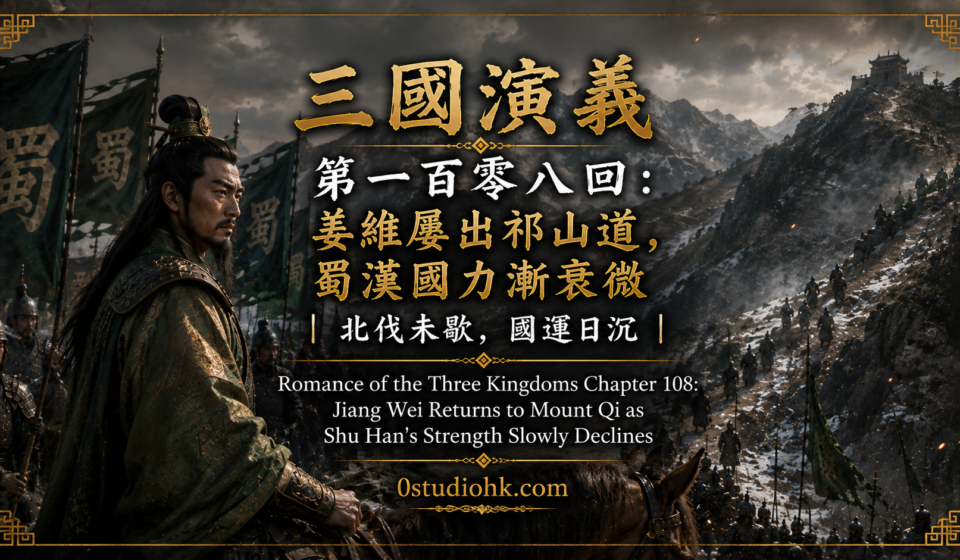
三國演義第一百零八回:姜維屢出祁山道,蜀漢國力漸衰微|北伐未歇,國運日沉 | Romance of the Three Kingdoms Chapter 108: Jiang Wei Returns to Mount Qi as Shu Han’s Strength Slowly Declines
諸葛亮離世後,姜維接過北伐重任,多次率軍出祁山,延續武侯未竟之志。然而長年征戰逐漸消耗蜀漢有限的兵力與糧草,朝廷與民間亦承受沉重壓力。姜維雖然忠心不改,卻開始面對北伐最難解的問題:理想仍在,國力卻已難以支撐。
After Zhuge Liang’s death, Jiang Wei continued the Northern Expeditions, repeatedly leading Shu forces toward Mount Qi. Yet years of warfare were steadily draining Shu Han’s limited resources. Jiang Wei remained determined to continue his mentor’s unfinished mission, but the kingdom itself was becoming too weak to sustain an endless struggle against Wei.
中文版本
諸葛亮離世之後,蜀漢的北伐並沒有因此停止。對姜維而言,孔明留下的不只是兵法與軍略,更是一份沒有完成的使命。從那一天開始,他逐漸成為蜀軍最重要的將領之一,肩負起繼續北伐的重任。祁山的道路,他已經十分熟悉。當年諸葛亮曾多次率軍經過這片山地,如今換成姜維帶領蜀軍再次向北。山勢依舊險峻,山道依舊漫長,但蜀漢的情況卻已經不同。每一次出兵,都需要從漢中調集大量糧草、兵器與士卒,漫長的補給線更令後方承受沉重負擔。姜維知道,蜀漢不能像魏國一樣長期消耗。魏國土地廣大,人口眾多,後勤能力遠勝蜀漢,只要守住關中與各處城池,便能等待蜀軍自行疲弱。因此姜維最擔心的,並不是一次戰鬥的勝負,而是長期戰爭對蜀漢國力造成的消耗。可是他同樣明白,如果蜀軍完全停止進攻,魏國便能集中更多力量向漢中施壓。對蜀漢而言,被動等待同樣危險。於是姜維只能不斷尋找進攻與保存實力之間的平衡。蜀軍再次出祁山時,姜維首先派出斥候探查魏軍動向。他沒有急於與敵軍決戰,而是觀察魏軍部署,尋找防線中的薄弱位置。多年征戰令他逐漸成熟,他知道一場漂亮的勝仗並不能解決蜀漢真正的問題。真正重要的是能否取得足以改變戰局的成果。然而魏軍已經不是昔日容易被奇襲的軍隊。魏國經過多年整頓,關中防線更加完整,各地城池互相呼應。蜀軍即使突破一處,也很快會遇到新的防線。姜維多次嘗試從不同方向發動攻勢,希望迫使魏軍分兵應對。可是魏軍依靠地利與兵力優勢,往往採取穩守策略。蜀軍進攻越深入,補給線便越長;魏軍退得越遠,卻越接近自己的糧草與援軍。這場戰爭因此逐漸變成一場消耗戰。姜維最清楚其中的危險。一天,他在軍帳中查看糧冊,發現可供前線使用的軍糧已經比過去減少。軍需官又報告,部分運糧隊需要更長時間才能抵達前線。姜維沉默良久。他知道,士兵可以依靠意志作戰,但不能沒有糧食。戰馬可以勇猛衝鋒,但同樣需要草料。北伐大軍看似強盛,背後其實牽動整個蜀漢的生產與民生。每一袋糧食運往前線,就代表後方少了一份儲備;每一次徵兵,也代表更多家庭失去勞動人口。蜀漢的百姓已經承受多年戰爭,國家的財力也逐漸變得緊張。成都朝廷之中,因此開始出現不同意見。有人認為北伐應該暫停,讓百姓休養;有人擔心繼續出兵會令國庫更加空虛;也有人認為只要魏國仍然強大,蜀漢就不能放棄主動權。姜維聽見這些聲音,心中十分明白。他不是不知道國家的困難,只是他更害怕蜀漢失去最後的戰略空間。只要魏軍可以從容整軍,蜀漢便會越來越被動。於是姜維仍然選擇北上。他希望以進攻牽制魏軍,讓敵人無法將所有力量集中到蜀漢邊境。這也是他繼承諸葛亮戰略思想的重要原因。孔明當年北伐,同樣面對國小力弱的問題,卻仍然相信主動出擊能夠延續蜀漢的生存空間。姜維也相信,只要北伐的戰鼓仍然響起,魏國便不能完全忽視蜀漢的存在。可是時代已經慢慢改變。司馬氏在魏國的勢力越來越強,魏國軍政體系亦逐漸穩固。與此同時,鄧艾、鍾會等新一代將領開始嶄露頭角。這些人與過去的魏將不同,他們更加年輕,也更加善於研究地形、後勤與大規模軍事行動。姜維開始感受到新的壓力。自己所面對的,已不再只是過去熟悉的魏軍,而是一個正在重新整合力量的強大國家。祁山戰場上的每一次交鋒,都令蜀漢付出代價。有時候蜀軍取得小勝,將士們士氣高漲;但只要戰果無法延續,軍隊最終仍然需要撤退。撤軍並不代表姜維放棄,而是代表另一輪整軍即將開始。可是一次又一次的整軍,也意味著一次又一次的消耗。姜維站在山坡上,看著遠方魏軍的營寨,心中十分清楚,自己正在打一場越來越困難的戰爭。敵人並沒有變得容易對付,反而越來越強;自己的國家卻沒有越來越強,反而逐漸疲弱。這種差距,是任何軍事才能都難以完全彌補的。夜深時,姜維回到軍帳,重新攤開地圖。漢中、祁山、隴右,每一條道路他都已經熟悉。他想起孔明當年留下的軍略,也想起恩師對自己的信任。姜維知道,自己或許永遠無法取代諸葛亮,但他至少可以繼續走下去。北伐或許已經不再是一場可以輕易取得勝利的戰爭,但它仍然是蜀漢維持主動權的一種方式。翌日清晨,蜀軍再次整隊。戰旗在山風中獵獵作響,士兵們重新檢查兵器與糧袋。姜維站在軍陣前方,望著一張張疲憊的臉孔。他沒有說太多話,只是命令全軍保持戒備。因為他明白,真正的北伐已經不只是向魏國進攻,更是一場與國力、時間和命運的鬥爭。只要蜀漢仍然存在,他便不願放棄北上的道路。然而,祁山的道路再長,也有走到盡頭的一天;國家的力量再強,也有消耗殆盡的一刻。姜維看向北方,心中依然堅定,但他也知道,蜀漢正在一步一步走向一個更加艱難的時代。
English Version
Years had passed since Zhuge Liang’s death, but the Northern Expeditions had not disappeared with him. For Jiang Wei, the legacy of his teacher was more than a collection of military strategies. It was an unfinished responsibility. After returning from earlier campaigns, Jiang Wei gradually became one of the most important commanders of Shu Han and continued to lead armies toward the northern frontier. The road toward Mount Qi was familiar to him. Zhuge Liang had marched through these mountains many times, and now Jiang Wei was following the same difficult routes. The mountains had not changed, but Shu Han had. Every campaign required large quantities of grain, weapons, horses, and manpower. The farther the army moved north, the longer its supply routes became. Jiang Wei understood that Shu could not sustain war in the same way as Wei. Wei possessed greater territory, a larger population, and much stronger logistical resources. Its commanders could remain behind fortified positions and allow Shu forces to exhaust themselves. This was why Jiang Wei feared a prolonged war more than a single battlefield defeat. Yet he also understood that abandoning the offensive would create another danger. If Shu stopped attacking, Wei could concentrate more troops around Hanzhong and strengthen its pressure against the Shu frontier. For a smaller kingdom, waiting passively could be just as dangerous as fighting. Jiang Wei therefore tried to maintain a difficult balance between military pressure and the preservation of Shu’s remaining strength. When the Shu army marched toward Mount Qi again, Jiang Wei ordered scouts to study the movements of Wei forces before committing his troops. He had become more experienced after years of campaigning. He no longer believed that a dramatic victory alone could solve Shu Han’s problems. What he needed was a result large enough to alter the strategic balance. But Wei had also changed. Its defenses in Guanzhong had become more organized, and its fortresses supported one another. Even if Shu broke through one position, another line of resistance could quickly appear. Jiang Wei therefore tried different approaches, hoping to force Wei to divide its forces. Yet Wei commanders understood the advantage of defending their own territory. The farther Shu advanced, the more difficult its supply system became. The farther Wei withdrew, the closer it remained to its own reinforcements and food stores. The war was slowly becoming a contest of endurance. Jiang Wei understood the danger better than anyone. One evening, while reviewing military records inside his command tent, he noticed that the amount of grain available to the army had fallen again. The logistics officers reported that some supply convoys were taking longer to reach the front. Jiang Wei remained silent. Soldiers could fight with courage, but courage could not replace food. Horses could charge into battle, but they also needed grain and pasture. The strength of the Northern Expedition depended upon the entire economic system of Shu Han. Every sack of grain sent north reduced the reserves available in the rear. Every new recruit represented another worker absent from his family. Shu’s population had already suffered through years of war, while the state treasury was becoming increasingly strained. In Chengdu, disagreement naturally began to grow. Some officials wanted the Northern Expeditions suspended so that the people could recover. Others feared that continued campaigns would exhaust the treasury. Still others believed that Shu could not afford to surrender the initiative while Wei remained so powerful. Jiang Wei understood every side of the argument. He knew the kingdom was suffering. But he also feared that abandoning the initiative would leave Shu with no strategic room to maneuver. If Wei were allowed to reorganize without pressure, Shu’s position would become increasingly dangerous. Jiang Wei therefore continued to march north. His aim was not simply conquest. He wanted to keep Wei’s armies occupied and prevent them from concentrating all their strength against Shu. This was one of the central ideas he inherited from Zhuge Liang. His teacher had also faced the problem of a smaller state fighting a stronger opponent, yet had believed that offensive pressure could preserve Shu’s strategic freedom. Jiang Wei shared that conviction. As long as Shu continued to threaten Wei, Wei could not completely ignore its western frontier. But the political and military environment was changing. The Sima family was becoming increasingly influential within Wei, and the Wei military system was becoming more firmly organized. At the same time, younger commanders such as Deng Ai and Zhong Hui were beginning to emerge. They belonged to a new generation of military leaders who paid close attention to terrain, logistics, mobility, and large-scale operations. Jiang Wei began to feel the pressure of this changing environment. The enemy he faced was no longer simply the Wei army of an earlier generation. It was a powerful state that was continually adapting and reorganizing its strength. Every battle around Mount Qi carried a cost for Shu Han. Sometimes Shu forces achieved a local victory and morale rose among the soldiers. But if the victory could not be expanded, the army eventually had to withdraw. A withdrawal did not mean that Jiang Wei had abandoned his mission. It meant another round of preparation would begin. Yet every new preparation required more food, more soldiers, and more resources. Standing upon the mountains overlooking the battlefield, Jiang Wei could see how difficult the war had become. His enemy was growing stronger, while his own kingdom was gradually becoming weaker. No commander, no matter how talented, could completely overcome such an imbalance. Late at night, Jiang Wei returned to his command tent and unfolded the maps once more. Hanzhong, Mount Qi, Longyou—the roads were familiar to him. He remembered Zhuge Liang’s plans and the trust his teacher had placed in him. Jiang Wei knew that he could never simply replace Zhuge Liang. But he could continue the road that his teacher had begun. The Northern Expeditions might no longer be a campaign that could easily produce victory, yet they remained one of the few ways Shu could preserve its strategic initiative. At dawn, the Shu army assembled again. Banners moved in the mountain wind as soldiers checked their weapons and supplies. Jiang Wei stood before the formation and looked at the tired faces of his men. He said little. Instead, he ordered them to remain alert and prepared. He had come to understand that the Northern Expedition was no longer simply a war against Wei. It had become a struggle against resources, time, and fate itself. As long as Shu Han remained, Jiang Wei was unwilling to abandon the road north. Yet even the longest mountain road eventually reaches its end, and even the strongest kingdom can exhaust its strength. Jiang Wei looked toward the northern horizon with determination, but he also understood that Shu Han was entering an increasingly difficult age. The dream remained alive. The kingdom supporting that dream was slowly running out of strength.