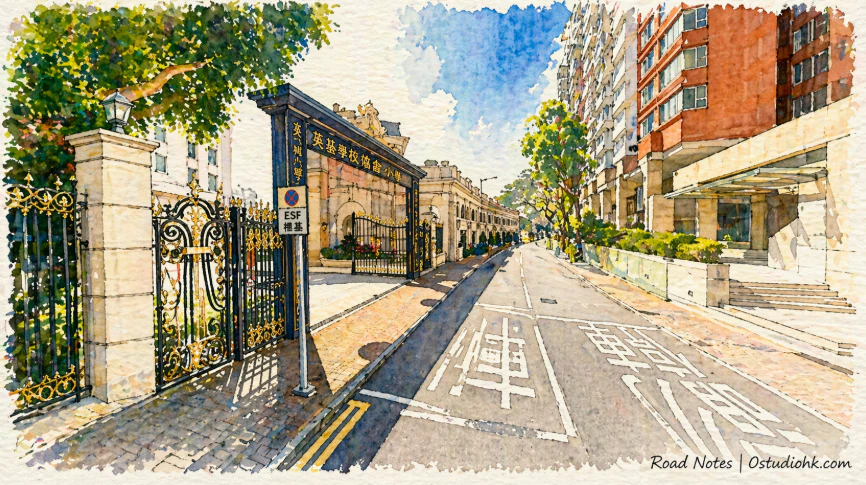
在香港九龍琵琶山的山腰之上,郝德傑道沿着綠意與坡道延伸,名字帶着殖民時代的痕跡,也藏着一段遠離城市喧囂的靜謐。
Along the slopes of Piper’s Hill in Kowloon, Caldecott Road winds quietly through greenery, its name reflecting a colonial past and a slower rhythm beyond the city below.
中文
郝德傑道(Caldecott Road)位於香港九龍琵琶山一帶,是一條結合自然環境與歷史背景的山區道路,其名稱來自殖民時期人物安德魯·卡爾德科特,他曾於1930年代在香港政府任職,參與法律及行政工作,屬於當時英國殖民體系中的重要官員之一。以官員名字命名街道,是香港殖民時期常見的做法,反映出權力與城市空間之間的連結。郝德傑道的形成與琵琶山地區的發展密切相關,該區位於九龍中部較高位置,早期因地勢較高、環境較為清涼,被視為適合居住或休閒的地方,與低地密集的市區形成對比。在20世紀初,隨著香港逐步發展,部分山區開始被開發為住宅或政府設施用地,而郝德傑道則作為連接不同山坡區域的重要通道之一,逐漸形成。歷史上,這類山區道路並非為大量交通而設,而是服務於較低密度的居住與行政用途,因此其道路規模與城市主幹道有所不同,更接近一種「生活與自然之間的過渡空間」。隨著時間推移,香港人口增長與城市擴展加快,九龍地區逐漸高度都市化,但琵琶山一帶仍保留一定綠化與開放空間,使郝德傑道在城市之中維持一種相對安靜的特質。從城市變化角度來看,郝德傑道見證了香港由殖民地行政體系轉變為現代城市的過程,其命名所代表的權力象徵逐漸淡化,而街道本身則轉化為居民與自然共存的空間。街道特色方面,郝德傑道具有明顯的山路特徵,道路彎曲且坡度起伏,兩旁多為樹木、斜坡及部分住宅或設施,整體氛圍較為寧靜,與九龍市區的繁忙形成鮮明對比。部分路段可望見遠處城市景觀,形成一種「在城市之上觀看城市」的視角,帶來不同層次的空間感。由於人流與車流相對較少,這條道路更多呈現出一種緩慢節奏,使人行走其中時能更專注於環境本身。今日的郝德傑道,不僅是一條連接山區的道路,更是一段歷史與自然交織的空間,它提醒人們,在高度發展的城市之中,仍然存在着一些邊緣地帶,讓人能暫時遠離速度與密度,重新感受時間的流動與空間的寧靜。
English Version
Caldecott Road, located along the slopes of Piper’s Hill in Kowloon, represents a quieter dimension of Hong Kong’s urban landscape where history and nature intersect. Named after Andrew Caldecott, a colonial official who served in Hong Kong during the 1930s, the road reflects a period when administrative influence was often embedded directly into the naming of urban spaces. Such naming practices were common during British rule, linking authority and geography in subtle yet lasting ways. The development of Caldecott Road is closely tied to the transformation of hillside areas in Kowloon. In the early 20th century, elevated regions such as Piper’s Hill were considered desirable due to their cooler climate and relative distance from the densely populated lowlands. These areas gradually saw the construction of residential properties and government facilities, with roads like Caldecott Road providing essential access while maintaining a lower density compared to the city center. Unlike major urban arteries designed for efficiency and heavy traffic, Caldecott Road evolved as a more modest route, shaped by the terrain and its surrounding environment. As Hong Kong continued to urbanize rapidly throughout the mid to late 20th century, Kowloon became increasingly dense and developed, yet certain hillside zones retained pockets of greenery and calm. Caldecott Road stands as part of this contrast, offering a slower, more reflective experience within a highly dynamic city. From a broader perspective, the road illustrates the gradual shift from a colonial administrative structure to a modern urban society, where the symbolic weight of such names has diminished while the spaces themselves have adapted to contemporary life. Physically, the road is defined by its curves, slopes, and vegetation, with occasional views opening up toward the city below. The absence of intense commercial activity contributes to a quieter atmosphere, allowing visitors and residents alike to engage more directly with the landscape. Today, Caldecott Road is more than just a connector between points on a map; it is a layered environment where past and present coexist. It offers a momentary retreat from the speed of urban life, reminding us that within even the most developed cities, there remain places where time seems to move differently, inviting reflection and pause.