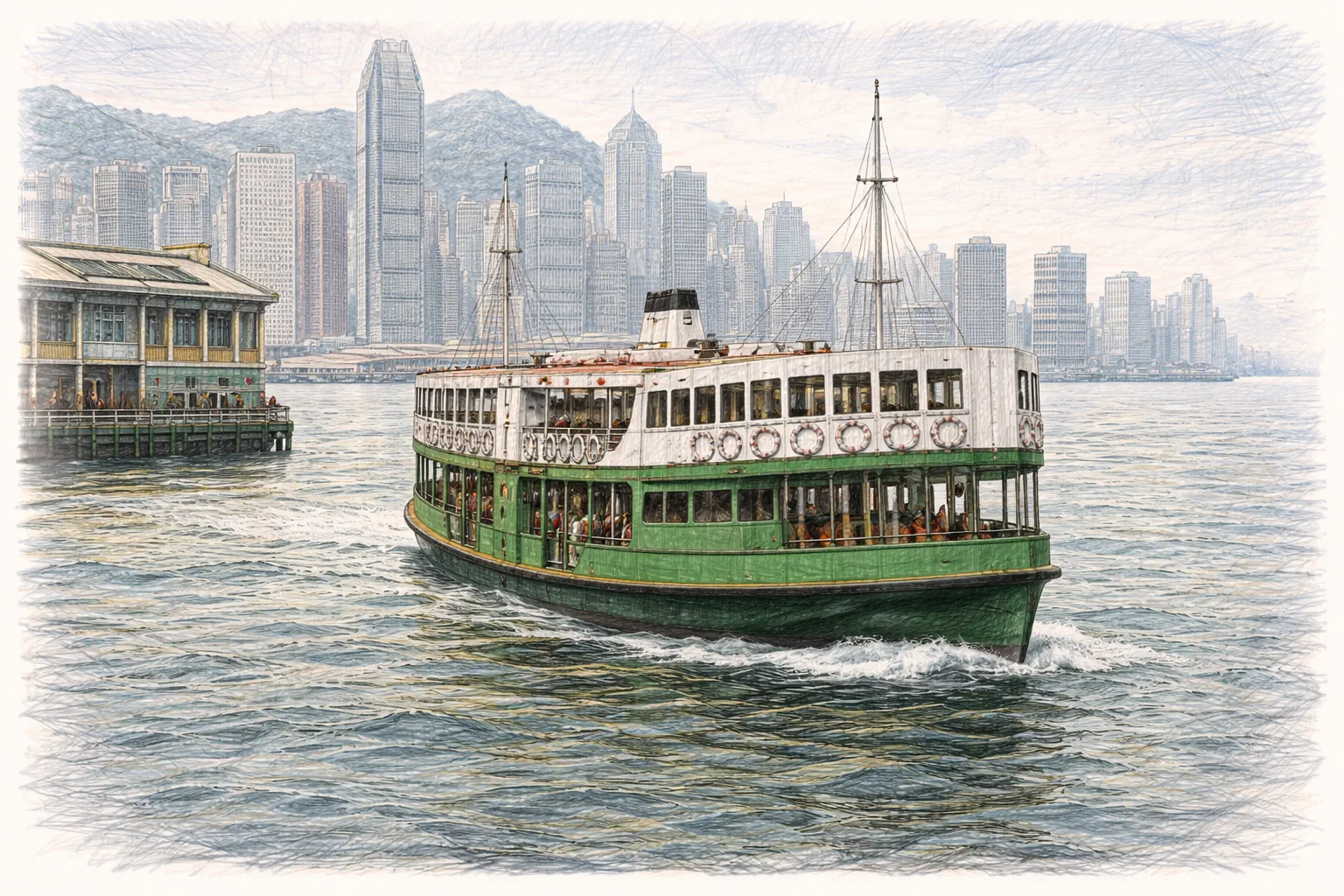
渡輪在現代城市中的角色不僅僅局限於交通工具,它更是一種生活哲學的體現。在快節奏與效率至上的都市環境中,渡輪提供了一種截然不同的體驗,讓人能夠短暫抽離日常,享受過渡的空間與時間。搭乘渡輪的過程,是一種與城市保持距離的方式。當船隻駛離碼頭,高樓大廈的輪廓逐漸模糊,街道的喧囂聲隨之消散,這並非完全脫離,而是一種暫時的抽離,讓人重新審視自己與城市的關係。
渡輪的設計和運作方式也顯示出其特殊性。與地鐵或巴士等交通工具相比,渡輪幾乎不會對乘客形成強制性的干擾。船上沒有密集的廣告屏幕,也沒有頻繁的廣播提醒,乘客可以自由選擇發呆、眺望海面,或是什麼都不做。這種自由自在的氛圍,使得渡輪成為少數能讓人真正放鬆的公共交通方式之一。更重要的是,渡輪的行駛路線本身也具有象徵意義,它並非單純追求縮短距離,而是一段過渡性的旅程。在船隻行駛的過程中,城市的天際線雖然仍然可見,但視角卻完全不同,這種改變促使人重新思考城市的形象以及自身的位置。
渡輪所提供的不僅僅是一種交通方式,更是一種文化與精神層面的象徵。一個仍然保有渡輪的城市,某種程度上展現了對生活節奏的尊重。這樣的城市不僅僅以效率為導向,它容許居民在某些時刻慢下來,享受片刻停頓。搭乘渡輪的人通常不急於抵達目的地,他們明白旅程的價值不在於速度,而在於過程本身。這段旅程是從繁忙過渡到寧靜、從擁擠過渡到空間的一次體驗。在船隻靠岸時,人群自然起身準備下船,沒有催促,也沒有焦躁,因為每個人都已充分感受到這段旅程所帶來的意義。
未來城市規劃中,渡輪應被視為不可或缺的一部分。它不僅能有效緩解交通壓力,更為城市居民提供了一種心理休憩的獨特方式。在全球化與都市化加速發展的背景下,像渡輪這樣的空間與時間過渡工具顯得尤為珍貴。它提醒我們,在追求進步與效率之餘,也需要留下一些空間和時間給自己,去感受生活中的細微美好。渡輪所承載的不僅是跨越水域的功能,更是一種生活態度與哲學。通過這樣的旅程,我們不僅跨越了地理上的邊界,也跨越了心境,由此完成了一次真正意義上的過渡。
English Version
In a city defined by density, verticality, and constant movement, the act of crossing water introduces a different experience of space and time, and the ferry in Hong Kong stands as one of the most enduring examples of how urban life extends beyond land into a fluid, transitional environment. Unlike fixed routes that remain bound to streets or rails, ferry journeys unfold across open water, creating a temporary separation from the structures and rhythms of the city while still remaining deeply connected to it. The moment of boarding a ferry marks a subtle shift, where the noise and intensity of the urban environment begin to recede, replaced by the movement of water, the rhythm of engines, and the changing perspective of the skyline. This transition is not only physical but perceptual, allowing passengers to experience the city from a distance, where familiar landmarks become part of a larger composition and where the relationship between different districts becomes more visible. The ferry thus functions as both transportation and vantage point, offering a way of seeing the city that cannot be replicated from within its streets. As the vessel moves between shores, time seems to stretch slightly, creating a pause within the otherwise continuous flow of urban activity, where individuals are neither fully in one place nor another, but suspended within a moment of passage. This in-between state gives the journey a reflective quality, where observation replaces urgency and where the act of moving becomes an experience in itself rather than merely a means to an end. Historically, ferries played a crucial role in connecting different parts of Hong Kong before the development of extensive land-based infrastructure, making them essential to both daily life and economic activity, and their continued presence today reflects an adaptation to changing conditions while preserving their cultural and experiential significance. Even as tunnels, bridges, and faster modes of transport have reduced their necessity, ferries remain relevant by offering something that speed cannot replace: a sense of openness, continuity, and connection to the natural element of water that defines the city’s geography. The visual experience of a ferry ride is constantly shifting, shaped by light, weather, and movement, where reflections on the water, changing skies, and passing vessels create a dynamic environment that engages the senses and reinforces the uniqueness of the journey. This variability ensures that no two crossings are exactly the same, adding a temporal dimension that extends beyond schedule and destination. The ferry also plays a role in shaping collective memory, as repeated journeys accumulate into personal and shared experiences, linking individuals to specific routes, times of day, and emotional states that become associated with the act of crossing. For some, it may represent daily routine; for others, a moment of escape or transition between different parts of life. The coexistence of these meanings reflects the flexibility of the ferry as a space that accommodates both practicality and reflection. In contemporary urban life, where efficiency often dominates decision-making, choosing to take a ferry can be seen as an intentional act, prioritizing experience over speed and allowing for a different engagement with the city. This choice highlights the existence of alternative temporalities within the same environment, where individuals can move not only through space but through different perceptions of time. In a broader sense, the Hong Kong ferry represents a form of urban continuity that bridges past and present, connecting historical patterns of movement with modern needs, and demonstrating how certain forms of infrastructure can remain meaningful by offering experiences that extend beyond their functional role. Ultimately, the ferry is not only a way of getting from one shore to another, but a moving space where the city reveals itself in layers, where distance creates clarity, and where the act of crossing becomes a moment of awareness, reminding passengers that movement through a city can also be a way of understanding it.