
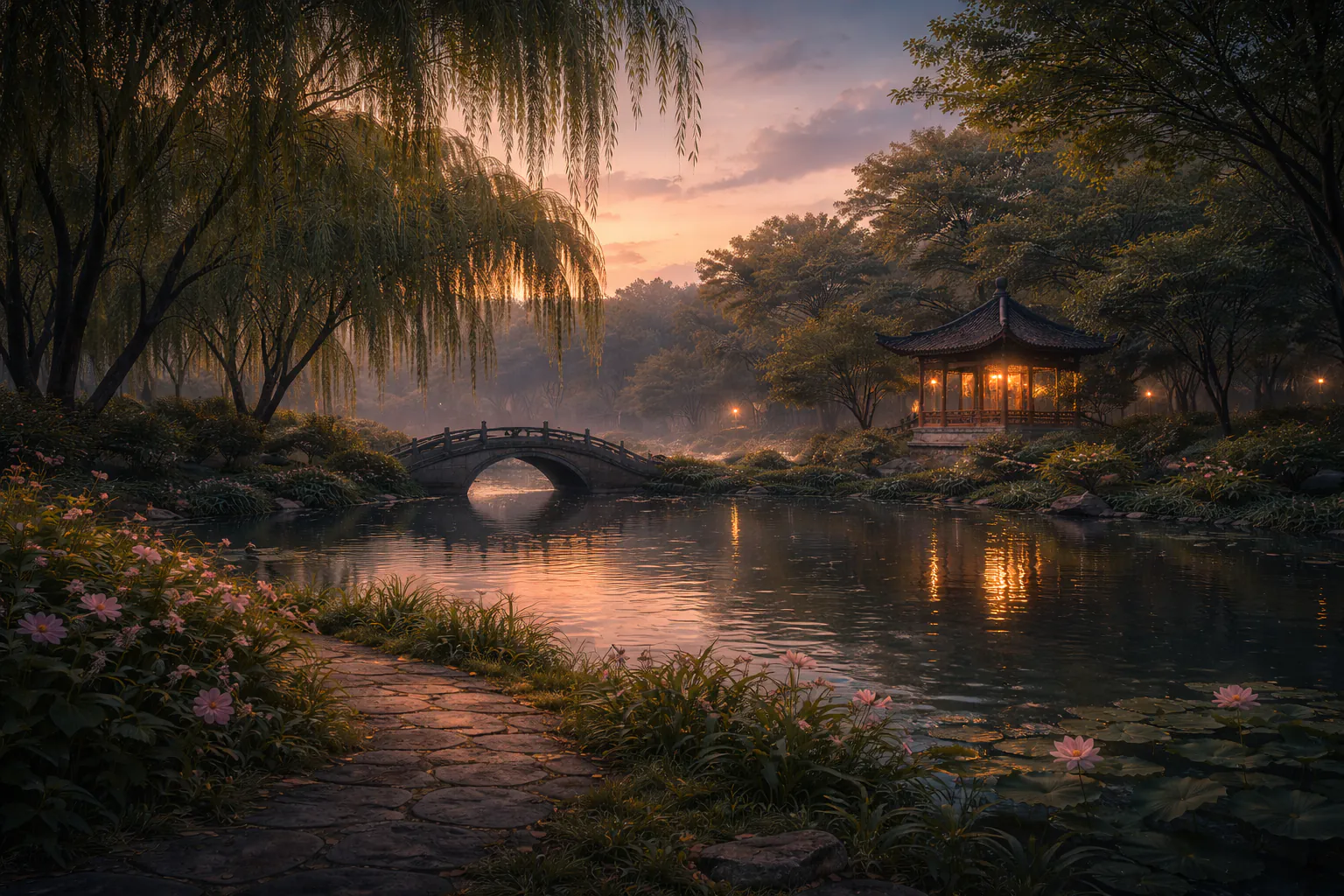
《紅樓夢》第二十六章|清晨荷影:情感如何轉化為詩心 | Dream of the Red Chamber Chapter 26: Morning Lotus Shadows—When Emotion Becomes Poetry
當情感經過沉澱,往往會轉化為更細膩的表達。《紅樓夢》第二十六章以清晨荷影為背景,描繪人物在寧靜之中將感受融入詩意。外在景象不再只是觸發,而成為內心的一部分,使情感由流動轉為凝聚。
When emotion settles, it often transforms into something more refined. In Chapter 26 of Dream of the Red Chamber, the quiet presence of lotus shadows in the morning becomes a bridge between feeling and expression. What was once stirred from the outside is now internalized, allowing emotion to take shape through poetic perception.
卻說夏夜過後,榮國府又迎來一個清新的清晨。夜裡微風帶來幾分涼意,天色初亮時,園中薄霧尚未散去。湖面如鏡,荷葉之上還留著點點露珠。
林黛玉向來睡眠淺薄,清晨早早醒來。她推開窗戶,只見天邊微微泛白,遠處樹影朦朧。湖面隱約可見幾朵荷花,在晨霧之中顯得格外柔和。
她心中一動,便披上外衣,獨自走入園中。
清晨的花園與白日不同。沒有丫鬟婆子往來,也沒有姑娘們的笑聲。只有鳥鳴與風聲,使整個園子顯得格外幽靜。
黛玉沿著石徑慢慢行走。湖邊荷葉微動,露水在葉面滾動。幾朵粉色荷花在晨光中微微開放,顯得清雅動人。
她停在湖邊,望著荷影倒映水中,心中忽然生出一種說不出的情緒。
就在這時,身後傳來腳步聲。
黛玉回頭一看,原來是賈寶玉。
寶玉似乎也是剛起不久,見黛玉在湖邊,便笑道:「妹妹今日起得早。」
黛玉輕聲說:「清晨園子最安靜。」
寶玉走到湖邊,看著水中荷影說:「白日裡荷花雖好,卻不如清晨這般清雅。」
黛玉點頭說:「清晨景色總是最真。」
寶玉笑道:「如此景色,倒讓人想作詩。」
黛玉微微一笑:「你又想到詩了。」
寶玉說:「不如就以這湖中荷影為題,各作幾句。」
黛玉略一沉吟,看著水面荷花,便輕聲吟出幾句詩。詩句清淡柔和,彷彿將清晨湖景寫入其中。
寶玉聽後拍手稱讚:「妹妹的詩總像這湖水一般清澈。」
黛玉笑了笑:「不過隨意而已。」
寶玉也試著吟了幾句,語氣輕快。雖不如黛玉詩句細膩,卻也頗有情趣。
兩人站在湖邊談詩,晨光逐漸升起。遠處丫鬟們開始在園中打掃,小徑上傳來掃地聲。
整個花園慢慢甦醒。
幾位姑娘也陸續來到園中,有人說來看荷花,有人說要到亭中飲茶。
園子又恢復往日的熱鬧。
寶玉看著湖面說:「清晨這樣的景色,若不是早起,倒很難看見。」
黛玉輕聲說:「許多美景,往往只有片刻。」
寶玉聽了,微微沉思。
陽光漸漸照亮湖面,荷花在光影之中顯得更加鮮艷。風輕輕吹過,荷葉搖動,水面泛起細細波紋。
榮國府的生活仍在繼續。亭台樓閣依舊繁華,花園依舊美麗。
然而那些在清晨湖畔的詩句與談話,卻像荷葉上的露珠一般,雖然短暫,卻讓人難以忘記。
English Version
After the night has passed, emotion does not disappear.
It changes form.
In Chapter 26, the garden returns in the stillness of morning. Light falls softly, and the shadows of lotus leaves move gently across the surface of the water.
Nothing calls for attention.
And yet, everything feels complete.
Because what was once felt has now settled.
Emotion is no longer something that moves restlessly.
It becomes something that can be held, shaped, and understood.
This is where poetry begins.
Not in the act of writing,
but in the act of seeing.
Baoyu experiences the scene with quiet appreciation, drawn to its simplicity.
Daiyu understands it more deeply.
She sees that beauty is not separate from feeling—it is formed by it.
That what once stirred the heart from the outside has now become part of how the world is perceived.
And in that shift,
emotion is no longer fleeting.
It becomes expression.