
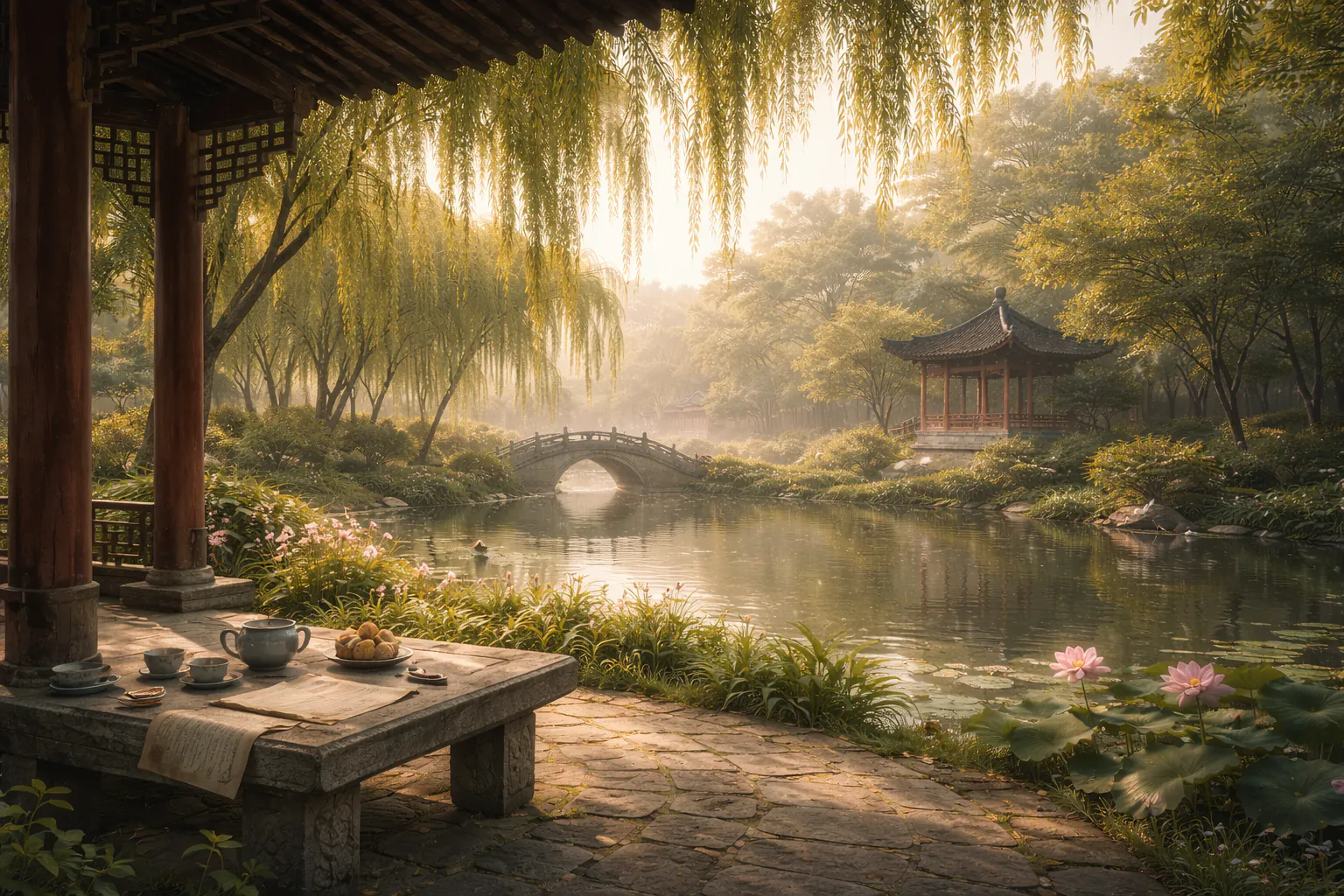
《紅樓夢》第二十二章|夏日亭中:論詩之間的理解與分歧 | Dream of the Red Chamber Chapter 22: Summer Pavilion—Poetry, Understanding, and Subtle Differences
當思緒逐漸清晰,人們開始以言語表達。《紅樓夢》第二十二章以夏日亭中論詩為場景,人物在交流與討論之中展現各自的理解與觀點。表面是對詩意的探討,實則透露出思想的差異與情感的距離。
As thoughts take shape, they begin to find expression through words. In Chapter 22 of Dream of the Red Chamber, discussions of poetry in a summer pavilion reveal more than literary taste—they expose subtle differences in perspective and emotional distance. What appears to be an exchange of ideas quietly reflects deeper layers of understanding and separation.
卻說榮國府園中經過整修之後,景色愈發清雅。轉眼已入初夏,花木繁茂,綠蔭濃密。湖邊柳枝垂水,遠處亭台隱於樹影之間,顯得格外幽靜。
這日午後,天氣微熱,園中卻因湖水與樹蔭顯得十分清涼。賈寶玉閒來無事,便信步走入園中。他沿著小徑慢慢行走,只見花木間蟬聲初起,空氣中帶著淡淡花香。
走到湖邊小亭時,他見林黛玉早已坐在亭中。石桌上放著一冊詩集,她正低頭翻閱。
寶玉笑道:「妹妹又在讀詩?」
黛玉抬頭一笑:「天氣悶熱,讀書倒能靜心。」
寶玉走進亭中,在石凳上坐下。湖面微風吹動,水光閃閃。他望著遠處柳影說:「夏日景色雖不如春花熱鬧,卻也別有一番趣味。」
黛玉合上詩集,說道:「春花易謝,夏木常青,各有其時。」
寶玉笑道:「妹妹說話總像詩一般。」
黛玉輕輕一笑,並未答話。
不久,其餘幾位姑娘也陸續來到園中。有人帶著茶具,有人帶著點心,於是大家便在亭中坐下歇息。
丫鬟將清茶倒入杯中,茶香淡淡飄散。眾人一邊品茶,一邊談起詩詞。
寶玉忽然說:「近日天氣漸熱,不如以『夏日』為題,各寫幾句詩。」
眾人聽了都覺得有趣,便紛紛拿出紙筆。
園中頓時安靜下來,只聽見遠處蟬鳴與風聲。有人低頭沉思,有人已開始動筆。
林黛玉沉吟片刻,提筆寫下幾句詩。她的詩句清雅含蓄,既寫夏景,又帶著淡淡情思。
眾人讀後皆稱讚不已。
寶玉看過之後說:「妹妹的詩總是如此自然,像園中風景一般。」
黛玉淡淡說:「詩不過隨意寫來。」
寶玉也寫了一首,語氣輕快,描寫湖邊柳影與夏日微風。眾人看後都笑說他詩中帶著幾分玩興。
午後陽光透過樹葉落在亭中,光影斑駁。茶香與花香交織,使整個花園顯得格外悠閒。
有人提議將今日詩句抄錄保存,以後再續詩社之事。寶玉聽了十分高興,便讓丫鬟收好詩稿。
時間不知不覺過去。湖面波光閃動,遠處樹影隨風輕搖。
黛玉望著水面,忽然說:「詩會雖好,卻像夏日風景,一瞬即過。」
寶玉笑道:「只要心中記得,便不算消失。」
黛玉沒有再說什麼,只輕輕望著湖水。
傍晚時分,眾人漸漸散去。寶玉走在園中小徑上,回頭望了一眼亭子。
那座亭子在暮色中顯得安靜而優雅。今日的詩句與談笑,也許只是平常的一日。
然而在榮國府這樣的花園裡,每一次相聚、每一首詩句,都在悄悄記錄著這段青春與繁華的歲月。
而寶玉胸前的通靈寶玉,在夕陽餘光中微微閃耀,彷彿默默見證著這一切。
English Version
When thought becomes clear, it seeks expression.
In Chapter 22, conversation turns toward poetry—not as performance, but as reflection. Words are no longer casual. They carry intention.
At first, the exchange feels harmonious.
Ideas are shared. Interpretations unfold. Each voice contributes to a larger understanding.
But clarity does not always bring unity.
Because understanding is never identical.
Each person sees something slightly different.
Feels something slightly different.
Values something slightly different.
And in these differences, something subtle emerges.
Not conflict—
but distance.
Baoyu engages with openness, drawn to the flow of thought rather than its precision.
Daiyu listens more carefully.
She recognizes that meaning is not fixed. That what one person expresses may not fully reach another.
And that even in shared conversation,
true understanding remains just out of reach.