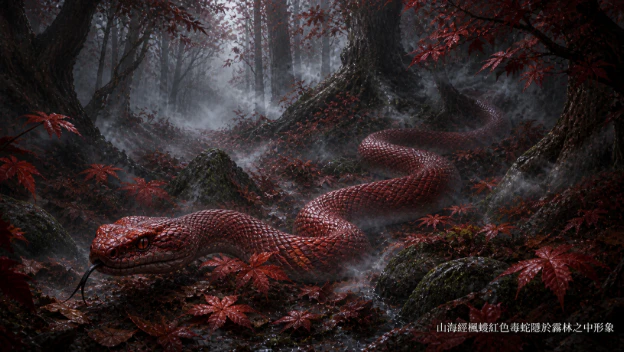
在《山海經》的奇異記載中,楓蝮是一種潛伏於山林之中的毒蛇,與霧氣與危險緊密相連。牠象徵隱藏的威脅與自然界不可預測的致命力量。
In the strange chronicles of the Shan Hai Jing, Fengfu is described as a venomous serpent dwelling within mountains and forests, closely tied to mist and danger. It represents hidden threats and the unpredictable lethality of nature.
中文
深山之中,古木參天,霧氣終年不散,行人一旦踏入,便難以辨清方向。林間寂靜無聲,連鳥鳴也罕見,彷彿這片土地本身拒絕一切外來之物。當地人稱此地為禁林,世代相傳其中潛伏著一種名為楓蝮的毒蛇。楓蝮體色暗紅如楓葉,身形修長卻充滿力量,行動無聲無息,幾乎與落葉與霧氣融為一體。據說牠不僅以毒聞名,更能釋放出淡淡的毒霧,使誤入其中的生物在不知不覺間失去方向與意識。曾有旅人誤入此林,初時只覺空氣微寒,視線逐漸模糊,腳步愈發沉重,直到倒地不起。當他被人發現時,周圍並無明顯傷痕,唯有空氣中殘留一絲淡淡的苦味。某年秋日,一隊獵人深入山中尋獵,誤闖禁林。落葉鋪滿地面,紅黃交錯,美麗卻令人不安。他們很快發現方向失常,無論如何行走,都似乎在原地打轉。霧氣漸濃,呼吸變得困難,耳邊開始出現低微的沙沙聲。起初無人察覺,直到其中一人忽然倒下,臉色蒼白,四肢僵硬。其餘人驚慌失措,試圖將他拖離,但四周景象不斷變換,彷彿森林本身在移動。就在此時,一道暗紅色的影子在霧中閃過,細長而迅捷。那便是楓蝮。牠並未急於攻擊,而是在霧中游走,觀察著獵物的掙扎。牠的存在幾乎無法被察覺,只有當危險降臨之際,才顯露出真正的形態。傳說楓蝮並非單純的毒蛇,而是山林之靈的化身,負責驅逐闖入禁地之人。牠的毒不只是肉體上的侵蝕,更是一種讓人迷失的力量。最終,僅有一名獵人成功逃出禁林。他回到村落時神情恍惚,語無倫次,只反覆提及霧、紅影與無聲的威脅。從此之後,村民更加敬畏那片山林,不再輕易踏入。楓蝮的傳說在口耳相傳中逐漸擴散,成為對未知與自然力量的警示。或許楓蝮從未主動尋人,而只是守護著某種界線,一旦越界,便無法回頭。在那片霧氣不散的山林深處,牠仍靜靜潛伏,與落葉與陰影融為一體,等待下一個不慎闖入者。
English Version
Deep within the mountains lies a forest that seems untouched by time, where towering trees block out the sky and a constant veil of mist clings to the earth. Few who enter return with clarity, and many never return at all. Locals speak in hushed tones of a creature that dwells there—a serpent known as Fengfu. Its body mirrors the deep crimson of autumn leaves, allowing it to vanish seamlessly into the forest floor. Silent and precise, it moves like a shadow woven into the mist itself. But it is not merely its venom that inspires fear. It is said that the creature can release a subtle, almost invisible haze, one that disorients and weakens those who breathe it. Victims rarely notice the danger until it is too late. A group of hunters once ventured too far into this forbidden place. At first, the forest appeared beautiful, with layers of red and gold leaves covering the ground. But the deeper they went, the stranger it became. Paths seemed to loop endlessly, and the air grew heavier with each step. Breathing became difficult, and a quiet rustling began to echo around them. One by one, unease turned into panic. When one of the hunters collapsed without warning, the others realized they were no longer in control. As they struggled to carry him, the forest seemed to shift, distorting their sense of direction. Then, through the fog, something moved—a flicker of dark red, swift and deliberate. It did not strike immediately. Instead, it circled, observing. The creature’s presence was almost intangible, revealed only through the growing tension in the air. Legends suggest that Fengfu is more than an animal—it is a guardian of the forest, a manifestation of nature’s will to protect its boundaries. Its venom does not simply harm the body; it clouds the mind, drawing victims deeper into confusion until escape becomes impossible. In the end, only one hunter found his way out. When he returned, he spoke in fragments, unable to fully explain what had happened. He remembered the mist, the shifting paths, and the feeling of being watched by something that never needed to be seen clearly. After that, the villagers avoided the forest entirely. The story of Fengfu spread, becoming a warning rather than a tale. Some believe the serpent does not seek to harm, but to defend. It marks a boundary between the known and the unknown, and those who cross it do so at their own risk. And somewhere within that endless mist, beneath layers of fallen leaves, the silent guardian still waits, unseen but ever present.