EP02 上環西港城:愛德華式建築與香港街市歷史的交匯|Western Market Sheung Wan: Edwardian Architecture and Market Heritage
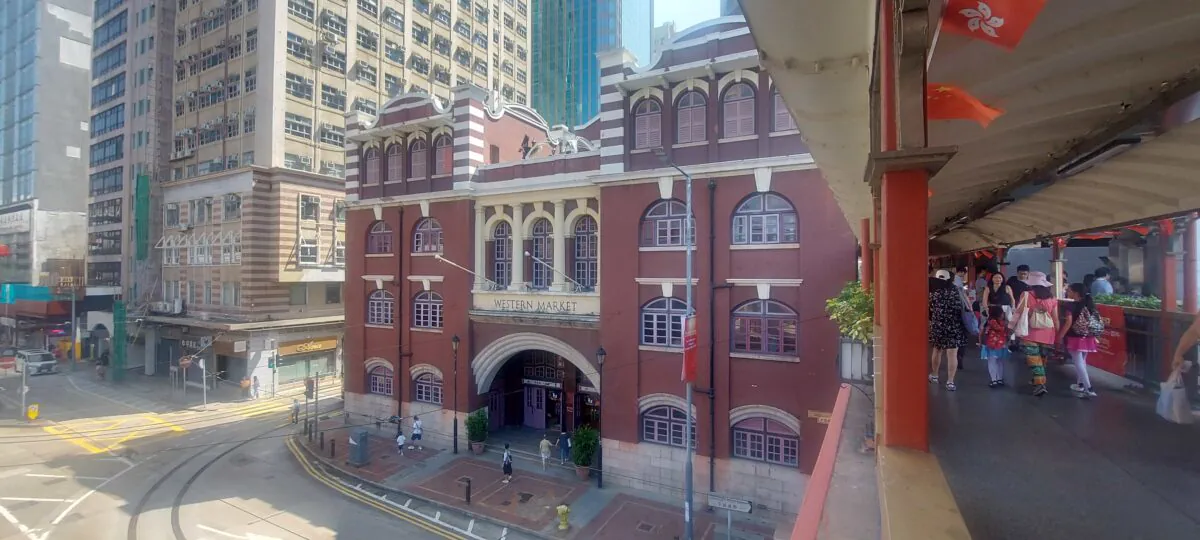
位於上環的西港城,是香港現存最具代表性的愛德華式建築之一。紅磚外牆與拱形窗戶,見證著昔日街市文化與殖民時期建築風格的融合,在現代城市中保留一段歷史記憶。
Western Market in Sheung Wan is one of Hong Kong’s most iconic Edwardian buildings. With its red-brick façade and arched windows, it reflects a blend of colonial architectural style and traditional market culture, preserving a vivid piece of the city’s history within a modern urban setting.

在香港的城市發展之中,上環一直是一個帶有濃厚歷史層次的地區,這裡既是早期開埠的重要據點,也是各種文化與商業活動交匯的場所。而位於德輔道西的西港城,正正是這段歷史的具體體現。當你站在建築面前,首先映入眼簾的是紅磚外牆與對稱的立面設計,這種風格源自愛德華時期的建築語言,強調比例、節奏與細節,與香港常見的現代玻璃幕牆形成強烈對比。西港城原本是街市的一部分,其歷史可以追溯至二十世紀初,當時香港正處於快速發展的階段,人口增加帶動了對食物與日用品的需求,街市成為城市生活的重要組成部分。建築不只是提供功能,更體現了一種城市秩序與公共空間的概念。走進西港城內部,可以感受到空間的開闊與結構的穩定,中央中庭設計讓自然光能夠進入室內,形成一種柔和的光影效果。鐵製欄杆與木質元素的結合,使整個空間既堅固又帶有溫度。雖然現時西港城已不再是傳統意義上的街市,但它仍然保留了一種商業與文化交織的氛圍。不同樓層的店舖與活動,使這裡成為一個既懷舊又現代的場所。從城市角度來看,西港城的存在提醒我們,建築不只是功能性的容器,更是時間的載體。它見證了香港從早期貿易港口到現代都市的轉變,也記錄了人們生活方式的變化。當周圍的建築不斷更新與重建時,西港城卻以相對穩定的姿態保留下來,成為一個可以讓人回望過去的窗口。

這種保留並不只是形式上的,而是一種文化記憶的延續。從細節來看,紅磚的紋理、窗戶的弧形設計,以及建築邊角的裝飾,都反映出當時工藝的講究與審美標準。這些元素在今日看來,或許不再是主流,但正因如此,它們更顯得珍貴。對於攝影者而言,西港城提供了豐富的構圖可能性。外立面的對稱性與節奏感,使畫面具有穩定的結構,而內部的光影變化則增加了層次與深度。不同時間的光線會帶來不同的效果,清晨時分光線較為柔和,適合捕捉建築細節;中午光線強烈,能夠突顯紅磚的質感;而傍晚則帶有一種溫暖的色調,使整個建築更具歷史感。當我們在快速變化的城市中生活,很容易忽略這些看似「舊」的建築,但正是這些空間,構成了城市的記憶與身份。西港城不只是上環的一個地標,更是一段關於香港如何成為今日模樣的故事。當你再次經過這裡,也許可以放慢腳步,抬頭看看那些紅磚與窗戶,思考它們曾經見過的時代與人群,或許會發現,城市的魅力並不只在於未來,也存在於這些被保留下來的過去之中。


English Version
Within the broader narrative of Hong Kong’s urban development, Sheung Wan stands as a district layered with history, where early colonial influences, trade activities, and local culture have intersected for generations, and Western Market serves as a tangible representation of this complex past. Located along Des Voeux Road West, the building immediately captures attention with its red-brick façade and symmetrical composition, a hallmark of Edwardian architectural style that emphasizes proportion, rhythm, and ornamental detail, offering a striking contrast to the glass and steel structures that dominate the modern cityscape. Originally constructed as part of the city’s market system in the early twentieth century, Western Market was designed not only to accommodate commercial activities but also to reflect a sense of order and civic organization, highlighting the importance of public space in an evolving urban environment. As Hong Kong’s population grew and its economy expanded, markets became essential nodes of daily life, connecting communities through trade and interaction. Entering the building, visitors encounter an interior defined by openness and structural clarity, with a central atrium that allows natural light to filter into the space, creating a soft interplay of light and shadow that enhances the architectural experience. The combination of iron railings and wooden elements contributes to a sense of durability while maintaining warmth, demonstrating the craftsmanship and material sensibility of the period. Although Western Market no longer functions as a traditional marketplace in the same way it once did, it continues to host a range of commercial and cultural activities, preserving a dynamic atmosphere that bridges past and present. From an urban perspective, the building serves as a reminder that architecture is not merely functional but also a repository of time, embodying the transitions that have shaped Hong Kong from a colonial trading port into a global metropolis. While surrounding structures have been replaced or transformed, Western Market remains relatively unchanged, offering a rare continuity that allows people to engage with the city’s historical layers in a direct and tangible way. This preservation is not only about maintaining a physical structure but also about sustaining cultural memory, as the building encapsulates stories of commerce, community, and everyday life across different eras. Examining the details more closely, one can observe the texture of the red bricks, the curvature of the windows, and the decorative elements along the edges, all of which reflect the aesthetic values and construction techniques of the time. These features may no longer align with contemporary architectural trends, but it is precisely this difference that gives them significance, highlighting the diversity of architectural expression within the city. For photographers, Western Market offers a rich visual environment, with its symmetrical façade providing strong compositional structure, while the interior light conditions introduce depth and variation. The changing light throughout the day transforms the building’s appearance, from the gentle illumination of morning to the intense contrasts of midday and the warm tones of evening, each revealing different aspects of its character. In a rapidly evolving urban landscape, it is easy to overlook buildings that appear old or outdated, yet these spaces play a crucial role in defining the identity of the city. Western Market is not simply a landmark in Sheung Wan but a narrative embedded within the urban fabric, telling the story of how Hong Kong has developed over time. The next time one passes by, it may be worth slowing down and looking more closely at the red bricks and arched windows, considering the generations of people and moments they have witnessed, and recognizing that the charm of a city lies not only in its future but also in the fragments of its past that continue to endure.