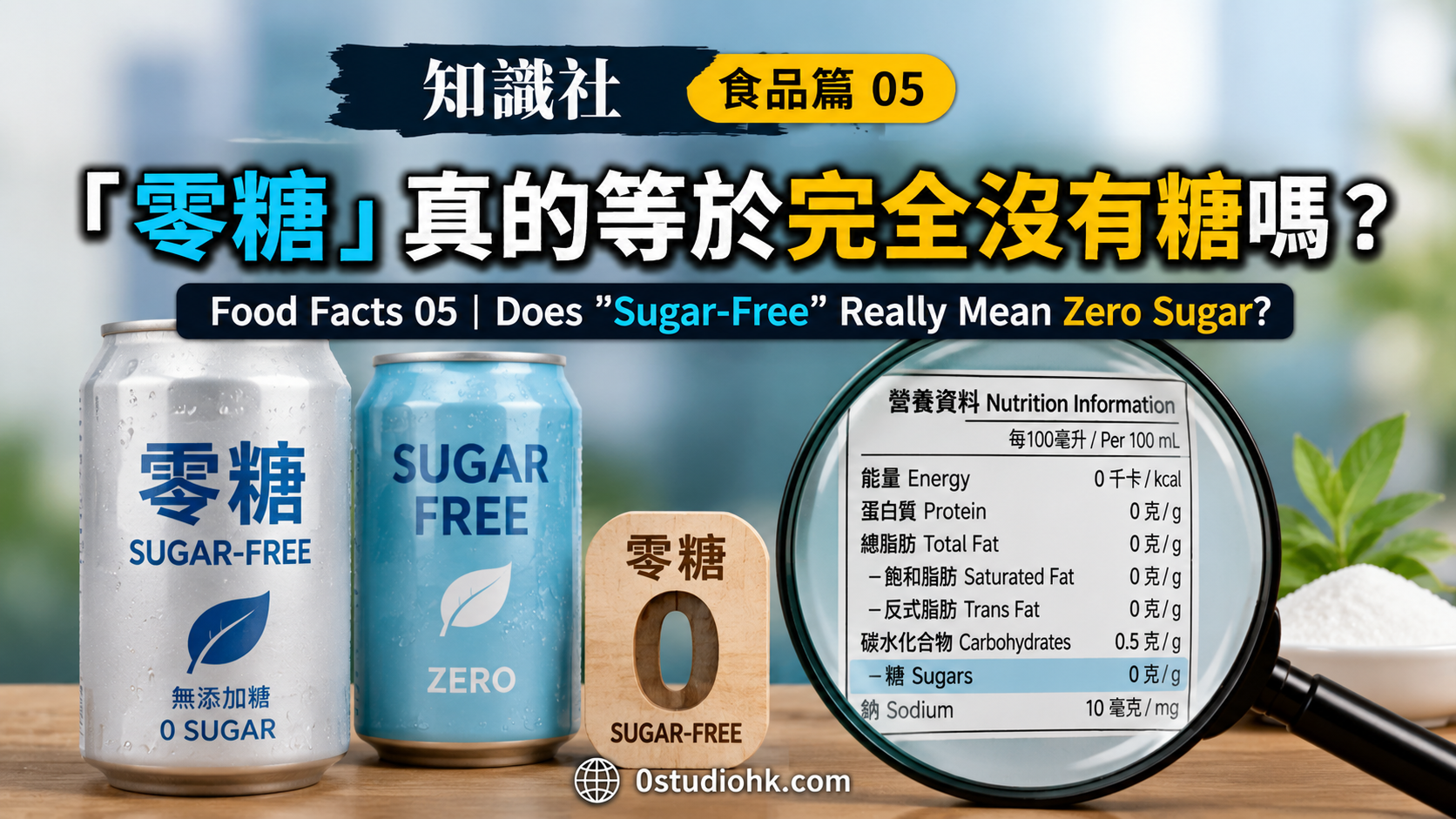
走進超市,「零糖」、「無糖」、「Zero Sugar」幾乎隨處可見。不少人認為,只要包裝寫上零糖,就代表完全沒有糖分,可以放心飲用。但事實真的是這樣嗎?原來,「零糖」並不一定代表絕對沒有糖,而是食品法規中的一種營養標示。
“Zero Sugar” has become one of the most common labels on modern beverages. Many people assume it means a drink contains absolutely no sugar. In reality, the label follows legal nutrition standards rather than a literal definition of zero.
中文版本
近年愈來愈多人關注健康,因此超市裡出現大量標示「零糖」、「無糖」或「Zero Sugar」的飲品。不少消費者看到這些字眼,便認為產品完全不含糖分,可以毫無顧慮地飲用。然而,食品包裝上的「零糖」並不一定代表真正的「零」。根據香港及世界多個地區的食品標示規定,「無糖」是一項具有法定標準的營養聲稱,而不是數學上的絕對零。以香港為例,每100毫升飲品只要糖分不超過0.5克,便可合法標示為「無糖」或「Zero Sugar」。換句話說,一瓶容量較大的零糖飲品,理論上仍可能含有極少量糖分,只是低於法例規定的標示上限,因此仍符合相關要求。既然如此,為什麼無糖汽水或無糖茶喝起來依然是甜的?原因在於它們大多使用代糖(甜味劑)來取代蔗糖,例如阿斯巴甜(Aspartame)、三氯蔗糖(Sucralose)、安賽蜜(Acesulfame K)及甜菊糖苷(Steviol Glycosides)等。這些甜味劑的甜度往往比蔗糖高出數百倍,只需極少用量便能產生足夠甜味,而且大多數幾乎不提供熱量,因此廣泛應用於低糖或無糖飲品。那麼,無糖飲品是否一定比含糖飲品健康?答案並沒有絕對。對於需要控制糖分攝取的人士,例如糖尿病患者或希望減少熱量攝取的人,無糖飲品確實可以成為較合適的選擇。不過,長期依賴高甜度飲品,仍可能讓味覺習慣偏向甜味,部分研究亦持續探討某些人工甜味劑與腸道微生物之間的關係。此外,即使沒有糖分,汽水仍可能含有碳酸、酸味劑或其他添加成分,過量飲用同樣未必理想。因此,「零糖」並不代表可以無限制飲用,而是一種幫助減少糖分攝取的食品設計。真正維持健康的關鍵,仍然是均衡飲食及適量飲用,而清水始終是最適合人體日常補充水分的選擇。
English Version
As people become more health-conscious, supermarket shelves are filling with beverages labeled “Zero Sugar,” “Sugar Free,” or “No Added Sugar.” These claims often create the impression that a product contains absolutely no sugar, but the reality is more nuanced. In many countries and regions, including Hong Kong, the term “Sugar Free” is defined by food labeling regulations rather than by a literal absence of sugar. Under Hong Kong’s nutrition labeling rules, a beverage may be labeled as sugar free if it contains no more than 0.5 grams of sugar per 100 milliliters. This means a large bottle could still contain a very small amount of sugar while legally meeting the standard. If that’s the case, why do sugar-free drinks still taste sweet? The answer lies in sweeteners that replace ordinary sugar. Ingredients such as aspartame, sucralose, acesulfame potassium, and steviol glycosides provide intense sweetness using only tiny amounts. Because many of these sweeteners contain little or no calories, they have become popular in low-sugar and sugar-free beverages. Does this automatically make sugar-free drinks healthier? Not necessarily. They can be helpful for people who need to reduce sugar intake or manage calorie consumption, but they are not a perfect substitute for water. Some researchers continue to study how frequent consumption of certain sweeteners may affect taste preferences or the balance of gut microorganisms. In addition, sugar-free soft drinks may still contain acids, carbonation, and other ingredients that should be consumed in moderation. Understanding what “Zero Sugar” actually means helps consumers make better choices. Rather than seeing it as a guarantee of perfect health, it is more accurate to view it as a regulated nutrition claim designed to reduce sugar intake while maintaining sweetness.
總評
中文
「零糖」並不代表完全沒有糖,而是符合食品法規的營養標示。了解標示背後的真正意思,比單純相信包裝文字,更能幫助我們作出健康的飲食選擇。
English
“Zero Sugar” is a regulated nutrition claim, not a promise of absolute zero sugar. Knowing the meaning behind the label allows consumers to make more informed and balanced dietary decisions.