
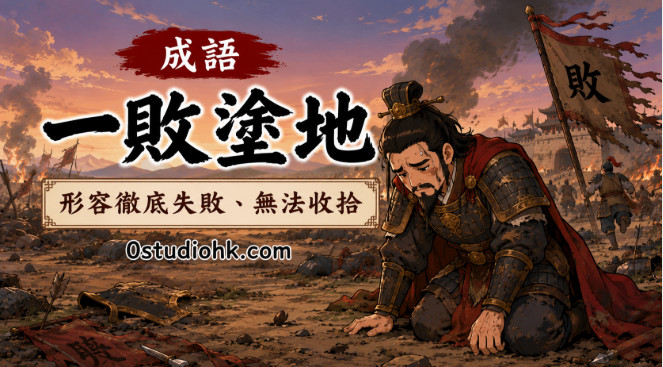
成語「一敗塗地」意思與典故:形容徹底失敗、無法收拾 |The Meaning of “Yi Bai Tu Di”: A Chinese Idiom for Complete Defeat
「一敗塗地」是中國廣為流傳的成語,用來形容遭遇徹底失敗,不僅失去優勢,也難以挽回局勢。它既可描述戰爭中的潰敗,也常用來比喻事業、競爭或人生遭受重大挫折,提醒人們勝敗乃人生常態,失敗亦是成長的一部分。
English Version
“Yi Bai Tu Di” is a classic Chinese idiom describing total defeat or overwhelming failure. It is often used to portray situations where someone loses completely and finds it difficult to recover, while also reminding us of the importance of resilience.
「一敗塗地」字面意思是「失敗得跌倒在地,滿身塵土」,比喻遭受極其嚴重的失敗,局勢完全崩潰,沒有還手之力。其中「塗地」原意是倒臥在地上,引申為狼狽不堪、敗局已定。這個成語最早見於古代史籍,後來逐漸成為形容戰爭失利、政治鬥爭失敗或競爭徹底落敗的重要詞語。古代將領若在戰場上兵敗如山倒,便可稱為「一敗塗地」;現代則廣泛運用於商業、市場競爭、體育賽事、考試以及人生各種挑戰。例如企業經營失誤、市場策略失敗,或球隊遭遇大比分落敗,都可以使用這個成語。不過,「一敗塗地」並不只是描述結果,更帶有警惕意味。它提醒人們,成功不能驕傲自滿,失敗也不能輕言放棄。許多歷史人物都曾經歷重大挫折,最終仍憑藉毅力重新站起來。因此,這個成語雖然形容失敗極為慘重,但並不代表人生就此結束,而是鼓勵人們從錯誤中吸取教訓,以更成熟的態度迎接下一次挑戰。
English Version
The idiom “Yi Bai Tu Di” literally means “to be defeated until one falls to the ground covered in dust.” It describes a crushing defeat in which a person, army, team, or organization loses completely and is left in a helpless position. Originally associated with military defeats recorded in ancient Chinese history, the phrase later expanded to include politics, business, sports, education, and everyday life. It often refers to situations where poor planning, unexpected circumstances, or overwhelming opposition result in complete failure. Despite its strong negative meaning, the idiom carries an important lesson rather than simply criticizing defeat. Chinese culture has long emphasized learning from setbacks, believing that failure can become the foundation for future success. Many historical leaders, inventors, scholars, and entrepreneurs experienced devastating losses before eventually achieving greatness. For this reason, “Yi Bai Tu Di” is frequently used not only to describe the outcome of an event but also to remind people of the consequences of overconfidence, poor preparation, or weak leadership. At the same time, it encourages perseverance, reflection, and improvement. A complete defeat does not necessarily mark the end of one’s journey; instead, it can become the beginning of valuable experience and renewed determination. This balanced perspective explains why the idiom remains meaningful in both traditional Chinese culture and modern society.
小故事:
從前有兩位年輕商人同時開設布莊。一位每天研究市場需求,仔細挑選布料品質,也耐心傾聽顧客意見;另一位則認為自己一定會成功,從不願接受他人的建議,還大量購買昂貴卻不受歡迎的布匹。不久後,市場風向改變,前者迅速調整商品,生意越來越興旺;後者卻堅持原來的做法,結果貨物堆滿倉庫,資金無法周轉,最後不得不關閉店鋪,可說是一敗塗地。許多人嘲笑他的失敗,但第一位商人卻主動伸出援手,邀請他一起重新經營。經歷這次挫折後,他終於明白,真正失敗的不是輸掉一次,而是拒絕改變。於是,他重新學習經營知識,虛心接受建議,幾年後再次開設自己的店鋪,這一次終於獲得成功。有人問他最大的收穫是什麼,他回答:「如果沒有那次一敗塗地,我永遠不會知道自己的不足。」從此,這個故事成為當地年輕商人常聽的勵志故事,也提醒大家失敗並不可怕,可怕的是失去重新站起來的勇氣。
English Version
Long ago, two young merchants opened textile shops in the same town. One carefully studied customer preferences, selected quality fabrics, and listened to every suggestion from his buyers. The other believed success was guaranteed and ignored all advice, purchasing expensive materials that few people wanted. As fashion trends changed, the first merchant quickly adjusted his inventory and continued to prosper. The second stubbornly refused to change. Soon, his warehouse was filled with unsold goods, his savings disappeared, and he was forced to close his business. His failure was complete. Many townspeople mocked him, believing his career had ended forever. Surprisingly, his former competitor offered encouragement instead of criticism. He shared business knowledge and invited the defeated merchant to learn alongside him. Humbled by his experience, the young man realized that failure itself was not the greatest problem—refusing to improve was. Over the following years, he studied management, listened carefully to experienced traders, and gradually rebuilt his confidence. Eventually, he opened another shop that became one of the town’s most respected businesses. When asked about the secret behind his later success, he smiled and replied, “Without that crushing defeat, I would never have discovered what I truly needed to learn.” His story reminded everyone that even complete failure can become the first step toward lasting success.
結語
「一敗塗地」雖然代表徹底失敗,但真正重要的是失敗之後如何重新出發。只要勇於反省、不斷學習,每一次挫折都可能成為下一次成功的重要基石,這也是這個成語留給後人的深刻啟示。
English Version
“Yi Bai Tu Di” teaches that complete defeat is not the end of the journey. Those who learn from failure, remain determined, and continue moving forward often transform their greatest setbacks into their greatest achievements.