
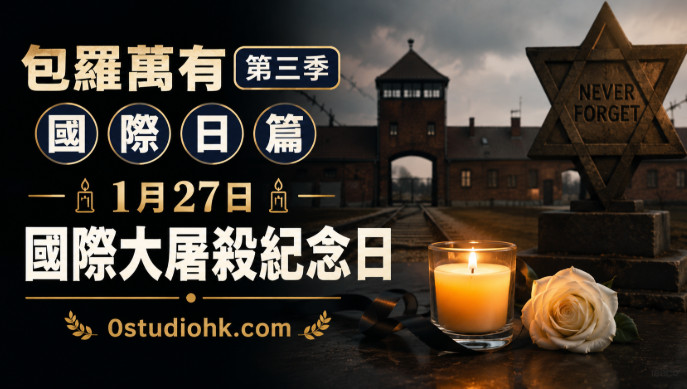
包羅萬有 Season 3|國際大屠殺紀念日|認識1月27日國際大屠殺紀念日的由來與歷史意義 International Holocaust Remembrance Day | Understanding January 27 and Its Historical Significance
每年1月27日是國際大屠殺紀念日,旨在悼念納粹大屠殺的數百萬名受害者,提醒世人銘記歷史、反對仇恨與歧視,共同守護和平、人權與尊嚴。
International Holocaust Remembrance Day is observed every year on January 27 to honor the millions of victims of the Holocaust and to encourage remembrance, education, and the protection of human dignity, peace, and human rights.
中文
1945年1月27日,位於波蘭的奧斯威辛-比克瑙集中營(Auschwitz-Birkenau)由蘇聯紅軍解放,世人首次親眼見證納粹德國在第二次世界大戰期間大規模迫害與屠殺猶太人的罪行。為了讓這段歷史永遠被記住,聯合國大會於2005年通過第60/7號決議,正式將每年1月27日定為國際大屠殺紀念日(International Holocaust Remembrance Day),呼籲全球各國透過教育、紀念及歷史研究,防止種族滅絕、反猶太主義、種族主義及各種形式的仇恨再次發生。大屠殺是二十世紀最黑暗的歷史事件之一。在1933年至1945年間,納粹政權系統性迫害猶太人,約有六百萬名猶太人遇害。此外,羅姆人、身心障礙人士、波蘭平民、蘇聯戰俘、同性戀者、政治異見人士及其他被視為「不受歡迎」的群體亦遭到迫害、監禁甚至殺害。集中營、滅絕營、強迫勞動營及大規模槍決,成為這段歷史的重要象徵。國際大屠殺紀念日並非只紀念受害者,更提醒世人認識仇恨言論、極端主義及歧視如何逐步演變成大規模暴行,因此歷史教育成為這個紀念日最重要的工作之一。世界各地博物館、學校、大學及研究機構會舉辦展覽、講座、紀錄片放映、證人分享及歷史課程,讓新一代了解歷史真相,避免悲劇重演。聯合國每年亦會圍繞不同主題舉辦紀念活動,探討歷史記憶、人權教育、反仇恨言論及維護民主等議題,希望透過國際合作推動包容、多元及和平文化。隨著倖存者逐漸凋零,保存口述歷史、文物及歷史檔案變得更加重要。數碼科技亦協助博物館建立虛擬展覽、電子資料庫及教育平台,使世界各地的人都能了解這段歷史。國際大屠殺紀念日同時提醒各國,尊重人權、法治及多元文化,是維護和平社會的重要基石。當社會能夠包容不同種族、宗教、文化及信仰,便能減少偏見與衝突。這一天不只是回顧過去,更是一項對未來的承諾,提醒每一代人以歷史為鑑,拒絕歧視、反對暴力,並共同守護人類共同擁有的自由、尊嚴與和平。
English Version
International Holocaust Remembrance Day is observed annually on January 27, marking the anniversary of the liberation of the Auschwitz-Birkenau concentration and extermination camp in occupied Poland by Soviet forces in 1945. In 2005, the United Nations General Assembly adopted Resolution 60/7, designating January 27 as a day to honor the victims of the Holocaust and to encourage education that helps prevent genocide, antisemitism, racism, and all forms of hatred. The Holocaust remains one of the darkest chapters in modern history. Between 1933 and 1945, Nazi Germany systematically persecuted and murdered approximately six million Jewish people. Millions of others—including Roma people, persons with disabilities, Polish civilians, Soviet prisoners of war, homosexual individuals, political opponents, and other targeted groups—were also imprisoned, exploited, or killed under Nazi rule. Concentration camps, extermination camps, forced labor facilities, and mass executions became symbols of an organized campaign of persecution and mass murder. International Holocaust Remembrance Day is not only a time to honor those who lost their lives but also an opportunity to examine how prejudice, discrimination, propaganda, and dehumanization can gradually develop into widespread violence. Education is therefore one of the central goals of the observance. Schools, universities, museums, memorial institutions, and research centers around the world organize exhibitions, educational programs, survivor testimonies, documentary screenings, and public discussions to help younger generations understand the historical facts and the consequences of intolerance. Each year, the United Nations highlights themes related to remembrance, human rights, historical preservation, and the fight against hate speech and discrimination. As the number of Holocaust survivors continues to decline, preserving testimonies, historical records, photographs, and archival materials has become increasingly important. Digital technology now enables museums and educational organizations to create virtual exhibitions and online resources that make this history accessible to people around the world. The observance also serves as a reminder that protecting democracy, the rule of law, and respect for human rights requires continuous effort. Societies that value diversity, encourage dialogue, and reject hatred are better equipped to prevent future atrocities. International Holocaust Remembrance Day is therefore not only about remembering the past but also about inspiring present and future generations to defend human dignity, oppose discrimination, and work together toward a more peaceful and just world.
總結(中文)
國際大屠殺紀念日提醒世界銘記歷史,尊重生命與人權,反對任何形式的仇恨、歧視及種族滅絕。唯有從歷史中學習,才能共同守護和平與人類尊嚴。
Summary (English)
International Holocaust Remembrance Day honors the victims of the Holocaust while encouraging education, remembrance, and the protection of human rights. Remembering history helps build a future founded on peace, dignity, and respect for all.