
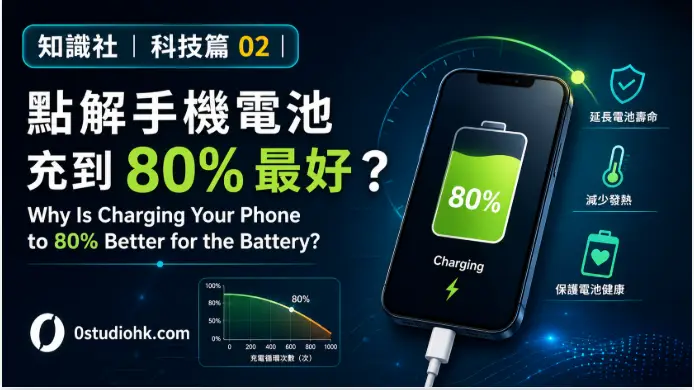
知識社|科技篇 02|點解手機電池充到 80% 最好? Why Is Charging Your Phone to 80% Better for the Battery?
近年不少手機都加入「80% 充電限制」功能,不少人都聽過「充到 80% 對電池最好」,但為什麼不是充到 100%?難道手機廠商不希望我們用盡電池容量嗎?答案其實與鋰電池的壽命有關。
Many modern smartphones now include an option to stop charging at 80%. While this may seem unusual, battery experts have long known that limiting the charge level can help extend the lifespan of lithium-ion batteries.
中文版本
現今幾乎所有智能手機都使用鋰離子電池(Lithium-ion Battery)。這種電池具有容量高、重量輕及可反覆充電等優點,因此廣泛應用於手機、手提電腦、平板電腦及電動車。不過,鋰電池並不是充得越滿越好。當電池由 20% 充至 80% 時,內部化學反應相對穩定,對電池造成的壓力較小;但當電量接近 100% 時,電池電壓會升至較高水平,內部材料承受更大負荷,長期維持在高電量狀態,會加快電池老化速度。同樣地,如果電池經常完全放電至接近 0%,亦會增加損耗。因此,不少研究都指出,讓鋰電池維持在約 20% 至 80% 的電量範圍,有助延長整體使用壽命。這也是近年不少品牌推出「最佳化充電」或「80% 充電限制」功能的原因。當系統偵測到用戶經常長時間插著充電,例如晚上睡覺時,便會暫停充電在約八成左右,待預計起床前才慢慢充滿,以減少電池長時間維持高電壓狀態。值得注意的是,充到 100% 並不會立即損壞電池。手機內部設有完善的電池管理系統(Battery Management System,簡稱 BMS),當顯示 100% 時,實際上仍保留一定安全緩衝,不會讓電池真正達到理論極限。因此,偶爾充滿電完全屬於正常使用方式,無需過分擔心。真正影響壽命的是長期每天都維持滿電、高溫或深度放電。除了充電比例,高溫亦是鋰電池最大的敵人。例如一邊快速充電、一邊玩大型遊戲或長時間拍攝影片,都可能令手機溫度急升,加速電池老化。因此,相比是否充到 100%,避免高溫往往更加重要。今天,不論是手機、平板電腦、手提電腦,甚至電動車,都開始採用更智能的充電管理方式,希望在日常使用與電池壽命之間取得平衡。對大部分人而言,如果每天都需要長時間使用手機,偶爾充滿至 100% 並沒有問題;但若經常長時間插著充電,啟用 80% 充電限制,確實有助延長電池健康度。
English Version
Nearly every modern smartphone uses a lithium-ion battery because it offers high energy density, light weight, and the ability to be recharged hundreds of times. However, lithium-ion batteries experience chemical stress when kept at very high or very low charge levels. Between roughly 20% and 80%, the battery operates under relatively moderate conditions. As the charge approaches 100%, the battery voltage rises, increasing stress on the internal materials. Keeping the battery fully charged for long periods can gradually accelerate chemical aging and reduce its maximum capacity over time. Completely draining the battery to nearly 0% on a regular basis can also shorten its lifespan. For this reason, many battery experts recommend keeping daily charging within the middle range whenever practical. This recommendation has led many smartphone manufacturers to introduce features such as Optimized Charging or an 80% Charge Limit. These systems learn a user’s charging habits and delay the final portion of charging until shortly before the device is expected to be unplugged. This reduces the amount of time the battery spends at its highest voltage. Importantly, charging a phone to 100% does not immediately damage the battery. Every smartphone includes a Battery Management System (BMS) that carefully controls charging and leaves a hidden safety buffer even when the display reads 100%. Occasional full charging is therefore perfectly normal. The real concern comes from repeatedly storing the battery at full charge, exposing it to high temperatures, or frequently allowing it to discharge completely. Heat is often an even greater enemy than charging percentage. Fast charging while playing demanding games or recording high-resolution video can significantly increase battery temperature and accelerate long-term wear. Today, smartphones, laptops, tablets, and even electric vehicles use increasingly intelligent charging systems designed to balance convenience with battery longevity. For most users, charging to 100% when needed is completely acceptable. However, if a device spends many hours connected to a charger every day, limiting the charge to around 80% can help preserve battery health over the long term.
總評
手機充到 80% 並不是因為廠商限制容量,而是希望減少鋰電池長時間承受高電壓壓力,延長電池壽命。真正保護電池的方法,不只是避免充滿,更重要的是避免長時間高溫使用。
Summary
Charging to around 80% helps reduce stress on lithium-ion batteries and may extend their lifespan. Combined with avoiding excessive heat, it is one of the most effective ways to maintain long-term battery health.