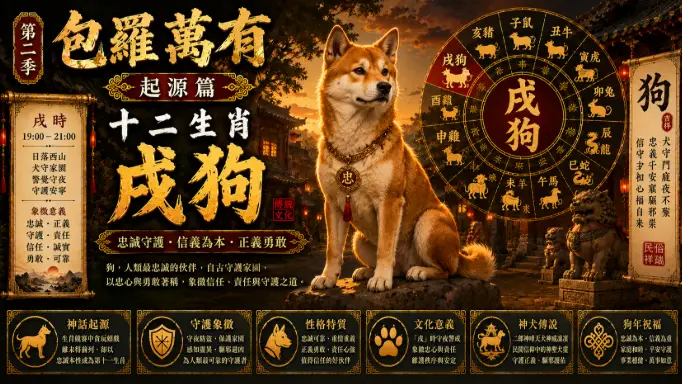
包羅萬有 第二季 起源篇|十二生肖 戌狗的忠誠精神與守護文化 | Origins Series Season 2 | The Dog in the Chinese Zodiac and the Spirit of Loyalty
戌狗在十二生肖中象徵忠誠、守護與正義精神。從古代村落守夜到民間信仰文化,狗一直是人類最親近的伙伴,也代表信任與真誠的重要價值。
The Dog symbolizes loyalty, protection, and honesty in the Chinese Zodiac. From guarding ancient villages to becoming humanity’s closest companion, the Dog has long represented trust, devotion, and moral courage in Chinese culture.
中文版本
戌狗是十二生肖中的第十一位,在中國文化中象徵忠誠、正義與守護精神。自古以來,狗與人類關係極為密切,不論看守家園、協助狩獵還是陪伴生活,狗一直是最可靠的伙伴之一。因此在華人社會裡,狗不只是家畜,更被視為忠心與誠信的重要象徵。關於生肖狗的起源,民間流傳玉皇大帝舉辦生肖競賽的故事。傳說中,狗原本速度極快,有能力取得更高名次,但因途中貪玩下水嬉戲,最終稍微延誤,成為第十一位生肖。雖然名次不算前列,但狗忠誠坦率的性格依然深受人們喜愛,也讓戌狗逐漸成為守護與誠實精神的代表。在中國古代社會裡,狗的重要性極高。農村村落常利用狗守夜防盜,而獵犬更是古代狩獵文化的重要助手。古人相信狗具有敏銳感知能力,甚至能察覺邪氣與危險,因此民間亦流傳大量與狗驅邪守宅相關的傳說。在部分地區,人們會擺放石狗或狗形圖騰,希望保護家宅平安。狗因此逐漸成為辟邪與守護文化的重要象徵。十二地支中的「戌」,對應晚上七時至九時。古人認為這段時間天色逐漸昏暗,而狗開始提高警覺看守家園,因此將狗與戌時結合。戌時同時象徵夜晚開始與防備狀態,因此狗也帶有警覺、忠心與責任感的文化意義。這種安排反映古代中國人對生活節奏與動物習性的細緻觀察。隨着生肖文化發展,戌狗逐漸形成鮮明性格象徵。民間普遍認為屬狗的人誠實可靠、重視道義,而且對朋友與家人極具責任感。他們通常富有正義感,願意保護弱小,同時待人真誠,不喜虛假。雖然有時顯得過於固執或敏感,但也因此更容易獲得別人信任。這些生肖性格觀念雖然屬於傳統民俗,但多年來已深深融入華人文化與社會價值觀之中。狗在中國藝術與民間文化中的形象亦十分豐富。古代年畫、陶器與石雕中經常出現狗的形象,象徵守護與平安。在部分神話與民俗故事裡,神犬更擁有超自然力量,例如二郎神身旁的哮天犬,便是中國神話中最著名的神犬之一。這些故事讓狗的形象不只停留於現實世界,也進一步進入神話與信仰層面。除了中國以外,狗文化在世界各地同樣具有重要地位。無論東方或西方,狗都被視為忠誠與友情象徵,因此每逢狗年,各地都會推出大量與狗相關的新年裝飾、藝術作品與賀年商品,象徵幸福、守護與好運。今天的戌狗,早已超越普通生肖動物本身。牠代表人類對忠誠、友情與安全感的追求,也象徵東方文化中重視責任與信義的精神。從古代村落文明到現代家庭生活,狗依然是華人世界中最溫暖而最值得信賴的傳統象徵之一。
English Version
The Dog is the eleventh animal in the Chinese Zodiac and has long symbolized loyalty, honesty, justice, and protection in Chinese culture. Throughout history, dogs played an essential role in human society as guardians, hunting companions, and trusted friends. Because of their devotion and reliability, dogs gradually became powerful cultural symbols representing trust, faithfulness, and moral integrity. In many traditional communities, the Dog was regarded not merely as a domestic animal, but as a loyal protector deeply connected to human life and security. According to the famous zodiac legend, the Jade Emperor organized a race to determine the order of the zodiac animals. The Dog, known for its speed and energy, was expected to finish near the front. However, along the journey, the Dog became distracted and stopped to play in the water, delaying its arrival and ultimately earning the eleventh position in the zodiac cycle. Although the Dog did not achieve a leading rank, its sincere and loyal nature remained admired by generations of people, reinforcing its symbolic association with honesty and guardianship. In ancient Chinese villages, dogs were highly valued for protecting homes and farmland from thieves and wild animals. Hunting dogs also played important roles in survival and food gathering during earlier historical periods. Because dogs possess strong senses and heightened awareness, ancient people believed they could detect danger, evil spirits, or supernatural threats before humans could. As a result, many folk traditions connected dogs with spiritual protection and household safety. Stone dog statues and dog-shaped charms were sometimes placed near entrances to guard families against misfortune and harmful influences. Within the traditional Earthly Branch system, the Dog corresponds to the branch “Xu,” representing the hours between 7 p.m. and 9 p.m. Ancient observers associated this time with growing darkness and the beginning of nighttime vigilance, when dogs naturally became alert while guarding homes and villages. This symbolic connection reflects how Chinese culture linked animal behavior with timekeeping, philosophy, and everyday life. The Dog therefore became associated with responsibility, awareness, and dependable protection. Over centuries, the Dog also developed strong personality symbolism within zodiac traditions. People born in the Year of the Dog are commonly believed to be loyal, honest, dependable, and deeply protective of family and friends. They are often admired for their strong sense of justice and willingness to defend others against unfairness. Dog personalities are frequently described as sincere and trustworthy, although they may sometimes appear overly cautious or emotionally sensitive. While these interpretations belong to traditional folklore rather than science, they continue to shape social values and cultural identity in many Chinese communities today. Dogs also hold an important place in Chinese mythology, art, and storytelling traditions. Ancient ceramics, folk paintings, and temple carvings often portrayed dogs as symbols of safety and blessing. In Chinese mythology, divine dogs sometimes possessed supernatural powers. One of the most famous examples is Xiaotianquan, the heavenly hound accompanying the warrior deity Erlang Shen. Such legends elevated the Dog beyond the ordinary world and transformed it into a sacred figure connected to courage and spiritual protection. Beyond China, dogs are universally recognized across cultures as symbols of loyalty and companionship. During the Year of the Dog, festive decorations, cultural performances, and artistic designs celebrating dogs appear throughout many communities, representing happiness, friendship, protection, and good fortune. Today, the Dog represents far more than a zodiac animal. It embodies humanity’s longing for trust, emotional connection, security, and unwavering loyalty. From ancient village life to modern family culture, the Dog continues to stand as one of the most beloved and dependable symbols in Chinese civilization.