成語「一字千金」的意思與典故:形容文字極其珍貴 | The Meaning of “Yi Zi Qian Jin”: Words Worth a Thousand Gold Pieces
「一字千金」是中國流傳已久的經典成語,用來形容文字極具價值,內容精彩而難得。這個成語不僅代表文采卓越,也象徵真正好的作品能影響人心、流傳後世,因此至今仍常被用於文學、寫作與文化評論之中。
“Yi Zi Qian Jin” is a famous Chinese idiom describing words so valuable that even a single character is worth a thousand pieces of gold. It praises exceptional writing, wisdom, and language powerful enough to inspire generations.
意思
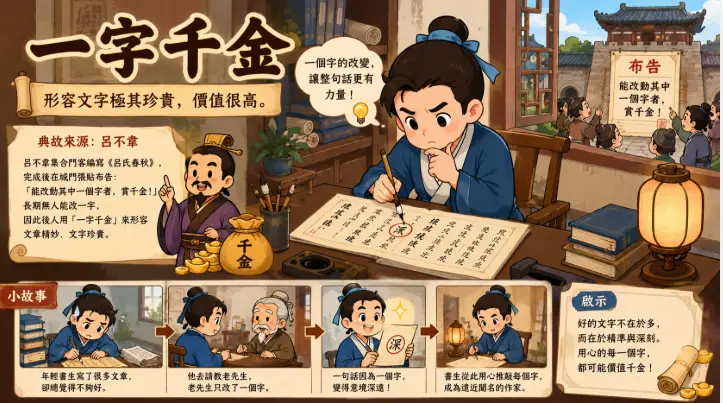
「一字千金」字面意思是一個字價值千金,用來形容文章精妙、文字珍貴,也比喻一句話極有價值。這個成語源自中國戰國時代,與著名人物呂不韋有關。相傳呂不韋集合門客編寫《呂氏春秋》,完成後將內容公開張貼於城門,並宣稱若有人能修改其中任何一字,便賞賜千金。由於作品內容嚴謹、文采出色,長時間無人能改,因此後世便以「一字千金」形容文章優秀到難以增減。這個成語除了稱讚文學才能,也反映古人對文字與知識的重視。在中國文化中,文字不只是紀錄工具,更代表思想、智慧與精神,因此真正有力量的內容往往被視為珍寶。現代社會裡,「一字千金」仍然十分常見,例如形容作家文筆深刻、演講內容發人深省,或一句忠告改變人生方向時,都可以使用這個成語。有時候它也用來提醒人們說話要謹慎,因為有價值的語言不在於數量,而在於是否能觸動人心。相比華麗卻空洞的言語,「一字千金」更強調內容的深度與影響力。這個成語歷經千年仍廣泛流傳,正因它準確表達了文字真正珍貴之處,也讓人理解好作品往往需要長久思考與累積才能誕生。
English Version
The idiom “Yi Zi Qian Jin” literally means “one character worth a thousand pieces of gold.” It is used to praise writing or speech of extraordinary value and quality. The phrase originated during China’s Warring States period and is closely connected to Lü Buwei, an influential statesman and scholar. According to legend, Lü Buwei gathered many learned scholars to compile a great work known as Lüshi Chunqiu. When the book was completed, it was displayed publicly at the city gate along with a bold announcement: anyone who could improve or change even a single character would receive a reward of one thousand gold pieces. Because the text was considered so refined and carefully written, no one successfully altered it. From this story came the idiom “Yi Zi Qian Jin,” which later became a symbol of exceptional writing and meaningful expression. In Chinese culture, words have long been regarded as carriers of wisdom, morality, and history. Therefore, language that can inspire thought or preserve important ideas is seen as priceless. Today, the idiom is still widely used to describe outstanding literature, memorable speeches, or advice with deep impact. It also reminds people that meaningful communication is not about speaking more, but about choosing the right words. A carefully crafted sentence can sometimes influence a person more than pages of empty language. Because of this lasting idea, the expression continues to appear in education, literature, journalism, and cultural discussions. “Yi Zi Qian Jin” remains one of the most respected compliments for writers and thinkers in the Chinese-speaking world.
小故事:
古代有一位年輕書生,非常喜歡寫文章。他每天都在河邊的大樹下讀書,夢想有朝一日能成為知名文人。雖然他才華不錯,但總急於完成作品,常常寫得又快又多,卻缺乏真正打動人心的力量。有一天,他帶著自己厚厚一疊文章去拜訪城中一位老先生。老先生看完後沒有責罵,只輕輕問他:「你最滿意的是哪一句?」書生愣住了,竟一時答不上來。老先生於是拿起筆,在其中一句旁邊改了一個字。原本平淡的句子,忽然變得意境深遠,情感也更加鮮明。書生反覆閱讀後大受震撼,終於明白真正好的文字,不在於寫得多,而在於是否精準有力。從那天開始,他不再追求快速完成,而是認真推敲每一個字詞。有時為了一句話,他甚至整夜無法入睡,只為找到最合適的表達。幾年後,這位書生成為遠近聞名的作家。有人問他成功的秘訣,他微笑回答:「一句真正能留在人心中的話,便是一字千金。」後來這句話也逐漸流傳開來,成為人們稱讚優秀文章的重要成語。
English Version
Long ago, there was a young scholar who dreamed of becoming a famous writer. Every day, he sat beneath a large tree beside the river, reading books and filling pages with essays and poems. He wrote quickly and produced many works, believing that quantity alone would bring recognition. Although his writing was elegant, readers often forgot his words soon after reading them. One day, he visited an elderly teacher respected throughout the city for his wisdom. The scholar proudly presented a thick stack of manuscripts and waited eagerly for praise. After reading quietly for a long time, the old teacher looked up and asked, “Which sentence do you value the most?” The young man froze. Despite writing hundreds of pages, he could not think of a single unforgettable line. The teacher smiled gently and used a brush to replace just one character in a sentence. Instantly, the entire meaning changed. The line became vivid, emotional, and powerful. The scholar reread it repeatedly in amazement. At that moment, he realized that true writing is not measured by length, but by precision and depth. From then on, he slowed down his work and carefully considered every word. Sometimes he spent hours searching for the perfect phrase, believing that language carried weight beyond appearance. Years later, he became a respected author whose essays were copied and studied everywhere. When people asked him the secret behind his success, he replied, “A single meaningful word can be worth a thousand pieces of gold.” Over time, this idea spread widely and became connected with the idiom “Yi Zi Qian Jin,” praising words that possess lasting value and wisdom.
結語
「一字千金」流傳至今,不只是稱讚文采優秀,更提醒人們珍惜文字的力量。真正有價值的語言,往往能穿越時間,影響人心。無論寫作或說話,用心選擇每一個字,都可能成為改變他人的重要力量。
English Version
“Yi Zi Qian Jin” continues to remind people that words carry tremendous power. Meaningful language can inspire, guide, and endure across generations. Whether in writing or daily conversation, carefully chosen words often leave the deepest impact.