
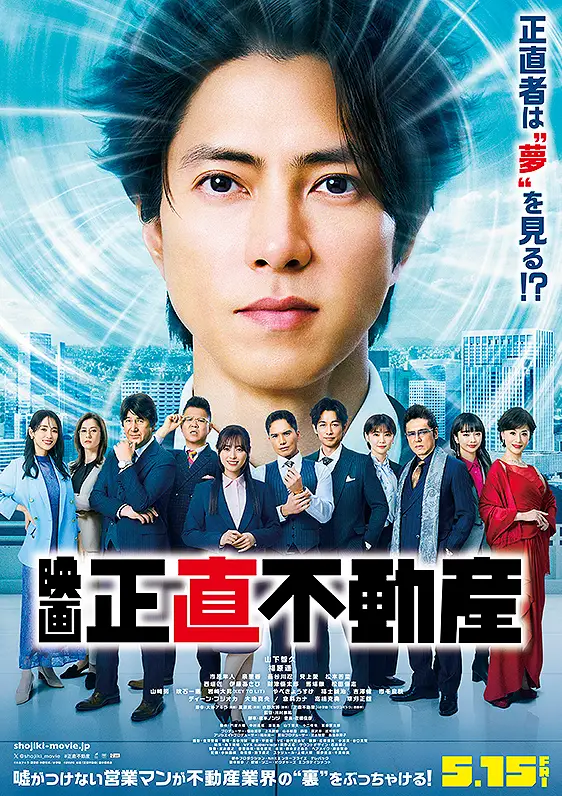
《映画 正直不動産》是人氣日劇《正直不動産》系列的電影版,由川村泰祐執導,改編自連載於《Big Comic》的同名漫畫。作品延續電視劇的核心設定,描繪一名因詛咒而無法說謊的不動產業務員,在充滿利益與欺瞞的房地產世界中艱難求生。電影在輕鬆幽默的節奏之中,結合職場喜劇、社會諷刺與人性成長,透過「誠實」這件看似簡單卻困難的事,重新思考現代社會中的信任與價值。
Directed by 川村泰祐, Honest Real Estate is the theatrical continuation of the popular Japanese television drama based on the manga serialized in Big Comic. Expanding upon the series’ unique premise, the film follows a real estate salesman cursed with the inability to lie, forcing him to survive in an industry built on negotiation, manipulation, and hidden agendas. Combining workplace comedy, social satire, and personal growth, the movie explores the surprising power of honesty within a society driven by ambition and profit.
電影內容
《映画 正直不動産》的主角永瀬財地原本是不動產公司「登坂不動産」的王牌業務員。他擅長推銷、懂得操控客戶心理,也習慣以漂亮話術成交。然而一次地鎮祭意外中,他破壞了祠堂,因此受到詛咒,從此再也無法說謊。對於一個靠口才與包裝生存的業務員而言,這種體質幾乎等同災難。永瀬開始不由自主地把房屋缺點、投資風險與真實想法全部說出口,結果經常讓客戶震驚,也令自己陷入各種職場危機。電影延續電視劇中的喜劇風格,但規模與議題更加擴大。永瀬除了繼續與同事競爭升職機會外,也被捲入大型房地產投資騙局、舊契約糾紛與土地開發問題之中。對手不只是同行競爭,更包括利用資訊不對等與人性貪念操控市場的不法勢力。電影中的不動產世界被描繪成充滿利益交換與心理戰的地方,每個人都試圖隱藏真相,只追求最大利益。永瀬的「無法說謊」因此顯得既荒謬又危險。作品最大的魅力,在於它利用誇張設定反映真實社會問題。房地產本來就是與人生密切相關的行業,人們對房子往往抱有夢想與焦慮,因此資訊不透明與業務話術很容易影響判斷。電影透過永瀬的誠實,揭露不動產業界中的灰色地帶,包括誇大宣傳、投資陷阱與利益操作。雖然帶有喜劇色彩,但其實隱含對現代資本社會與商業倫理的批判。永瀬這個角色也在故事中持續成長。過去的他只重視業績與物質成功,希望開名車、住高級塔樓,但隨著無法說謊,他開始真正理解客戶需求與工作的本質。誠實雖然讓他吃虧,卻也讓他逐漸獲得別人的信任。這種轉變讓電影不只是單純職場喜劇,更是一部關於價值觀與人生態度的成長故事。電影中的搭檔月下咲良則延續系列中的溫暖與正義感,成為永瀬的重要支撐。她與永瀬之間的互動既有喜劇節奏,也帶有某種理想與現實之間的平衡。演員山下智久成功延續角色魅力,把永瀬在誠實與現實衝突中的狼狽與成長演得極具親和力,而福原遥則為作品增添明亮與溫柔氣氛。電影同時保留日劇版的節奏感與娛樂性,大量誇張場面與內心吐槽令整體觀感輕快有趣,但背後其實隱藏對「誠實是否能在現代社會生存」的深層提問。《映画 正直不動産》不只是漫畫改編娛樂作品,更是一部透過幽默方式重新思考信任與道德的現代職場電影。它讓觀眾在笑聲之中感受到現實社會的複雜,也提醒人們真正重要的或許並不是利益,而是面對他人時仍願意保持真誠的勇氣。
English Version
Honest Real Estate follows Nagase Saichi, once the star salesman of Tosaka Real Estate, a company operating within the highly competitive world of property sales and development. Before the events of the story, Nagase was known for his smooth talk, persuasive tactics, and ability to close deals through carefully crafted sales language. However, everything changes after he accidentally destroys a sacred shrine during a ceremonial event and becomes cursed with the inability to lie. Suddenly incapable of hiding inconvenient truths, Nagase blurts out everything customers are never supposed to hear — structural flaws, overpriced investments, hidden risks, and even his own personal thoughts. In an industry built around negotiation and strategic persuasion, this condition becomes both humiliating and professionally disastrous. The film expands upon the comedic foundation of the television drama while introducing larger-scale conflicts involving fraudulent overseas investments, complicated land development schemes, contract disputes, and aggressive real-estate manipulation. Nagase finds himself confronting not only rival companies but also larger systems driven by greed, deception, and exploitation. The real-estate world portrayed in the film is one where appearances matter more than truth and where information imbalance allows powerful individuals to manipulate ordinary people chasing dreams of wealth or security. Nagase’s forced honesty therefore becomes both absurdly funny and unexpectedly revolutionary. One of the film’s greatest strengths is the way it uses exaggerated comedy to reflect genuine social issues. Housing and property are deeply connected to people’s hopes, anxieties, and future stability, making the real-estate business particularly vulnerable to misleading promises and unethical behavior. Through Nagase’s inability to lie, the film exposes the darker side of the industry, including deceptive advertising, investment scams, and morally questionable business practices. Beneath the humor lies a clear critique of modern capitalism and the way profit can overshadow human trust. Nagase himself undergoes significant emotional growth throughout the story. Initially motivated by status, wealth, luxury cars, and high-rise apartments, he gradually begins understanding what his clients truly need and what meaningful work actually means. Ironically, the honesty that once ruined his career slowly becomes the reason people begin trusting him. This transformation gives the film emotional depth beyond its comedic premise, turning it into a story about integrity, self-worth, and personal change. His colleague and partner Tsukishita Sakura continues to serve as an emotional counterbalance within the narrative, bringing warmth, sincerity, and moral clarity to the chaotic situations surrounding Nagase. The chemistry between 山下智久 and 福原遥 remains one of the film’s central charms, blending humor with genuine emotional connection. Director Yasuyuki Kawamura preserves the energetic style and comedic pacing of the television series while allowing the movie to explore broader ethical questions. Over-the-top reactions, internal monologues, and fast-paced comedic sequences keep the tone entertaining, yet beneath the laughter lies a surprisingly thoughtful question: can honesty truly survive in a modern society driven by competition and self-interest? Honest Real Estate ultimately becomes more than a workplace comedy or manga adaptation. It is a reflection on trust, morality, and the courage required to remain truthful in a world where deception is often rewarded.
影片簡介(預告片/片段)
一名無法說謊的不動產業務員,在利益世界中展開誠實大作戰。
A workplace comedy about a salesman cursed with brutal honesty in the real-estate industry.
電影資料
導演:川村泰祐
類型:喜劇、職場、劇情、日本電影
製片公司:日本電影製作
上映年份:2020年代
主要演員
山下智久
福原遥
市原隼人
Dean Fujioka
黒谷友香
總結
《映画 正直不動産》透過誇張而有趣的設定,描繪誠實在現代商業社會中的價值與困難。電影在輕鬆幽默之中,帶出對職場倫理與人際信任的思考,也讓角色在一次次衝突中重新理解工作的真正意義。
Honest Real Estate is an entertaining yet surprisingly thoughtful workplace comedy that transforms honesty into both a curse and a source of personal growth. Through humor and social satire, the film explores trust, ethics, and the challenge of staying sincere in a competitive modern world.