
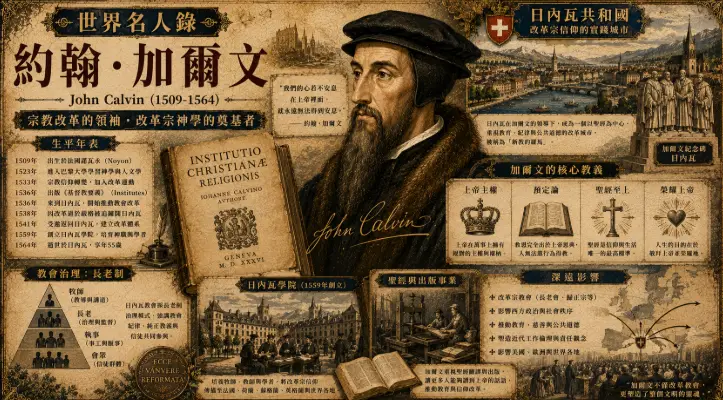
約翰·加爾文與日內瓦共和國:宗教改革時代的神學改革者 | John Calvin and the Republic of Geneva: The Reformer Who Reshaped Protestant Christianity | 世界名人錄
約翰·加爾文是宗教改革時代最具影響力的神學家之一,他在日內瓦建立改革宗體系,深刻改變歐洲宗教、政治與教育發展,也讓日內瓦共和國成為新教世界的重要中心。
John Calvin became one of the most influential leaders of the Protestant Reformation through his theology, discipline, and vision of church reform. From Geneva, his ideas spread across Europe and reshaped the future of Christianity and Western society.
中文版本
約翰·加爾文出生於1509年的法國努瓦永,當時歐洲正處於巨大變動的前夕。文藝復興思想逐漸興起,人文主義開始挑戰中世紀傳統,而羅馬天主教會內部也因腐敗與權力問題受到越來越多批評。加爾文的父親原本希望他成為神職人員,因此安排他接受拉丁文與神學教育。年輕時的加爾文聰明而勤奮,對古典文學、法律與哲學均有深厚興趣。他後來前往巴黎與奧爾良學習,受到人文主義學者影響,開始重視原始經文與理性思考的重要性。十六世紀初,馬丁·路德發起宗教改革,整個歐洲開始進入信仰與政治劇烈衝突時代。加爾文最初並非激進改革者,但隨著對《聖經》與教會制度深入研究,他逐漸認為羅馬教廷已偏離基督教原始精神。約1533年前後,加爾文經歷宗教思想轉變,正式投入改革運動。由於法國當局開始鎮壓新教思想,他被迫離開家鄉,展開長期流亡生活。1536年,加爾文出版《基督教要義》,這本著作後來成為新教歷史上最重要的神學作品之一。他以清晰而嚴密的方式整理基督教改革思想,主張人類得救完全依靠上帝恩典,而非教會儀式或個人功德。《基督教要義》不僅奠定改革宗神學基礎,也使加爾文迅速成為歐洲最重要的新教思想家之一。同年,他前往瑞士途中經過日內瓦,原本只打算短暫停留,卻被當地改革者法雷爾強力挽留,希望他協助建立新教城市。日內瓦共和國當時剛擺脫薩伏依公國與天主教勢力影響,正試圖建立新的宗教與政治秩序。加爾文很快開始推動改革,包括重新組織教會制度、加強道德紀律與規範公共生活。然而,他嚴格的改革措施最初引起部分市民反感,最終遭到放逐。離開日內瓦期間,加爾文前往史特拉斯堡,在當地繼續講道與研究,也進一步完善自己的神學思想。1541年,日內瓦政府再次邀請他返回,因為城市內部政治與宗教局勢混亂,需要強而有力的領導者。回到日內瓦後,加爾文建立更完整的改革制度。他推動長老制教會管理模式,並成立宗教法庭監督市民行為,包括禁止酗酒、賭博與奢華生活。他認為真正的信仰應體現在日常紀律與道德之中。這種嚴格治理方式使日內瓦獲得「新教羅馬」之稱,同時也引發不少爭議。加爾文最具代表性的神學觀點之一,是「預定論」。他主張人類得救與否完全由上帝預先決定,而非個人努力所能改變。這種思想強調上帝絕對主權,也成為改革宗神學核心之一。雖然預定論長期引發爭論,但它對後來歐洲新教倫理、工作觀與資本主義發展產生深遠影響。德國社會學家韋伯甚至認為,加爾文主義與近代資本主義精神之間存在重要關聯。除了神學改革外,加爾文也高度重視教育與知識傳播。他於1559年創立日內瓦學院,培養大量新教牧師與學者。這些學生後來前往法國、荷蘭、蘇格蘭與英格蘭傳播改革宗思想,使加爾文主義逐漸成為歐洲最重要的新教流派之一。蘇格蘭長老教會、荷蘭改革宗教會以及部分清教徒運動,都深受加爾文思想影響。加爾文晚年健康逐漸惡化,但仍持續寫作與講道。他一生極度勤奮,留下大量神學著作、講章與書信。1564年,約翰·加爾文於日內瓦逝世,享年54歲。根據他的要求,墓地保持簡樸,避免個人崇拜。然而,他對世界歷史的影響卻極為深遠。歷史學家普遍認為,加爾文不只是宗教改革者,更是改變西方政治、教育與社會文化的重要思想家。他將日內瓦共和國塑造成新教世界核心,也讓改革宗思想從歐洲擴展至全球。即使數百年後,關於信仰、道德、自由與社會責任的討論,仍能看見加爾文主義留下的重要影響。
English Version
John Calvin was born in 1509 in Noyon, France, during a period of profound transformation in European history. Renaissance humanism was reshaping intellectual life, while criticism of the Roman Catholic Church continued to grow across the continent. Calvin’s father intended for him to enter the clergy, so he received a rigorous education in Latin, theology, philosophy, and classical literature. As a young scholar, Calvin studied in Paris and later pursued legal training in Orléans and Bourges. These studies exposed him to humanist methods that emphasized returning to original texts and examining scripture through careful analysis and reason. During Calvin’s youth, Martin Luther’s challenge to the Catholic Church had already ignited the Protestant Reformation. Europe was becoming increasingly divided by religious conflict, political instability, and debates over church authority. Although Calvin initially focused on academic pursuits, he gradually embraced reformist ideas after studying the Bible and the writings of early Christian thinkers. Around 1533, he experienced a significant religious conversion that redirected his life toward Protestant reform. Because French authorities began persecuting supporters of reform movements, Calvin was forced to flee his homeland and live in exile. In 1536, Calvin published the first edition of “Institutes of the Christian Religion,” a work that would become one of the most influential texts of Protestant theology. Written with remarkable clarity and intellectual discipline, the book explained central reformist doctrines and argued that salvation depended entirely on God’s grace rather than church rituals or human effort. The “Institutes” quickly established Calvin as one of the leading theological voices of the Reformation. That same year, Calvin traveled through Switzerland and stopped in Geneva, a city that had recently broken away from the influence of the Catholic Duchy of Savoy. Reform preacher Guillaume Farel persuaded Calvin to remain in Geneva and help build a Protestant society. Calvin began reorganizing the church, introducing stricter moral discipline and new systems of religious governance. His reforms, however, proved controversial among some citizens who resisted his strict standards. Tensions eventually forced Calvin into temporary exile. During his years away from Geneva, Calvin settled in Strasbourg, where he continued preaching, writing, and refining his theological ideas. In 1541, Geneva’s leaders invited him back, believing the city needed stronger leadership to stabilize its religious and political future. Upon returning, Calvin established a far more structured religious system. He developed a model of church government led by pastors, elders, teachers, and deacons. A consistory monitored public morality and enforced discipline against behaviors considered sinful or disruptive. Gambling, drunkenness, and excessive luxury were discouraged, while education and religious study were strongly promoted. Under Calvin’s influence, Geneva became known throughout Europe as a center of Protestant reform and earned the reputation of being the “Protestant Rome.” One of Calvin’s most famous and debated doctrines was predestination. He taught that God, through divine sovereignty, had already determined who would receive salvation. Human beings could not earn redemption through good works alone. This doctrine emphasized God’s absolute authority and became central to Reformed theology. Although controversial, Calvin’s teachings deeply influenced Protestant ethics, discipline, and attitudes toward labor and personal responsibility. Some later scholars, including sociologist Max Weber, argued that Calvinist values contributed to the development of modern capitalism and disciplined economic culture in Europe. Calvin also believed strongly in education and intellectual development. In 1559, he founded the Geneva Academy, which trained ministers and scholars who later spread Reformed Protestantism across Europe. Calvinist influence reached France, the Netherlands, Scotland, England, and eventually North America. The Presbyterian tradition in Scotland, Puritan movements in England, and many Reformed churches around the world all developed under Calvin’s theological influence. Despite suffering from declining health in his later years, Calvin continued preaching and writing almost until his death. He produced extensive biblical commentaries, sermons, letters, and theological works that shaped Protestant thought for generations. John Calvin died in Geneva in 1564 at the age of fifty-four. In accordance with his wishes, he was buried in a simple grave without elaborate monuments, reflecting his opposition to personal glorification. Nevertheless, his historical impact became enormous. Historians regard Calvin not only as a religious reformer but also as a thinker who transformed politics, education, social discipline, and Western cultural values. Through his leadership, the Republic of Geneva became a major center of Protestant influence, and Calvinism expanded into one of the most powerful movements in Christian history. Even centuries later, debates about morality, authority, faith, and individual responsibility continue to reflect the enduring influence of John Calvin’s ideas.