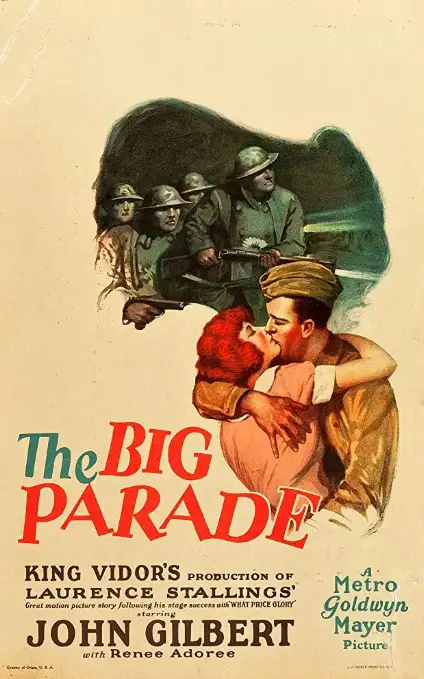
《戰地之花》被譽為默片時代最偉大的戰爭電影之一,也是早期反戰電影的重要代表。電影以第一次世界大戰為背景,透過一名年輕士兵的成長與創傷,描繪戰爭如何改變人性、友情與愛情。沒有過度英雄化的戰鬥場面,反而以真實與沉重情感打動觀眾,讓這部1925年的作品至今仍保有強烈感染力。
The Big Parade is widely regarded as one of the greatest silent war films ever made and a defining anti-war masterpiece of early cinema. Set during World War I, the film follows the emotional transformation of a young American soldier whose journey through friendship, romance, and battlefield horror reveals the devastating human cost of war. Rather than glorifying combat, the film presents war as a tragic and deeply personal experience, giving it an emotional realism that continues to resonate nearly a century later.
電影內容
《戰地之花》講述來自富裕家庭的美國青年吉姆,原本過著無憂無慮的生活,但在第一次世界大戰爆發後,他受到愛國情緒與社會氛圍影響而決定從軍。起初,他對戰爭充滿浪漫幻想,以為這是一場能夠證明男子氣概與榮耀的冒險。然而當他真正踏入歐洲戰場後,眼前的一切逐漸摧毀了他的天真。電影前段以較輕鬆的節奏描寫士兵之間的友情與日常生活,吉姆與來自不同階級背景的戰友建立深厚感情,也在法國鄉村遇上一位純樸女孩。這段愛情帶著淡淡溫柔與希望,讓觀眾暫時忘記戰爭即將到來的殘酷。可是隨著戰火逼近,電影氣氛開始急速轉變。導演透過漫長壕溝行軍、空蕩森林與突然爆發的槍火,營造出令人窒息的不安感。電影最著名的戰場場面,以極具壓迫感的長鏡頭展現士兵穿越死亡地帶的恐懼。沒有誇張英雄姿態,也沒有刻意煽情,只有一群普通人在炮火下逐漸崩潰。觀眾能感受到士兵從興奮到麻木,再從麻木變成恐懼與絕望的心理變化。電影同時描繪戰爭對身體與心靈造成的雙重創傷。當角色親眼看見朋友死去、村莊被摧毀與生命毫無價值地消失時,他開始懷疑自己當初參戰的理由。《戰地之花》之所以偉大,在於它並非單純歌頌軍人犧牲,而是揭示戰爭如何吞噬青春與人性。即使在默片時代,它依然能透過畫面與節奏傳達深刻情感。電影中的愛情線也不是傳統浪漫童話,而是一種在毀滅世界中尋找溫暖與希望的象徵。吉姆與法國女孩之間語言不通,卻能透過眼神與動作建立情感,這種純粹交流反而成為整部電影最動人的部分。到了後段,戰爭不再只是背景,而像一股無法逃離的巨大陰影,逐步奪走角色的一切。電影最後留下的不是勝利喜悅,而是一種沉默而漫長的哀傷。它提醒觀眾,真正被戰爭摧毀的不只是城市與生命,更包括人對未來的信念與對世界的純真想像。作為1925年的作品,《戰地之花》不僅在技術上極具突破,更開創了日後戰爭電影對真實感與心理創傷的描寫方式,深深影響後來無數經典作品。
English Version
The Big Parade follows Jim Apperson, a carefree young man from a wealthy American family who eagerly joins the army during World War I, believing the conflict will be an exciting adventure filled with honor and patriotism. At first, military life appears almost playful, and the early sections of the film focus on camaraderie among soldiers, humorous moments of training, and the emotional excitement of entering an unfamiliar world. Jim quickly forms close friendships with fellow soldiers from working-class backgrounds, and while stationed in France he falls in love with a local farm girl whose warmth and innocence provide a temporary escape from the looming horrors of war. This gentle romance becomes the emotional center of the film, creating a fragile sense of humanity amid growing destruction. As the soldiers move closer to the front lines, however, the mood changes dramatically. The cheerful atmosphere fades into anxiety, exhaustion, and fear. Director King Vidor carefully builds tension through long marches, empty forests, silent waiting, and sudden explosions of violence. Rather than portraying war as glorious spectacle, the film emphasizes confusion, vulnerability, and emotional devastation. One of the film’s most famous sequences shows soldiers advancing through a battlefield under relentless gunfire, using slow, deliberate pacing to capture the terrifying inevitability of death. The scene remains astonishingly powerful because it strips away heroism and presents combat as chaotic human suffering. Throughout the film, Jim undergoes a painful transformation. The idealistic young man who once dreamed of glory gradually becomes emotionally scarred by the brutality surrounding him. Friends die without warning, landscapes are reduced to ruins, and survival itself begins to feel meaningless. The Big Parade succeeds as an anti-war film because it refuses to romanticize violence. Instead, it explores how war destroys innocence and leaves psychological wounds that cannot easily heal. Even without spoken dialogue, the performances communicate profound emotional depth through facial expressions, gestures, and visual storytelling. The love story also plays an essential role in the film’s emotional impact. Jim and the French girl struggle to communicate through language, yet their bond grows naturally through shared moments and silent understanding. Their relationship represents the possibility of compassion in a world collapsing into violence. By the final act, the war has consumed nearly every trace of optimism that existed at the beginning of the story. Victory feels hollow compared to the personal losses endured along the way. Rather than ending with triumphant celebration, the film closes with emotional exhaustion and lingering sorrow. Its message remains timeless because it recognizes war not simply as a political event, but as a force that permanently changes human lives. The Big Parade helped redefine the war film genre by introducing emotional realism and psychological trauma into cinematic storytelling, influencing generations of filmmakers long after the silent era ended.
影片簡介(預告片/片段)
一名年輕士兵在第一次世界大戰中逐漸失去對戰爭的幻想。
A young soldier loses his illusions about war during World War I.
https://www.youtube.com/watch?v=klv4GTP1Tx8&pp=ygUVVGhlIEJpZyBQYXJhZGUgKDE5MjUp
電影資料
導演:King Vidor
類型:戰爭、劇情、愛情、默片
製片公司:Metro-Goldwyn-Mayer
上映年份:1925
主要演員
John Gilbert
Renée Adorée
Tom O’Brien
Karl Dane
總結
《戰地之花》以真實、沉重而充滿情感的方式重新定義了戰爭電影。它不強調勝利與英雄,而是描寫人在戰火中的脆弱與失落。即使經過百年,電影中的情感與反戰訊息依然強烈,讓它成為默片時代最值得重溫的經典之一。
Conclusion
The Big Parade remains one of the most emotionally powerful war films ever made because it focuses not on victory or heroism, but on the fragile humanity lost in conflict. Its realism, emotional honesty, and anti-war message continue to resonate with modern audiences, securing its place as one of the silent era’s greatest cinematic achievements.