Alexander Pushkin以優雅而充滿激情的文字改變俄羅斯文學,他將詩歌、小說與民族精神融合成永恆經典。
Alexander Pushkin transformed Russian literature through lyrical brilliance, emotional depth, and a powerful vision of freedom, identity, and national culture.
中文
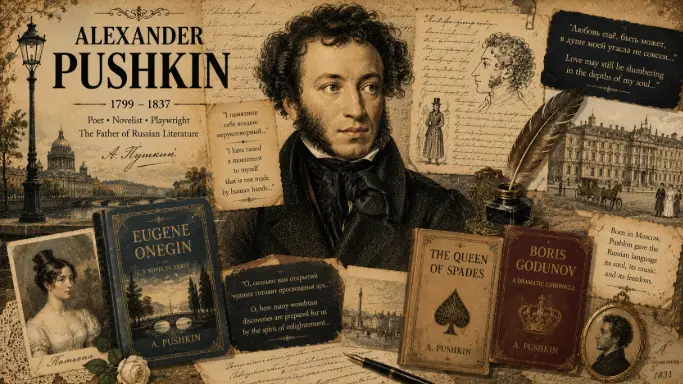
亞歷山大·普希金出生於十九世紀初的莫斯科,成長於俄國貴族家庭,自幼受到法國文化與俄羅斯民間故事雙重影響,他的祖先之一為非洲裔軍官漢尼拔,這段特殊家族背景也使他對身份與自由有更深刻的感受,普希金年輕時便展現驚人的文學天賦,在皇村學校求學期間已開始創作詩歌,作品充滿青春激情與對自由的嚮往,他生活的年代正值俄國政治壓抑與思想動盪時期,因此他的作品常帶有對專制與社會不公的批判精神,也因此多次遭到流放與監視,然而這些經歷反而讓他更深入接觸俄羅斯不同地區的文化與民間生活,豐富了他的創作視野,普希金最重要的成就在於他重新塑造了俄語文學語言,在他之前,俄國文學深受法語與古典形式影響,而他則將口語、詩意與民間語感融合,創造出更自然且富有節奏感的俄語風格,對後世作家產生深遠影響,他的代表作《葉甫蓋尼·奧涅金》被譽為俄羅斯文學的里程碑,以詩體小說形式描寫貴族青年奧涅金的空虛與迷惘,同時刻畫塔季揚娜真摯而深刻的情感,作品既帶有浪漫氣息,也充滿對社會與人性的觀察,普希金在短篇小說與戲劇創作上同樣具有重要地位,《黑桃皇后》展現命運與欲望的黑暗面,《鮑里斯·戈東諾夫》則以歷史與權力為主題,展現他對人性與政治的深刻理解,他的作品不僅描寫愛情與自由,也關注榮譽、命運與個人尊嚴,他的語言簡潔而富有音樂感,能在短短篇幅中呈現強烈情感與鮮明畫面,因此被視為俄羅斯現代文學的奠基者,後來的果戈里、托爾斯泰與陀思妥耶夫斯基等作家都深受其影響,普希金的一生充滿激情與衝突,他與貴族社會的複雜關係、婚姻與決鬥最終導致悲劇結局,他在一場決鬥中身受重傷,年僅三十七歲便離世,但他的死亡反而讓他成為俄羅斯文化中的傳奇象徵,他不只是詩人,更是民族語言與文學精神的創造者,普希金讓俄羅斯文學真正走向世界,也讓文字成為表達自由與人性的重要力量,即使經過數百年,他的詩句與故事仍持續被閱讀與引用,成為俄羅斯文化最重要的靈魂之一
English Version
Alexander Pushkin stands at the foundation of modern Russian literature, celebrated for transforming poetic language into something vibrant, personal, and unmistakably national, born into an aristocratic family in Moscow during the early nineteenth century, he was raised between two worlds, influenced by French literary culture while also absorbing the rhythms and legends of Russian folk tradition, his African ancestry through his great grandfather Abram Gannibal gave him a unique sense of identity within Russian society and contributed to his lifelong sensitivity toward questions of freedom and individuality, from an early age Pushkin displayed extraordinary literary talent, composing poetry filled with wit, emotion, and political awareness during his years at the Imperial Lyceum, his generation lived under strict imperial control, and many of his early works expressed rebellious ideals and criticism of autocratic authority, leading to surveillance, censorship, and periods of exile, yet these experiences broadened his understanding of Russia itself, exposing him to regional cultures, landscapes, and ordinary people beyond aristocratic circles, Pushkin’s greatest achievement was the creation of a modern literary Russian language that balanced elegance with natural speech, moving away from overly formal traditions and establishing a style both lyrical and accessible, this innovation shaped every major Russian writer who followed him, his masterpiece Eugene Onegin combines poetry and narrative into a sophisticated portrait of society, tracing the emotional distance and spiritual emptiness of its protagonist while contrasting him with the sincerity and emotional depth of Tatyana, the novel explores love, regret, alienation, and the subtle tensions between individual desire and social expectation, Pushkin also excelled in prose and drama, producing works such as The Queen of Spades and Boris Godunov that examined ambition, power, obsession, and fate with remarkable psychological insight, his writing possessed clarity, musicality, and emotional precision, allowing him to express profound ideas without losing elegance or immediacy, later literary giants including Gogol, Tolstoy, and Dostoevsky regarded him as the source from which Russian literature truly began, beyond his artistic achievements Pushkin’s life carried the intensity of romantic legend, marked by passionate relationships, social controversy, and personal conflict, his fatal duel at the age of thirty seven transformed him into a cultural martyr whose death shocked Russian society, yet his legacy only grew stronger with time, Pushkin became more than a poet, he became a symbol of artistic freedom, national identity, and the enduring power of language, his works continue to resonate because they combine emotional honesty with timeless reflections on honor, love, destiny, and the human longing for freedom