
大阪港車站地下通道漫遊:通往海遊館與天保山的靜謐過渡空間|Osakako Station Underground Walkway: A Quiet Passage Toward Kaiyukan and Tempozan Harbor | 旅行誌
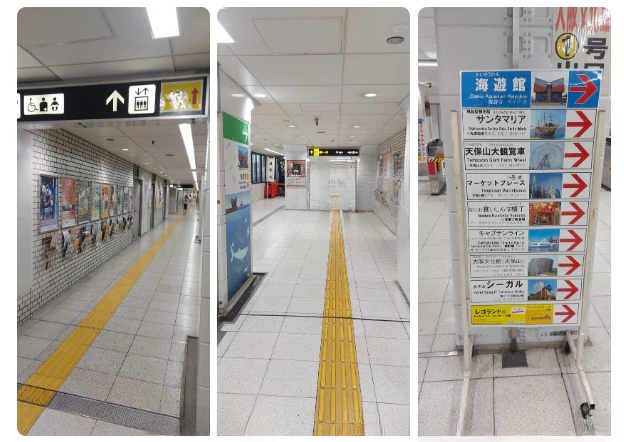
從 大阪港站 出發,通往 大阪海遊館 與 天保山港灣村 的地下通道,並不只是單純的連接路線。光線、人流與空間在這裡形成一種過渡節奏,讓人從城市的運作中慢慢抽離,進入另一種即將展開的旅程。
Starting from Osakako Station, the underground walkway leading toward Osaka Aquarium Kaiyukan and Tempozan Harbor Village is more than just a route. It acts as a transition — a space where movement slows, light softens, and the rhythm of the city begins to shift into something quieter.
中文版
有些路,並不是為了抵達而存在。
而是讓人慢慢進入另一種狀態。
從大阪港站走進地下通道的那一刻,城市的聲音開始被削弱。不是突然消失,而是被空間一層一層地吸收。光線變得均勻,人流變得有序,一切開始進入一種介於移動與停留之間的節奏。
這條通道沒有特別複雜的設計。
筆直的走道,延伸向遠方,兩旁是商店與展示空間。天花的燈光規律排列,把整個空間切分成一段一段的節奏。人們走在其中,不需要思考方向,只是自然地向前。
這種「不需要決定」的行走,反而讓人放鬆。
你會開始注意一些平時忽略的細節——腳步聲在地面回響、燈光在牆面反射、空氣中的微微流動。這些細節沒有刻意設計,卻構成了整個空間的氛圍。
偶爾會出現一些變化。
商店的亮光、販賣機的色彩、牆上的指示與地圖,像是節點一樣,打破單一的節奏。但這些變化並不強烈,只是輕輕提醒你,這裡仍然屬於城市的一部分。
越往前走,人流開始變得明顯。
有些人步伐加快,明顯有目的地前往某個地方;有些人則放慢腳步,像是在等待什麼。不同的節奏在同一條通道中交錯,形成一種安靜卻持續流動的畫面。
這裡並沒有風景。
卻有一種「過渡中的景象」。
你不會停留太久,也不會刻意記住什麼。但這段路卻在不知不覺中,調整了你的狀態。當你走到出口,重新看見自然光的那一刻,會感覺像是從一個空間切換到另一個世界。
前方是海遊館與天保山的開闊。
而身後,是剛剛走過的那段安靜通道。
它沒有成為主角。
卻讓整段旅程變得完整。
English Version
Some paths are not meant to be remembered.
They are meant to prepare you.
Stepping into the underground walkway from Osakako Station, the city doesn’t disappear — it fades. Sound softens, movement evens out, and the space begins to shape a different rhythm. You are still walking, but the experience shifts from intention to flow.
The passage itself is simple.
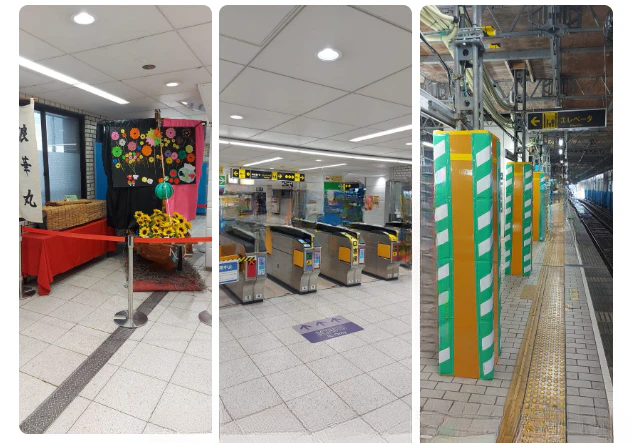
A long, straight corridor extending forward, lined with shops, machines, and occasional displays. Overhead lights repeat in measured intervals, breaking the space into segments that guide your movement without effort.
You don’t need to think about direction.
You just follow.
And in that absence of decision, something changes. Your pace adjusts. Your attention shifts. Small details emerge — the echo of footsteps, the reflection of light on tiled surfaces, the quiet presence of other people moving through the same space.
Every now and then, the rhythm breaks.
A brighter storefront. A vending machine glowing in color. A map or sign that momentarily draws your focus. These are not interruptions, but gentle markers — reminders that you are still within the structure of the city.
As you move further, the flow of people becomes more defined.
Some walk quickly, clearly heading somewhere specific. Others slow down, drifting slightly, as if suspended between destinations. These overlapping movements create a quiet, continuous motion — a shared yet unspoken coordination.
There is no scenery here.
And yet, there is atmosphere.
This is a space of transition — not meant for staying, but not entirely forgettable either. It exists between points, shaping the experience without demanding attention.
By the time you reach the exit, the return of daylight feels almost like a shift in dimension.
Ahead lies the openness of Kaiyukan and Tempozan — wider, brighter, more expansive.
Behind you, the passage you just walked through.
It was never the destination.
But without it, the journey would feel incomplete.