
香港冰室的年代:紅白磁磚與咖啡香的舊城記憶 | The Era of Hong Kong Bing Sutt: Red Tiles, Coffee Aroma, and the Memory of Old City Life | 今日回望 | 第22章
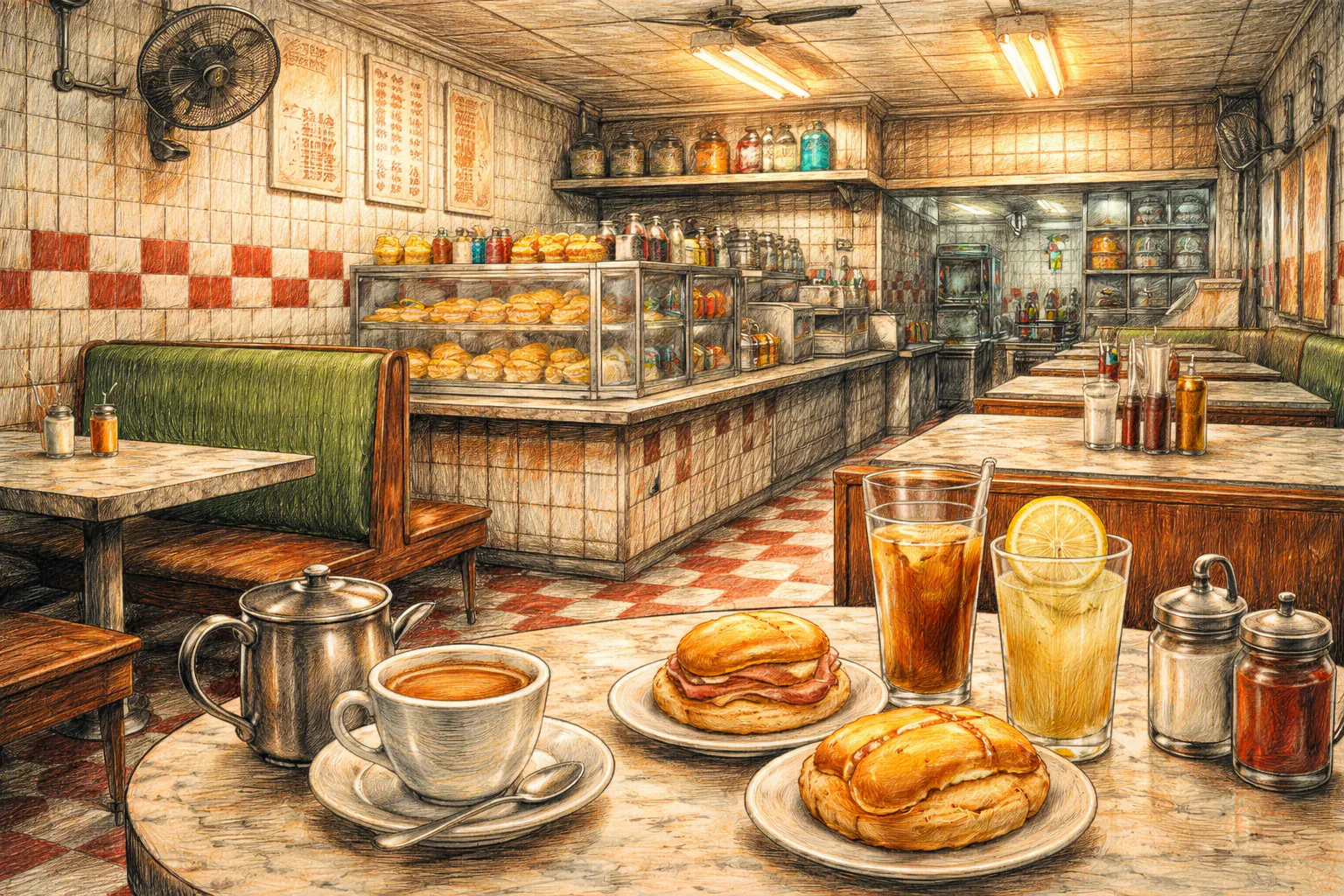
在茶餐廳普及之前,香港街頭最常見的餐飲場所是「冰室」。這些小店多出現在二十世紀中期的香港,以售賣咖啡、奶茶、汽水與簡單西式點心為主。紅白磁磚地板、吊扇與玻璃櫥窗,是許多老冰室的典型景象。學生、街坊與上班族在這些店裡吃早餐、看報紙、聊天,構成了城市最平凡卻最溫暖的日常。隨着時代變遷,許多冰室逐漸被茶餐廳取代,但那些瀰漫着咖啡香與烘焙味道的歲月,依然留在香港人的集體記憶之中。
Before modern cafés took over, Hong Kong’s bing sutts were everyday sanctuaries of comfort and familiarity. With red-and-white tiled walls and the lingering scent of milk tea and coffee, these modest eateries captured the rhythm of ordinary life. They were places where time slowed, conversations flowed, and the city revealed its quieter, more intimate side.
在香港飲食文化的歷史裡,「冰室」是一個重要而又充滿懷舊氣息的名字。在茶餐廳尚未普及的年代,冰室曾經遍佈城市的大街小巷,成為不少市民日常生活的一部分。
冰室的出現,大約可以追溯到二十世紀初期。當時香港受到西方飲食文化影響,咖啡、麵包與西式糕點逐漸被引入本地。一般市民未必能夠負擔高級西餐廳的消費,因此一些價格較低的小型咖啡店開始出現,這些店舖就是冰室的雛形。
「冰室」這個名字,其實與當時售賣的飲品有關。在早年的香港,冰塊屬於較為珍貴的物資,能夠提供冰飲的店舖自然吸引顧客。於是,許多店舖以「冰室」為名,主打凍咖啡、凍奶茶與汽水等飲品。
早期的冰室規模通常不大,但裝修卻有其獨特風格。許多冰室採用紅白相間的地磚,牆壁鋪上白色瓷磚,桌面則多為雲石或木製。店內通常掛着幾把吊扇,在炎熱的夏天緩緩轉動,為顧客帶來一點涼意。
玻璃櫥窗也是冰室的重要特色之一。櫥窗裡擺放着剛出爐的麵包、蛋撻、雞尾包與其他西式點心,香味往往飄到街上,吸引路人駐足。
冰室的餐單通常比較簡單,但卻深受市民歡迎。常見的食物包括牛油多士、火腿三文治、通粉、沙爹牛肉麵,以及各種麵包與糕點。飲品方面則以咖啡、奶茶、檸檬茶與汽水為主。
其中,「牛油多士」可說是冰室最具代表性的早餐之一。兩片烘得金黃的麵包塗上厚厚的牛油,再配上一杯熱咖啡或奶茶,簡單卻令人滿足。
冰室不僅是吃東西的地方,也是一個社交空間。許多街坊每天早上都會到附近的冰室吃早餐、看報紙,順便與熟人聊天。學生放學後也常常到冰室買麵包或喝汽水,店內總是充滿生活氣息。
在一些社區裡,冰室甚至像是一個小型的社區中心。老街坊會在固定的時間到同一間冰室聚會,店員也會記得他們的習慣與口味。這種熟悉的關係,使冰室成為城市裡充滿人情味的地方。
到了五、六十年代,香港經濟逐漸起飛,城市人口快速增加。人們的生活節奏也變得更快,對餐飲的需求不再只是咖啡與麵包,而是更加多樣化的食物。於是,一種結合中西飲食的餐廳形式開始興起,那就是後來廣為人知的茶餐廳。
茶餐廳在餐單上加入了炒飯、炒麵、碟頭飯等熱食,也提供更完整的早餐與午餐選擇。相比之下,傳統冰室的餐單顯得較為簡單,因此逐漸被茶餐廳取代。
不少冰室後來轉型為茶餐廳,也有一些則因經營困難而結業。隨着城市發展與租金上升,能夠保存下來的老冰室越來越少。
然而,在一些舊區裡,仍然可以找到幾間歷史悠久的冰室。走進這些店舖,彷彿走進另一個年代。老式吊扇、木椅、雲石桌面,以及牆上的舊式掛鐘,都讓人感受到濃厚的懷舊氣息。
這些老冰室不只是餐廳,更像是城市歷史的一部分。許多顧客來到這裡,不只是為了吃東西,而是為了尋找一種過去的感覺。
對一些老一輩香港人來說,冰室承載着他們的青春記憶。學生時代與同學喝汽水聊天、上班前匆匆吃早餐、或者放學後買麵包回家,都是生活中平凡卻珍貴的片段。
近年來,隨着懷舊文化興起,一些新開的餐廳開始模仿舊式冰室的裝修風格。紅白地磚、霓虹燈與舊式招牌重新出現在城市裡,讓年輕一代也能感受到那種昔日氛圍。
雖然這些新式店舖未必真正來自那個年代,但它們提醒人們,香港的飲食文化曾經有過這樣一段歷史。
回望香港冰室的年代,可以看到一個正在成長的城市。那些簡單的餐單、忙碌的店員與聊天的街坊,共同構成了城市最真實的生活畫面。
今天的香港或許已經變得更加繁忙與現代化,但只要走進一間老冰室,坐在雲石桌前喝一杯咖啡,人們仍然可以感受到那份屬於舊香港的溫度。
那些飄散在空氣中的咖啡香與麵包香,不只是味道,更是一段城市記憶。冰室的年代,也因此成為香港歷史中難以忘懷的一頁。
English Version
In the evolving story of Hong Kong, bing sutts once stood as understated yet essential spaces within the city’s daily life. Known for their simple interiors—often lined with red-and-white tiles, ceiling fans turning lazily above, and wooden or metal-framed seating—these cafés were neither luxurious nor elaborate. Yet, it was precisely this modesty that made them so enduring. They offered a sense of familiarity that felt constant amid a city that was always changing. Stepping into a bing sutt was like entering a pause within the movement of urban life, where time seemed to slow just enough for people to gather, eat, and reflect. The menu of a bing sutt was a reflection of Hong Kong’s unique cultural blend, combining Western influences with local tastes. Milk tea, coffee, and yuan yang—an iconic mix of both—formed the backbone of the drink offerings, each prepared with a consistency that regular customers came to rely on. Alongside these were simple yet beloved dishes such as buttered toast, pineapple buns, instant noodles with various toppings, and baked rice dishes. These meals were not designed to impress with complexity but to provide comfort, nourishment, and a sense of routine. The familiarity of these flavors became part of people’s daily rituals, whether during breakfast before work, a midday break, or a quiet afternoon pause. More than just places to eat, bing sutts functioned as social spaces where different layers of society intersected. Office workers, students, retirees, and laborers all found a place within these walls. Conversations ranged from casual chats to deeper discussions, while newspapers rustled and cups clinked softly against saucers. Regular customers often developed unspoken relationships with the staff, where orders could be anticipated without being spoken. This quiet understanding created a sense of belonging, turning a simple café into an extension of the neighborhood itself. The atmosphere was unpretentious, allowing people to be at ease, to linger without pressure, and to feel part of a shared environment. Historically, bing sutts emerged during a period when Hong Kong was absorbing influences from abroad while shaping its own identity. They offered Western-style food adapted to local preferences, making such experiences accessible to the broader population. Over time, they became deeply embedded in the city’s culture, representing a balance between tradition and adaptation. Their design and offerings remained relatively unchanged for decades, which in turn gave them a timeless quality. They were not driven by trends but by continuity, providing a stable presence in an ever-shifting urban landscape. As Hong Kong modernized, however, the number of traditional bing sutts began to decline. Rising rents, redevelopment, and changing consumer habits led to the emergence of modern cafés and international chains. These newer establishments brought sleek designs, standardized menus, and a different pace of service. While they offered comfort and variety in their own way, they often lacked the quiet intimacy and lived-in character of the bing sutt. The transition marked not only a shift in dining preferences but also a transformation in how people interacted with everyday spaces. The slower, more communal rhythm of the bing sutt gave way to a more individual and efficiency-driven experience. Despite this, the memory of bing sutts remains deeply rooted in Hong Kong’s collective consciousness. For many, they symbolize a time when life felt more grounded, when small routines carried meaning, and when spaces encouraged connection without formality. Some traditional bing sutts still survive, preserving their original appearance and methods, offering a glimpse into the past. Others have inspired modern reinterpretations that attempt to capture their aesthetic and spirit. Yet, what continues to resonate most is not just the food or the décor, but the feeling they created—a sense of calm within a busy city, a place where people could simply exist without urgency. Remembering the era of Hong Kong’s bing sutts is, in essence, remembering the quiet layers of the city’s identity. It is about acknowledging how ordinary spaces can hold extraordinary meaning, how everyday interactions can shape collective memory, and how culture often resides in the simplest of places. Through their red tiles, warm drinks, and familiar atmosphere, bing sutts remain a lasting symbol of a Hong Kong that valued presence, connection, and the understated beauty of daily life.