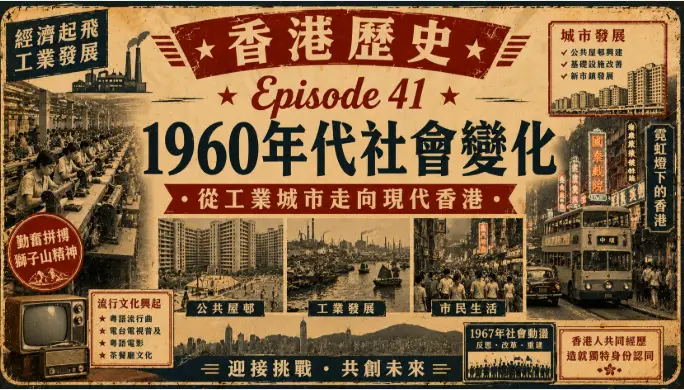
1960年代的香港正處於快速轉型時代。工業發展、人口增加與城市擴張,令香港社會出現巨大變化,也逐漸形成現代香港的生活文化與城市面貌。
The 1960s marked a turning point in Hong Kong’s transformation. Industrial growth, rising population, and rapid urban development reshaped daily life, creating the foundations of the modern city known around the world today.
中文
1960年代的香港,是一個急速變化與充滿矛盾的年代。一方面,香港經濟因工業發展而迅速起飛;另一方面,人口膨脹、貧富差距與社會問題亦同時加劇。這十年間,香港由戰後難民城市逐漸走向現代化工業社會,許多今日香港的重要城市文化與生活模式,也是在這個年代開始形成。當時香港人口持續增加,大量來自中國內地的移民令城市變得更加擁擠。公共屋邨開始大量興建,以解決木屋區與住屋不足問題。石硤尾、蘇屋邨、華富邨等公共屋邨逐漸成為戰後香港基層家庭的重要居所。雖然單位空間細小,但對許多人而言,能夠由木屋搬進擁有食水與穩定電力的公屋,已是生活重大改善。公共屋邨不單改變居住環境,也形成獨特鄰里文化。小販、茶餐廳、街市與學校開始圍繞屋邨發展,形成新型社區生活。工業化同樣深刻影響香港社會。大量工廠在觀塘、荃灣與九龍灣一帶出現,紡織、塑膠、電子與玩具工業高速發展。許多家庭依靠工廠工作維持生活,工人每日長時間勞動,形成香港典型工業城市景象。當時女性勞工比例大幅增加,不少女工白天進工廠,晚上仍需照顧家庭。雖然工作辛苦,但不少家庭相信只要努力,下一代便有機會脫離貧窮。教育開始受到重視,越來越多家長希望子女完成學業,成為文職或專業人士。1960年代的香港街道亦逐漸現代化。雙層巴士、電車與霓虹燈成為城市特色。彌敦道與中環商業區開始出現更多大型商店與百貨公司。日本電器、西方時裝與流行音樂開始進入香港市場,年輕人文化亦逐漸形成。收音機與後來的電視開始普及,粵語流行曲與電台節目深受市民歡迎。娛樂文化迅速發展,粵語電影、武俠小說與茶餐廳文化逐漸成為香港日常生活一部分。然而在經濟繁榮背後,1960年代香港仍存在不少社會問題。工人薪金偏低,勞工保障不足,部分工廠工作環境惡劣。人口過度集中亦令交通、醫療與教育資源緊張。1966年天星小輪加價事件引發社會不滿,之後更爆發1967年左派暴動。這場暴動受到中國文化大革命影響,香港多區發生罷工、示威與炸彈襲擊,社會一度陷入混亂與恐慌。政府之後開始重新檢視施政,包括加強公共服務與改善民生,希望減少社會不滿。雖然1960年代充滿挑戰,但香港社會亦逐漸建立屬於自己的身份認同。出生於戰後的一代開始把香港視為真正家園,而不只是暫時落腳地。粵語文化、流行娛樂與本地生活方式開始形成獨特香港特色。到了1960年代末期,香港經濟持續增長,社會氣氛亦逐漸穩定。這個年代留下的不只是工廠與屋邨,更是一種香港人共同經歷的集體記憶。從擁擠街道到霓虹夜景,從工廠鐘聲到收音機音樂,1960年代成為香港由戰後城市走向現代都會的重要轉折點。
English Version
The 1960s represented a decade of enormous transformation for Hong Kong. Rapid industrialization, migration, urban expansion, and social tension combined to reshape the colony into a modern city with its own distinct identity. While economic growth created new opportunities, the decade also exposed deep inequalities and social pressures that influenced the future direction of Hong Kong society. Population growth remained one of the defining realities of the era. Refugees and migrants from mainland China continued arriving in large numbers, placing immense pressure on housing and public services. In response, the colonial government accelerated public housing development. Large housing estates such as Shek Kip Mei, So Uk Estate, and Wah Fu Estate became symbols of postwar urban change. For many families previously living in wooden squatter settlements, moving into a public housing flat represented a dramatic improvement in living standards. Running water, electricity, and more stable living conditions helped reshape daily life for working-class communities. Entire neighborhood cultures developed around these estates, with markets, schools, tea restaurants, and small businesses forming tightly connected urban communities. Industrialization continued driving the city’s economic expansion. Factories producing garments, textiles, plastics, electronics, and toys spread across districts like Kwun Tong, Tsuen Wan, and Kowloon Bay. Factory work became central to everyday life for many families. Long working hours, crowded production floors, and physically demanding labor defined the experience of countless workers. Women entered the workforce in increasing numbers, balancing factory employment with household responsibilities. Despite difficult conditions, many families believed industrial labor could provide their children with better opportunities through education and upward mobility. Urban culture also changed rapidly during the decade. Neon signs illuminated busy commercial streets while double-decker buses, trams, and ferries became iconic parts of the city landscape. Nathan Road and Central developed into increasingly modern shopping districts filled with department stores, imported goods, and international influences. Japanese electronics, Western fashion, and popular music attracted younger generations eager to embrace modern lifestyles. Radio entertainment became deeply woven into daily routines, followed later by the growing influence of television broadcasting. Cantonese cinema, martial arts novels, and cha chaan teng café culture flourished during this period, helping shape a distinctly local cultural identity. Yet beneath the optimism of economic progress, serious social problems remained. Many factory workers earned low wages under harsh conditions, while overcrowding strained schools, hospitals, and transportation systems. Public frustration occasionally erupted into unrest. In 1966, protests surrounding a Star Ferry fare increase reflected growing dissatisfaction among ordinary citizens. The following year, Hong Kong experienced the violent leftist riots of 1967, heavily influenced by the Cultural Revolution taking place across the border in mainland China. Bomb attacks, strikes, demonstrations, and political clashes created fear and instability throughout the colony. The riots shocked both the government and society, leading authorities to place greater emphasis on social reforms, welfare programs, and public communication in the years that followed. Despite these tensions, the 1960s also marked the beginning of a stronger Hong Kong identity. Younger generations born or raised locally increasingly viewed Hong Kong as their permanent home rather than a temporary refuge. Cantonese language culture, local entertainment, and urban lifestyles became important elements of a shared social identity distinct from both Britain and mainland China. By the end of the decade, Hong Kong had emerged as a rapidly modernizing industrial city with growing confidence and cultural energy. The memories of crowded housing estates, factory whistles, neon-lit streets, radio songs, and bustling markets continue to define how many people remember the spirit of 1960s Hong Kong.
總結
1960年代的香港,在工業化與社會變化中逐步建立現代城市基礎。這個年代既充滿挑戰,也孕育出屬於香港自己的文化與身份認同。
The 1960s transformed Hong Kong socially, economically, and culturally. Amid rapid modernization and social tension, the city began forming the unique identity and urban character that would shape its future for decades to come.