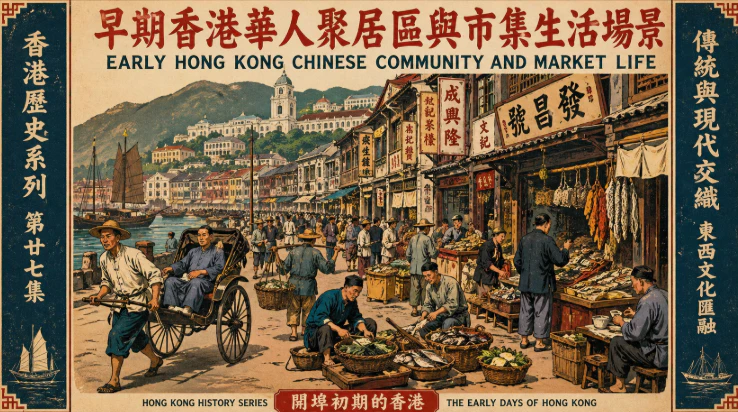
十九世紀中葉香港開埠後,大量華人湧入這片新興港口,在殖民制度與傳統文化之間建立獨特社會結構,逐漸形成既保留中國習俗又適應西方統治的城市社群。
In the mid-nineteenth century, Hong Kong rapidly transformed into a port attracting waves of Chinese migrants, who shaped a distinctive society balancing inherited traditions with the realities of colonial rule and urban change.
中文
早期香港華人社會的形成,源於十九世紀中葉香港開埠後的大量移民潮,來自廣東各地的商人、苦工與手工藝人湧入這片新興港口,他們帶來語言、宗族與地方文化,也帶來強烈的生存動力,在英國殖民統治之下,華人最初被排除於政治權力之外,只能在社會與經濟層面尋找立足點,因此逐步形成以商業與互助為核心的社群結構,早期華人社會主要集中於上環與中環一帶,形成密集的華人聚居區,街道狹窄但充滿活力,各類行業如米行、茶樓、藥材鋪與典當業迅速發展,構成基本經濟網絡,同時宗族與同鄉會成為重要的組織形式,透過血緣與地緣維繫社會秩序,幫助新移民找到工作與居所,亦在衝突時提供仲裁與保護,這些組織在官方制度不足的情況下扮演準治理角色,顯示華人社會自我調節的能力,隨著人口增加,治安問題亦逐漸浮現,秘密結社如三合會在部分基層社區中活躍,既是互助網絡亦涉及灰色活動,反映出殖民政府與華人社會之間的治理落差,而在另一面,華人精英階層逐步崛起,透過經商致富並與殖民政府建立合作關係,他們成為中介角色,一方面代表華人利益,另一方面協助維持社會穩定,這種結構使華人社會呈現出分層但互相依存的特性,宗教與信仰亦是社會的重要組成部分,廟宇不僅是祭祀場所,更是社區中心,供奉天后、關帝等神祇象徵航海與忠義精神,反映當時居民的生活需求與價值觀,同時傳統節慶如農曆新年與盂蘭節維繫社群凝聚力,使人們在異地仍能延續文化身份,在教育方面,早期以私塾為主,教授經典與倫理觀念,培養下一代的文化認同,而隨著時間推移,西式教育逐漸引入,為華人提供新的社會流動途徑,標誌著傳統與現代的交匯,經濟發展方面,華人逐步掌握本地商業命脈,從小型店舖到跨區貿易,形成靈活且具韌性的經濟體系,使香港逐漸成為區域貿易樞紐,在這一過程中,華人社會並非被動接受殖民統治,而是在限制中尋找空間,建立屬於自己的制度與文化,這種在壓力下形成的社會結構,不僅奠定香港日後繁榮的基礎,也塑造出一種融合東西方、兼具傳統與現代的獨特城市精神
English Version
The early Chinese community in Hong Kong emerged from a surge of migration following the establishment of the colony in the mid-nineteenth century, as people from Guangdong arrived in large numbers bringing languages, customs, and tightly knit social identities rooted in kinship and locality, within a colonial system that largely excluded them from political power, these migrants focused on building economic networks and communal support systems that allowed them to survive and gradually prosper, concentrated in densely populated districts such as Sheung Wan and Central, Chinese neighborhoods became vibrant hubs of trade and daily life, with shops, markets, tea houses, herbal stores, and pawn businesses forming a dynamic urban economy that sustained both the working class and emerging entrepreneurs, in the absence of comprehensive colonial governance at the grassroots level, clan associations and native-place groups became essential institutions, offering employment assistance, dispute resolution, and social protection, effectively acting as parallel structures of organization that maintained order within the community, as the population expanded, issues of crime and security surfaced, and secret societies played a complex role, sometimes functioning as mutual aid groups while also engaging in illicit activities, highlighting the gaps between official authority and lived realities, meanwhile, a Chinese elite began to rise through commerce, forging relationships with the colonial administration and serving as intermediaries between rulers and the broader population, their influence helped stabilize society while also reinforcing a layered social hierarchy, religion and belief were central to everyday life, with temples dedicated to deities such as Tin Hau and Guan Di acting not only as spiritual centers but also as focal points for community gathering and identity, traditional festivals including Lunar New Year and the Hungry Ghost Festival reinforced shared values and cultural continuity, ensuring that migrants maintained a sense of belonging despite displacement, education initially revolved around traditional schools that emphasized classical texts and moral teachings, but over time Western-style education was introduced, opening new pathways for advancement and signaling a gradual shift toward modernity, economically, Chinese residents became increasingly dominant in local commerce, creating flexible and resilient networks that connected Hong Kong to regional trade flows, throughout this transformation, the Chinese community was not merely shaped by colonial rule but actively adapted and negotiated its position, constructing a social framework that blended tradition with innovation, this adaptive resilience laid the groundwork for Hong Kong’s future development and gave rise to a distinctive urban identity that bridged cultural world.