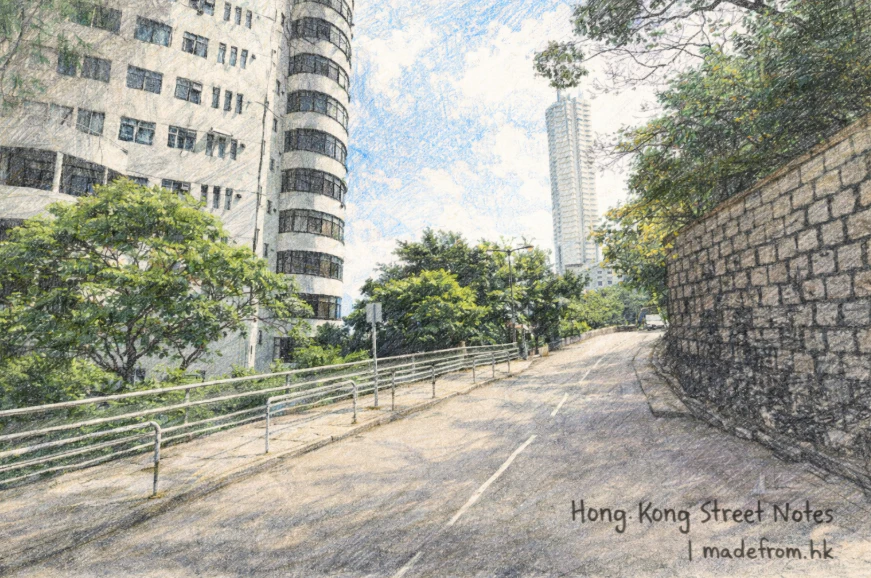
在香港山頂的靜謐之中,梅道像一條低調卻充滿歷史重量的道路,承載著殖民時代的權力象徵與上流階層的生活軌跡,從名字到風景,都隱約訴說著一段不被打擾的過去。
Tucked into the quiet slopes of Hong Kong’s Peak, May Road carries a sense of understated prestige. Behind its calm façade lies a story of colonial authority, elite residences, and a legacy shaped by those who once governed and lived above the city.
中文
梅道(May Road)位於香港山頂核心地段,是一條低調卻極具歷史象徵的道路,其名字源自香港第15任總督梅含理爵士(Sir Francis Henry May),他於1912年至1919年間出任總督,在其任內推動多項城市建設與行政改革,因此後人以其姓氏命名這條位於權力核心的道路,成為殖民時期命名傳統的典型例子之一。梅道的出現與香港山頂區的發展密不可分,早在19世紀末,山頂已逐漸成為歐洲人專屬的高尚住宅區,受《山頂保留條例》影響,華人長期被排除在此區之外,使這裡成為權力與階級的象徵空間,而梅道正處於這種歷史背景之中,其地理位置接近太平山頂主要幹道,周邊多為總督府高官、富商及外籍人士的住宅區,形成一個封閉而精英化的生活圈。隨著時間推移,香港進入戰後重建與經濟起飛階段,山頂區逐步開放,但其高地位與稀缺土地仍令梅道維持極高的居住價值,舊式殖民洋房逐漸被現代豪宅取代,建築風格從英式古典轉向當代高端住宅設計,但整體環境依然保留低密度與綠意環繞的特色,形成一種「新舊融合」的城市景觀。從城市變化角度看,梅道見證了香港由殖民地轉型為國際都市的過程,過去的權力象徵逐漸轉化為資本與地位的象徵,昔日的種族分隔消失,取而代之的是以經濟能力為主導的居住門檻,反映社會結構的轉變。街道本身沒有繁忙商業活動,也缺乏傳統街市或店舖,但正因如此,梅道呈現出一種獨特的寧靜氛圍,道路蜿蜒於山坡之上,兩旁被高樹與豪宅包圍,視野開闊時可俯瞰維多利亞港景色,這種景觀與空間感成為其最重要的「特色」,也是許多影視與攝影作品偏愛的場景。今日的梅道不僅是一條住宅道路,更是一種象徵——它代表著香港最頂層的生活方式,也承載著一段歷史遺留下來的階級記憶,在繁忙與擁擠的城市之上,這裡仍然保持著一種距離感與安靜感,讓人感覺時間在此稍微放慢,彷彿仍可隱約看見那個屬於殖民時代的影子。
English Version
May Road sits quietly within the prestigious Peak district of Hong Kong, yet beneath its calm exterior lies a layered history tied to colonial governance and elite living. The road is named after Sir Francis Henry May, the 15th Governor of Hong Kong, whose tenure from 1912 to 1919 left a lasting imprint on the city’s administrative and infrastructural development. Naming streets after governors was a common colonial practice, and May Road reflects this tradition, embedding authority directly into the city’s geography. Its location near Victoria Peak places it within what was once an exclusive enclave reserved primarily for Europeans, shaped by policies like the Peak Reservation Ordinance that effectively segregated communities by race and class. In this context, May Road was not just a street but part of a carefully constructed social hierarchy, surrounded by residences of colonial officials, wealthy merchants, and expatriates who lived above the bustling city below. As Hong Kong transitioned through the post-war era into a global financial hub, the Peak district evolved while retaining its exclusivity. Older colonial mansions gradually gave way to modern luxury residences, yet the essence of privacy, elevation, and prestige remained intact. May Road thus became a symbol not only of historical authority but also of contemporary wealth, where access is no longer determined by race but by economic power. The transformation of the area mirrors broader social changes in Hong Kong, where colonial divisions faded but new forms of inequality emerged. Unlike many urban streets filled with commerce and constant movement, May Road is notably quiet, lined with greenery and high-end residences that emphasize space and seclusion. Its winding layout and elevated position offer occasional glimpses of Victoria Harbour, reinforcing its appeal as both a residential haven and a visual escape. Today, May Road represents a unique intersection of past and present—it is at once a reminder of colonial legacy and a marker of modern affluence. In a city defined by density and speed, this road maintains a rare stillness, allowing traces of history to linger in its atmosphere, as if the echoes of its earlier era have never fully disappeared.