
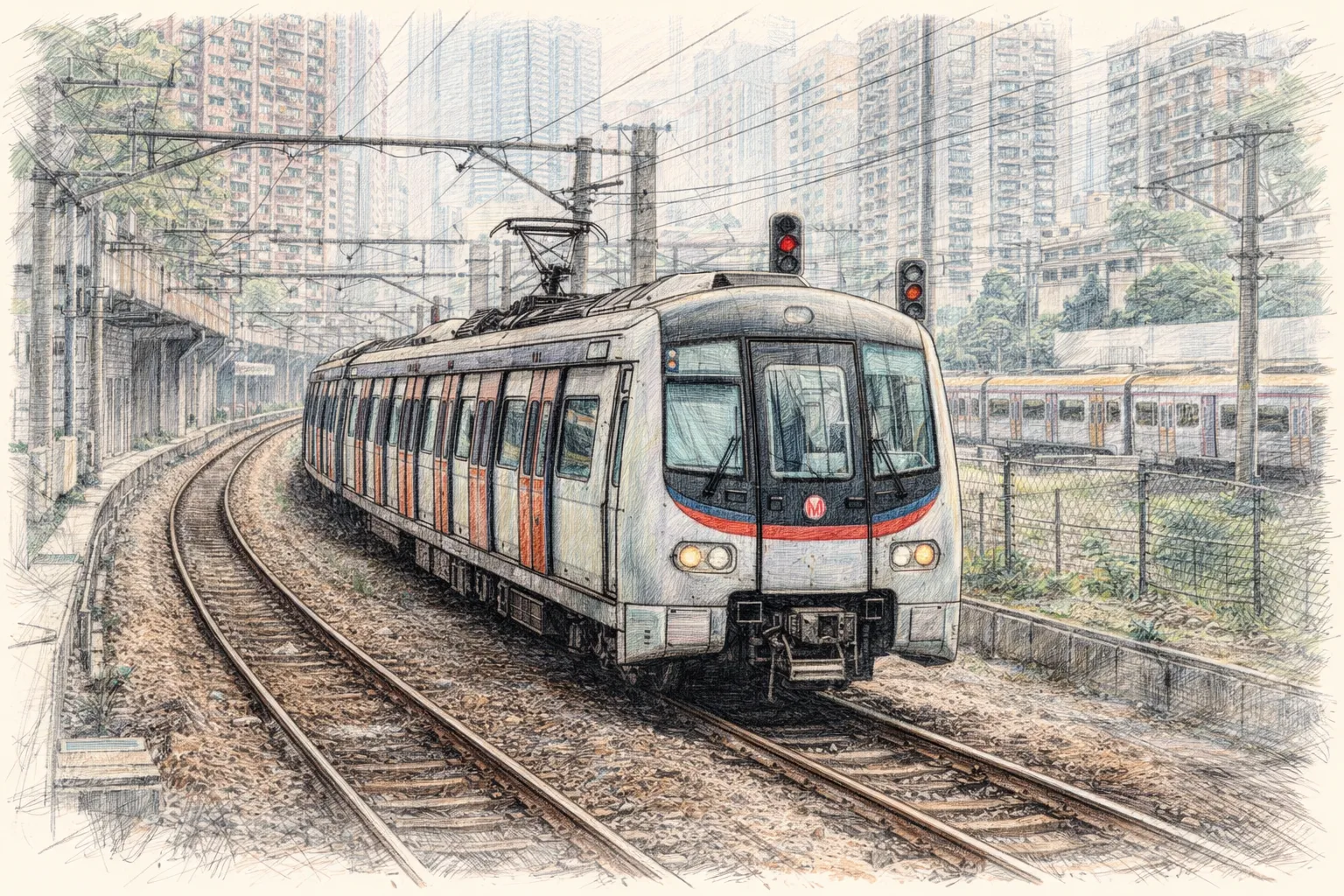
香港鐵路|一座城市如何被速度重新定義 | Hong Kong Railways|How Speed Redefined the Shape of a City【包羅萬有】第 2 章
香港的鐵路系統作為現代化城市交通的典範,展現了高效運輸的卓越功能。其設計初衷並非為了成為一個吸引目光的景觀,而是為了滿足都市生活中迅速移動的需求。透過精密的規劃與運行,鐵路成功地將城市居民從一地快速運送至另一地,為繁忙的都市生活提供了便利。然而,這種效率至上的交通工具在改變城市運作模式的同時,也對人們的生活方式、空間感知及社會互動產生了深遠影響。
每天清晨,當城市在逐漸甦醒之際,鐵路已然開始運行。人們匆匆步入車站月台,等待列車到來。這樣的場景日復一日地重複,成為都市生活中不可或缺的一部分。然而,這種日常通勤是否僅僅是一段過渡性的空白時間?抑或它也應該被視為生活的一部分?在這樣快速移動的節奏中,我們是否有意識地去感受沿途的環境與周遭的人群?
鐵路的核心價值在於速度與效率,其存在讓城市運作更加流暢。我們以分鐘來衡量距離,以車程定義空間的遠近。隨著鐵路網絡的不斷擴展,城市空間被壓縮,人們的生活節奏也因此加快。然而,這種便利也帶來了一些代價。首先,我們對空間的感知逐漸被模糊化。在傳統步行或慢速交通方式中,人們能夠更細緻地體驗周遭環境,例如街道的氣味、聲音以及沿途的景色。而如今,在高速移動的過程中,這些感官體驗被大幅減少,城市逐漸被簡化為一張抽象的路線圖,每個地點僅僅是站名或轉乘點。
其次,鐵路重新塑造了人與城市之間的關係。在車廂內,人們共享同一空間,但彼此之間卻幾乎沒有互動。每個人都專注於自己的世界:有人低頭滑手機,有人閉目養神,有人輕倚扶手隨列車搖晃。這種情境反映了現代都市生活中的矛盾——雖然共享空間,但缺乏情感交流與故事分享。儘管車廂內擁擠不堪,人與人之間卻顯得格外疏離。
然而,在某些特殊時刻,例如列車因故停駛於隧道中,這種快速移動的節奏會被迫暫停。廣播聲響起,燈光微微閃爍,人們開始抬起頭,相互對望。在這樣短暫的瞬間,我們才意識到身邊的人並非完全陌生,只是平日裡我們忽略了彼此的存在。這些偶然的停頓彷彿是一種提醒:提醒我們生活不應該只是匆忙趕路,也應該留一些時間去感受身邊的人與事。
此外,鐵路系統還對城市文化產生了深刻影響。它不僅改變了人們的生活方式,也重新定義了城市空間的使用模式。在傳統交通方式中,人們有更多機會與街道、商店及鄰里建立聯繫。而在高效運行的鐵路系統下,這些聯繫逐漸被削弱,城市文化逐漸朝著功能性與效率化方向發展。每個地點成為一個站名,每段旅程被壓縮為可預測的時間範圍,空間中的情感連結也隨之減少。
然而,我們是否應該重新審視這種生活方式?在快速移動的過程中,我們是否忽略了沿途的風景與故事?或許,正是因為鐵路系統太過高效,我們才失去了對旅程本身的感知能力。當列車再次啟動,人群隨著廣播聲響而移動,有的人下車,有的人繼續前行,每個人都朝著自己的目的地邁進。鐵路完成了它所承擔的任務,而城市也在高效運行中不斷向前。但在這樣快速變遷的城市節奏中,我們是否也應該留下一些空間,用於重新審視自己與城市、與他人的關係?
鐵路所帶來的不僅僅是速度與便利,它也深刻影響了我們對生活方式與城市文化的理解。或許,我們應該學會在快速移動中找回屬於自己的節奏與感受,讓生活不僅僅只是抵達目的地,而是充滿意義的每一步旅程。透過反思鐵路系統對都市生活的影響,我們可以探索如何在高效運行與人性化體驗之間找到平衡,使生活不僅僅是追求效率,也能保留更多情感與記憶。
總而言之,香港的鐵路系統作為現代交通工具,其功能性與便利性毋庸置疑。然而,在享受其帶來的便利之餘,我們也應該思考如何重新建立與城市、與他人的聯繫。在高速運行中找到慢速感知的方法,讓每段旅程都成為充滿意義的體驗,而非僅僅是一段過渡時間。這樣,我們才能真正讓都市生活更具深度與豐富性,使每一步都不僅是抵達目的地,更是探索生命意義的一部分。
English Version
In the development of modern cities, transportation is not merely a means of movement but a force that reshapes space, perception, and the very structure of urban life, and in Hong Kong, the evolution of railways represents one of the most significant examples of how speed can redefine the identity of a city. Before the expansion of rail networks, distance was experienced as a tangible constraint, where travel between districts required time, effort, and a gradual progression through space, creating a sense of separation that influenced how people lived, worked, and interacted. The introduction and expansion of railway systems fundamentally altered this relationship, compressing distances and transforming previously distant areas into accessible extensions of the urban core, allowing the city to grow not only outward but also in complexity and connectivity. Railways introduced a new logic of movement, one that prioritized efficiency, predictability, and scale, enabling large numbers of people to travel quickly and consistently across different parts of the city, and in doing so, redefining expectations of time and accessibility. This shift had profound implications for urban development, as residential patterns, commercial activity, and social interactions began to align with the possibilities created by faster transportation, leading to the emergence of new districts, the densification of existing ones, and the integration of previously isolated areas into a unified system. Stations became more than transit points; they evolved into hubs of activity, shaping the surrounding environment through the concentration of movement and the creation of new economic and social spaces. The relationship between infrastructure and urban form became increasingly evident, as the placement of railway lines influenced land use, property values, and patterns of daily life, demonstrating how mobility systems can act as frameworks around which cities organize themselves. The experience of traveling by rail also introduced a different perception of space, where the continuous landscape of the city is replaced by a sequence of nodes connected by rapid movement, altering how individuals understand distance and location. This abstraction of space allows for greater efficiency but also changes the sensory experience of the city, shifting focus from the journey itself to the destination, and reinforcing a mode of living that prioritizes speed and productivity. At the same time, the standardization of railway systems creates a controlled environment where variability is minimized, ensuring reliability but also reducing the unpredictability that characterizes surface-level movement. This balance between control and experience reflects a broader tension within modern urban life, where efficiency is often achieved at the expense of spontaneity and sensory richness. Despite these changes, railways remain deeply embedded within the daily routines of the city, shaping not only how people move but how they think about time, distance, and possibility. The ability to travel quickly across the city expands the range of choices available to individuals, influencing decisions related to work, residence, and social interaction, and contributing to a more interconnected urban environment. In Hong Kong, the integration of railways into the broader transportation network further amplifies their impact, creating a layered system where different modes of movement coexist and complement one another, allowing the city to function with a high degree of efficiency while maintaining flexibility. The persistence and expansion of rail infrastructure demonstrate how essential such systems have become, not only as tools of mobility but as defining elements of the city’s identity. In a broader sense, the story of Hong Kong’s railways illustrates how technological and infrastructural developments can reshape the human experience of space and time, creating new possibilities while redefining existing ones, and highlighting the role of speed as both a practical and cultural force within urban life. Ultimately, railways are not just about moving people from one place to another; they are about transforming the way a city exists, compressing its geography, accelerating its rhythms, and redefining the relationship between individuals and the spaces they inhabit.