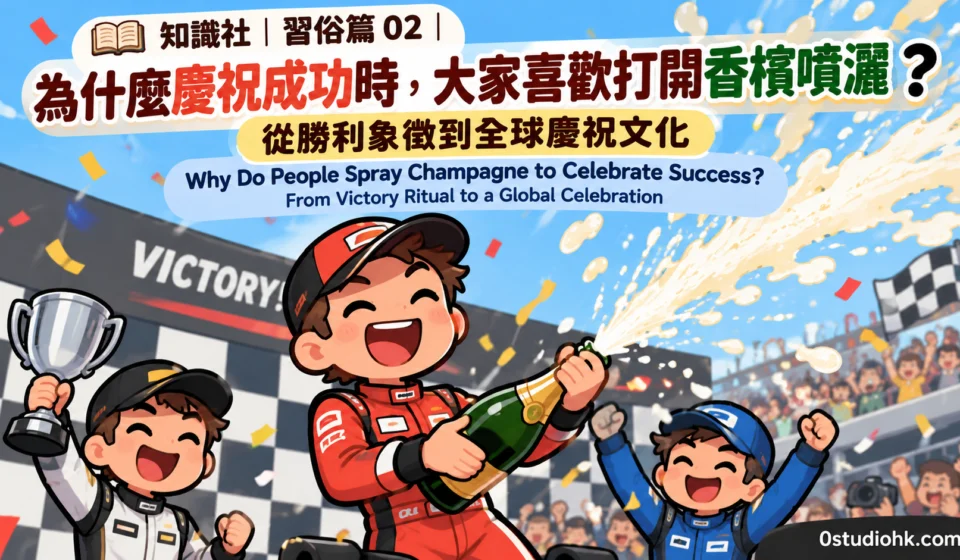
知識社|習俗篇 02 | 為什麼慶祝成功時,大家喜歡打開香檳噴灑?|從勝利象徵到全球慶祝文化 | Why Do People Spray Champagne to Celebrate Success?|From Victory Ritual to a Global Celebration
香檳噴灑是慶祝成功時最具戲劇性的畫面之一。從賽車頒獎台到體育勝利,再到電影中的慶功場面,酒液向空中飛濺,已成為歡呼、勝利與成功的象徵。
Spraying champagne has become one of the most recognisable images of celebration. From racing podiums to sporting victories and films, a bottle bursting into a shower of sparkling wine instantly communicates excitement, triumph and success.
中文版本
當一場比賽結束、冠軍誕生,或者一項重要工作終於取得成功時,我們經常會看到一個非常熟悉的畫面:有人拿起一瓶香檳,扭開瓶塞,伴隨「砰」的一聲,香檳立即向四周噴出,大家大笑、歡呼,甚至直接把酒液噴向身邊的人。這個動作如今已經成為勝利文化的一部分,但有趣的是,香檳最初並不是為了「噴灑」而存在的。香檳本身是一種帶有氣泡的葡萄酒,瓶內因發酵產生二氧化碳,因此開瓶時會形成壓力。當瓶塞被移走,壓力突然釋放,酒液便可能迅速湧出。換句話說,香檳天生就具備製造「慶祝效果」的條件。不過,單純的開瓶聲和噴出的酒液,並不能解釋為什麼它最後會成為全球性的勝利象徵。真正重要的是文化的發展。香檳在歐洲很早便與豪華宴會、慶典和重要場合聯繫在一起。它不是日常飲品,而是經常出現在婚禮、宴會、皇室活動及其他值得紀念的場合。因此,當人們要慶祝一件特別的事情時,打開香檳本身就具有「這是一個重要時刻」的意味。到了現代體育文化發展之後,香檳與勝利的關係變得更加明顯。尤其是在賽車世界,頒獎台上的冠軍、亞軍和季軍會獲得香檳,然後把酒瓶搖晃,再向其他車手和工作人員噴灑。這個畫面極具視覺效果,而且非常容易被攝影機捕捉。當新聞、電視轉播和體育攝影把這些畫面傳遍世界,香檳噴灑便逐漸由一種特定場合的行為,變成了「勝利」本身的視覺語言。特別是賽車頒獎台,對這項習俗的普及具有重要作用。當觀眾看到一位車手站在最高的頒獎台上,手中拿着香檳,然後把酒液向空中噴出,大家即使不懂賽車,也能立即明白這代表勝利。這正是習俗最有趣的地方:一個簡單的動作,不需要語言解釋,就可以傳達非常清楚的訊息。香檳噴灑還有一個特別之處,就是它把原本「看不見」的成功變成「看得見」的畫面。比賽勝利本身是一個結果,但香檳飛濺的一刻,卻把興奮、力量和喜悅全部視覺化。酒液飛向空中,瓶塞發出聲響,人群歡呼,鏡頭捕捉飛濺的酒花,於是成功不再只是一張獎牌、一個冠軍頭銜或一份成績,而變成一個充滿動態的慶祝場景。隨着流行文化、電影、電視及廣告不斷使用這種畫面,香檳噴灑逐漸超越體育範圍。有些企業慶祝大型交易或業績成功,有些活動在重要時刻開香檳,有些電影則用香檳噴灑來表達人物終於取得成功。久而久之,即使實際場合使用的未必是真正的香檳,人們仍然會把「開瓶、噴灑、歡呼」理解為慶功的象徵。當然,香檳噴灑並不是所有文化都具有相同意義,也不是所有慶祝場合都適合這樣做。它本質上是一種源於特定文化背景,再透過體育和大眾媒體傳播開來的慶祝方式。而且從實際角度來看,香檳噴灑也會造成浪費,因此在私人宴會或正式場合,很多人仍然會選擇正常倒進酒杯,而不是把酒液向四周噴射。不過,作為一項文化符號,它的生命力依然很強。今天我們看到香檳瓶塞飛起、酒液在空中散開,腦海中很自然便會聯想到冠軍、勝利、完成目標和人生中的高光時刻。這種聯想其實並不是因為香檳本身具有某種神奇力量,而是多年來的文化累積,把它與「成功值得慶祝」這個概念牢牢連結在一起。從豪華宴會的高級飲品,到賽車頒獎台上的勝利象徵,再到電影和流行文化中的慶功畫面,香檳的角色已經發生很大變化。最初,人們只是打開一瓶氣泡酒;後來,開瓶聲成為慶祝的聲音,酒液飛濺則成為勝利的畫面。也許這正是人類習俗有趣的地方:我們經常把一個原本普通的動作,經過一代又一代的重複,變成具有特殊意義的文化符號。當香檳再次在空中飛濺時,我們真正慶祝的,或許不只是那瓶酒,而是「終於成功了」這一刻。
English Version
When a competition ends, a championship is secured or an important goal has finally been achieved, there is a familiar celebration that needs almost no explanation. Someone grabs a bottle of champagne, removes the cork and, with a loud pop, sends sparkling wine flying through the air. People laugh, cheer and often spray one another with the drink. Today, this dramatic action is strongly associated with victory, but champagne was certainly not created to be sprayed. Champagne is a sparkling wine containing carbon dioxide produced during fermentation. Pressure builds inside the bottle, and when the cork is released, the pressure can force the liquid outward. In other words, champagne naturally has the physical characteristics needed to create a spectacular celebration. Yet the pressure inside the bottle alone cannot explain why spraying champagne became a symbol of success around the world. Its cultural history is much more important. Champagne became associated with luxury, formal occasions and important celebrations in Europe. It was not simply an everyday drink. It appeared at banquets, weddings, royal occasions and other events considered worthy of special recognition. Opening a bottle therefore became more than serving a drink; it could signal that something important was happening. The connection between champagne and victory became particularly powerful with the growth of modern sporting culture. One of the most influential settings was the motor-racing podium. After a race, the leading drivers would receive bottles of champagne and celebrate their results by shaking the bottles and spraying the sparkling wine over fellow competitors and members of their teams. The scene was energetic, spontaneous and highly photogenic. Television broadcasts, newspapers and sports photography then carried these images far beyond the racetrack. As audiences around the world repeatedly saw victorious drivers spraying champagne, the action became visually linked with winning itself. The racing podium was especially effective because the message required no translation. A driver standing on the highest step with a bottle of champagne could communicate success even to someone unfamiliar with the sport. This is one of the most fascinating features of cultural rituals: a simple physical action can become a universal visual message. Champagne spraying also does something that a trophy or a result on a scoreboard cannot do quite as dramatically. It turns an abstract achievement into a visible explosion of excitement. Winning may be a fact, but champagne flying through the air makes that fact feel alive. The popping cork, the movement of the liquid, the cheering crowd and the photographs all combine to create a powerful image of triumph. As television, cinema, advertising and popular culture adopted the image, champagne spraying gradually moved beyond professional sport. It began appearing in films, corporate celebrations, parties and other situations where people wanted to communicate achievement and excitement. Sometimes the drink was not even genuine champagne, but the action still carried the same cultural message: something important has been accomplished, and now it is time to celebrate. Of course, spraying champagne is not appropriate in every situation, and different cultures may attach different meanings to the practice. It can also be wasteful, which is why champagne is normally poured into glasses rather than deliberately sprayed at ordinary gatherings. Nevertheless, its symbolic power remains remarkably strong. When a cork flies from a bottle and sparkling wine fills the air, people immediately think of championships, major achievements, celebrations and moments of personal or collective success. The bottle itself does not possess any magical ability to create victory. Instead, decades of cultural repetition have connected champagne with the idea that success deserves a special celebration. The journey is fascinating: champagne moved from being a luxury drink served at prestigious occasions to becoming a visual symbol of sporting victory and eventually a familiar image in global popular culture. The sound of the opening bottle became part of the celebration, while the spray became a visual expression of triumph. What began as a drink associated with important occasions gradually became a ritual that communicates success without words. Perhaps that is what makes traditions so powerful. Human beings repeatedly perform certain actions until those actions acquire meanings far beyond their original purpose. When champagne is sprayed into the air today, people are not simply throwing sparkling wine around. They are recreating a cultural image of achievement, excitement and shared celebration. For a brief moment, success becomes something everyone can see, hear and feel.
總結
香檳噴灑由高級宴會文化逐漸走進體育與流行文化,尤其透過賽車頒獎台成為勝利象徵。酒液飛濺,讓抽象的成功變成一幕看得見的慶祝。
Champagne spraying evolved from a symbol of luxury into a global image of victory, especially through sporting podiums. The flying bubbles turn an achievement into a vivid, instantly recognisable celebration.