
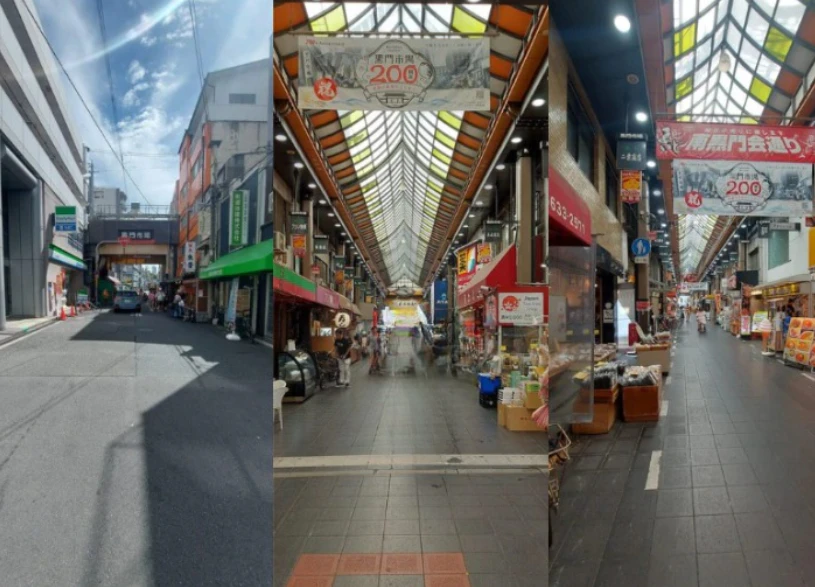
大阪黑門市場街景:在最熱鬧的美食市場之中行走與觀察 | Kuromon Market Street Scenes: Walking Through Osaka’s Most Vibrant Food Market | 旅行誌
走進 黑門市場,不只是為了品嚐美食,更像進入一個持續運作的空間。聲音、氣味與人流在狹長的通道中交錯,形成一種獨特的節奏,讓行走本身成為體驗的一部分。
Stepping into Kuromon Market is not only about food — it is about movement. Within its narrow pathways, sound, scent, and crowds intertwine, creating a continuous rhythm where walking itself becomes part of the experience.
中文版本
黑門市場的入口,沒有明顯的界線。
你不會突然「進入」,而是慢慢被吸收進去。街道逐漸收窄,人流開始變密,聲音與氣味同時增加,一切在不知不覺中轉換。
然後,你已經在裡面了。
市場的通道並不寬。
兩側的店舖緊密排列,商品幾乎延伸到行走的空間之中。視線被壓縮,注意力被拉近,每一步都與周圍的事物保持著很短的距離。
這種距離感,讓體驗變得直接。
你不只是看,而是被包圍。
不同的聲音同時出現。
店員的招呼聲、烹調的聲響、遊人的對話,層層疊加,卻沒有混亂。反而形成一種穩定的節奏,像是一條持續流動的線。
氣味也在空氣中交錯。
海鮮、燒烤、甜點,各種不同的味道在空間中重疊,沒有明確的分界。你無法只專注於一種氣味,而是同時感受到整個市場的存在。
行走,在這裡變成一種調整。
你需要不斷避開對面的人群,稍微側身,減慢速度,再重新前進。這種微小的動作,使你與空間產生持續的互動。
你不是旁觀者。
而是其中的一部分。
偶爾,你會停下來。
不是因為目的,而是因為某個畫面吸引了你——一個攤位、一種食物、一個瞬間。這些停頓很短,但讓整個行走有了節奏的變化。
市場並沒有明確的起點與終點。
你可以從任何一端進入,也可以在任何地方離開。但在這段過程之中,你會感受到一種完整性——一種由人、食物與空間共同構成的流動。
當你走出黑門市場,空間突然變得開闊。
聲音減少,氣味散去,步伐也恢復正常。
但剛才那段密集而連續的體驗,仍然停留在感覺之中。
黑門市場,不只是熱鬧。
而是一種持續發生的狀態。
English Version
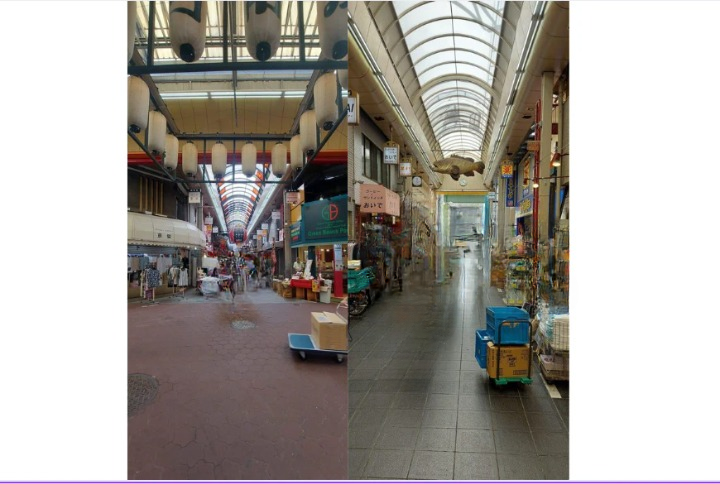
There is no clear boundary at the entrance of Kuromon Market.
You don’t step into it — you are gradually drawn in. The street narrows, the density increases, and sound and scent begin to layer together. The transition happens without a defined moment.
And suddenly, you are inside.
The passage is tight.
Shops line both sides closely, their displays extending toward the walkway. The space compresses your field of vision, pulling your attention closer to what surrounds you. Every step brings you into proximity with something — food, people, movement.
This closeness defines the experience.
You are not just observing.
You are surrounded.
Sound builds in layers.
Vendors calling out, cooking in motion, conversations passing by — all overlapping, yet forming a steady rhythm rather than chaos. It becomes a continuous flow, something you move within rather than listen to separately.
Scents move in the same way.
Seafood, grilled items, sweets — they blend together in the air, without clear boundaries. You don’t isolate them; you experience them as a whole.
Walking becomes an act of adjustment.
You shift slightly to pass others, slow down, move forward again. These small, constant movements create a subtle interaction between you and the space.
You are not outside of it.
You are part of it.
At times, you pause.
Not out of necessity, but because something captures your attention — a stall, a detail, a moment. These pauses are brief, yet they shape the rhythm of your movement.
The market has no fixed beginning or end.
You can enter from anywhere, leave at any point. Yet within that passage, there is a sense of completeness — a flow created by people, food, and space together.
When you step out, the shift is immediate.
Space opens up. Sound fades. Movement becomes easier.
But the density of that experience lingers.
Kuromon Market is not just lively.
It is a continuous state of motion.