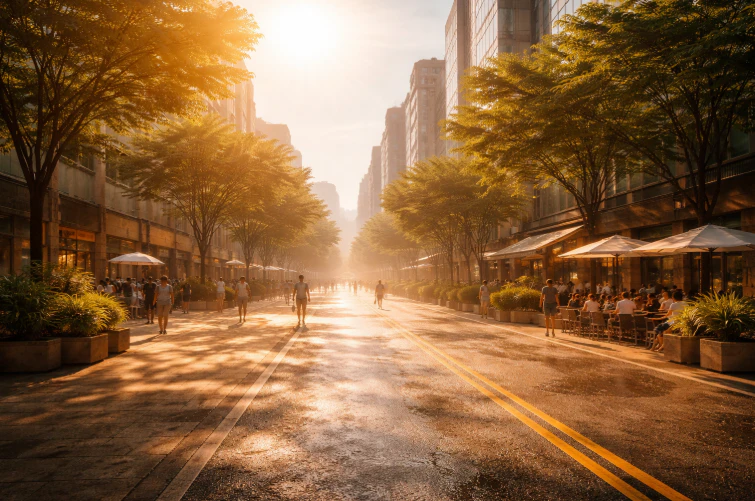
大暑,是一年之中最炎熱的時節,熱不再累積,而是全面釋放。空氣濃重、陽光猛烈,城市進入真正的盛夏狀態。這是一種無法忽視的熱,包圍著每一個人。
Major Heat marks the peak of summer, when accumulated warmth is fully released. The air becomes dense, the sun relentless, and the city enters its most intense seasonal state. It is a heat that cannot be ignored.
中文
大暑,是夏天最直接、最不掩飾的時刻,如果說小暑還帶著一點過渡與累積,那麼大暑就是完全的釋放。熱不再隱藏,而是全面覆蓋,從天空到地面,從空氣到人體,每一個角落都被高溫佔據。清晨不再涼爽,陽光一出現便迅速升溫,讓人還未完全清醒就已經感受到炎熱的存在。到了中午,太陽幾乎垂直照射,影子變得短而模糊,地面散發出強烈的熱氣,空氣彷彿凝滯,連風都帶著熱度。城市在這種狀態下運作,顯得有些遲緩,人們的動作變慢,語氣變得簡短,所有不必要的活動都被削減,只保留最基本的行動。大暑的熱,不只是溫度上的高,而是一種全方位的壓迫,它讓人無法忽視身體的存在,每一次呼吸都帶著溫度,每一次移動都伴隨著汗水。冷氣成為不可或缺的存在,室內外形成兩個截然不同的世界,人們在這種差異之中來回切換,身體不斷適應與調整。街道在正午時顯得空曠,商店門口的冷氣外洩成為一種吸引,行人短暫停留,只為感受那一瞬間的涼意。大暑的濕度往往同時達到高峰,汗水難以蒸發,皮膚長時間處於黏膩的狀態,這種感覺讓人更加疲倦。對學生而言,大暑通常已經進入暑假的中段,時間失去結構,白天與夜晚的界線變得模糊,長時間待在冷氣房中,偶爾走到戶外,便立刻感受到溫差帶來的衝擊。對上班族而言,大暑則是體力與耐力的考驗,每一天都像是在高溫中完成一場長時間的消耗戰。這種極端的氣候,也讓人重新思考節奏,學會放慢、學會節制,甚至學會接受某些事情無法快速完成。大暑同時也帶著一種飽和的意味,當熱達到極致時,人反而會進入一種近乎麻木的狀態,不再對溫度產生劇烈反應,而是默默承受。這種狀態,與節氣的循環形成呼應,因為極致之後,便是轉變。大暑之後,夏天將逐漸走向尾聲,雖然短時間內仍然炎熱,但變化已經悄悄開始。夜晚的城市仍然溫暖,甚至帶著悶熱,路面積存了一整天的熱量,在黑暗中慢慢釋放。燈光照亮街道,人們的活動轉移到夜晚,夜市、散步、晚餐成為主要節奏。這種夜晚的熱,與白天不同,它少了刺眼的光,卻多了一種持續的悶。大暑的記憶,往往不是某一個畫面,而是一整段強烈的感受,是身體對極端環境的回應。在這樣的時節,人們與自然之間的距離被拉近,因為無法逃避,只能面對。這種直接的經驗,使大暑成為一年之中最鮮明的節氣之一,它不只是炎熱,更是一種對極限的體驗。
English Version
Major Heat represents the most intense and unfiltered phase of summer, a time when warmth is no longer building but fully unleashed. If Minor Heat suggests a gradual accumulation, Major Heat is its complete release. The heat is everywhere, filling the sky, the ground, and the air, leaving no space untouched. Mornings no longer offer relief; as soon as the sun rises, temperatures climb rapidly, making the presence of heat unavoidable even before the day fully begins. By midday, the sun stands almost overhead, casting short, indistinct shadows, while the ground radiates powerful waves of heat. The air feels dense and nearly motionless, and even the wind carries warmth rather than comfort. In such conditions, the city continues to function, but at a noticeably slower pace. Movements become more deliberate, conversations shorter, and unnecessary activities are reduced to a minimum. The heat of Major Heat is not simply a matter of high temperature; it is an all-encompassing pressure that forces awareness of the body. Every breath carries warmth, every step produces sweat, and physical presence becomes impossible to ignore. Air conditioning becomes essential, dividing the environment into two contrasting worlds: the controlled coolness indoors and the relentless heat outdoors. People move between these spaces, constantly adjusting and readjusting their bodies. Streets at noon often appear empty, while the cool air spilling from shops becomes a subtle invitation, drawing people closer for brief moments of relief. Humidity frequently peaks during this period, making sweat slow to evaporate and leaving the skin in a persistent state of dampness. This sensation amplifies fatigue, making even simple tasks feel demanding. For students, Major Heat often falls in the middle of summer holidays, when time loses structure and the distinction between day and night becomes blurred. Long hours are spent indoors, and stepping outside brings an immediate and overwhelming contrast. For working adults, this period becomes a test of endurance, where each day feels like a prolonged effort under constant pressure. Such extreme conditions also encourage a reevaluation of pace, teaching the necessity of slowing down, conserving energy, and accepting limitations. There is also a sense of saturation within Major Heat. When heat reaches its peak, people often enter a state of near numbness, no longer reacting strongly but instead quietly enduring. This reflects a broader natural cycle, as extremes inevitably lead to change. After Major Heat, summer gradually begins to decline, even if the shift is not immediately noticeable. Nights remain warm and often stifling, as heat accumulated during the day slowly releases into the darkness. Artificial lights illuminate the streets, and human activity shifts into the evening, where markets, walks, and late meals become central to daily life. This nighttime warmth differs from daytime heat; it lacks the harsh glare of sunlight but retains a lingering heaviness. The memory of Major Heat is rarely tied to a single image, but rather to an extended sensory experience, a bodily response to an extreme environment. During this time, the distance between humans and nature narrows, as there is no escape from the conditions, only adaptation. This direct encounter makes Major Heat one of the most vivid seasonal markers of the year, representing not just heat, but the experience of reaching a limit.