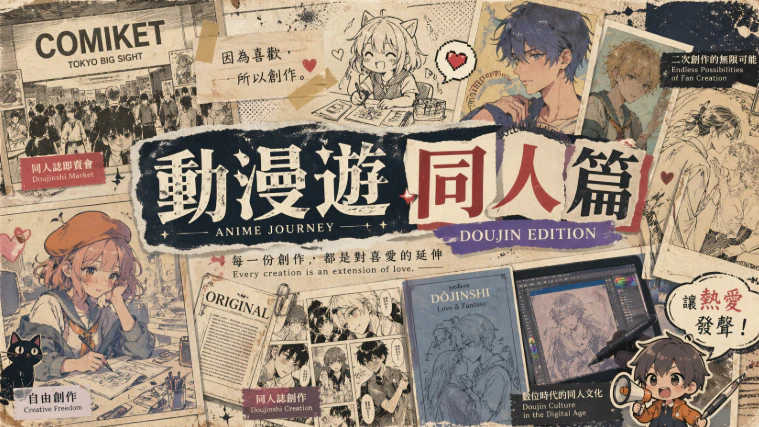
同人文化從一群粉絲自發創作開始,逐漸發展成橫跨全球的創作生態。從日本同人誌市場到網絡平台,再到AI生成時代,同人不再只是「二次創作」,而是一種介於熱愛與再創造之間的文化力量。
Doujin culture began as a form of fan-driven creativity and has since evolved into a global creative ecosystem. From Japan’s early doujinshi markets to digital platforms and now AI-generated content, it is no longer just derivative work but a powerful expression of passion, reinterpretation, and cultural participation.
中文
同人文化的起源可以追溯到日本戰後漫畫與動畫逐漸普及的年代,當時的讀者不再滿足於單純接受故事,而開始嘗試以自己的方式重新詮釋角色與世界觀,這種自發性的創作逐漸形成早期的同人活動,而真正讓同人文化成形的關鍵,是1970年代後期同人誌即賣會的出現,其中最具代表性的便是Comic Market(Comiket),這個由愛好者組成的市場讓創作者可以直接面對讀者,販售自製作品,也讓同人從個人創作轉變為一種具有社群性的文化行為,在這個時期,同人作品多以漫畫與小說為主,內容既包括原創,也包含對既有作品的延伸與改寫,隨著1980至1990年代日本動漫產業的黃金發展期來臨,大量具魅力的角色與故事誕生,同人文化亦同步爆發,創作者開始圍繞人氣作品進行再創作,形成所謂的「二次創作文化」,這種文化的核心並非單純模仿,而是一種帶有情感投射的再詮釋,例如補完原作未交代的情節,或發展不同的角色關係,這種自由度使同人創作成為粉絲參與作品的一種方式,而進入21世紀後,網絡的普及徹底改變了同人文化的生態,平台如Pixiv、論壇與社交媒體讓作品不再局限於實體市場,創作者可以迅速發布作品並獲得回應,全球粉絲也能跨越地域參與其中,這種去中心化的傳播模式使同人文化快速國際化,並逐漸形成不同地區的創作風格,例如歐美偏向文字型的fan fiction,而亞洲則仍以圖像創作為主,同時,數位工具降低了創作門檻,更多人能參與其中,使同人文化由少數人的興趣變成大眾化的創作形式,而近年AI技術的出現再次改寫了這個領域,從圖像生成到文本創作,創作速度與形式都產生巨大變化,也引發關於原創性與版權的討論,然而無論媒介如何改變,同人文化的核心始終沒有改變,那就是來自粉絲對作品的熱愛與延伸,這種文化之所以能長期存在,正是因為它不只是消費,而是一種參與,一種讓觀眾轉變為創作者的過程,也是一種將個人情感投射於虛構世界的方式,從地下市場到全球網絡,同人文化的演變其實反映了創作權力的轉移,從少數專業創作者走向每一個願意表達的人,而這種轉變,正是當代文化最重要的特徵之一
English Version
The origin of doujin culture can be traced back to post-war Japan when manga and anime began to gain widespread popularity, and audiences gradually shifted from passive consumers to active participants who reinterpreted characters and narratives in their own ways, leading to the emergence of early fan-driven creations, but the true formation of doujin culture came in the late 1970s with the rise of doujinshi conventions, most notably Comic Market or Comiket, which provided a physical space for creators to sell self-published works directly to readers, transforming individual creativity into a collective cultural movement, during this period doujin works included both original creations and derivative stories based on existing series, and as Japan entered its anime and manga golden age in the 1980s and 1990s, the explosion of iconic characters and narratives fueled the rapid growth of fan reinterpretations, forming what is now widely known as derivative or fan-based creation culture, however the essence of doujin is not mere imitation but emotional reinterpretation, where fans expand untold stories, explore alternative relationships, and reshape narratives based on personal attachment, this creative freedom turned audiences into participants rather than spectators, and with the arrival of the internet in the 21st century, doujin culture underwent a fundamental transformation as platforms such as Pixiv, forums, and social media removed physical limitations, enabling creators to publish instantly and connect with global audiences, this decentralized system accelerated the international spread of doujin culture and led to regional variations, with Western communities focusing more on fan fiction while Asian creators continued to dominate visual formats, at the same time digital tools significantly lowered the barrier to entry, allowing more individuals to engage in creative expression and turning doujin culture into a mainstream participatory phenomenon, in recent years the emergence of artificial intelligence has once again reshaped this landscape, introducing new methods of image and text generation that increase speed and accessibility while also raising questions about originality and copyright, yet despite these technological shifts, the core of doujin culture remains unchanged, rooted in passion, reinterpretation, and emotional connection, it represents not just consumption but participation, a process through which audiences become creators and project their personal meaning onto fictional worlds, and from underground markets to global digital networks, the evolution of doujin culture ultimately reflects a broader shift in creative power, moving away from a limited group of professionals toward a more inclusive and participatory cultural environment.