
佛誕的寺廟鐘聲|浴佛儀式與香港寺廟的節日氣氛|Buddha’s Birthday in Hong Kong|Temple Bells, Bathing Ritual and Sacred Festival Atmosphere | 包羅萬有 第21章
在香港眾多節日之中,佛誕帶著一種特別的安靜氣氛。它不像農曆新年那樣熱鬧,也不像端午節那樣充滿鼓聲。佛誕更像是一個沉靜而莊重的日子。當寺廟的鐘聲響起,香火在空氣中緩緩升起,整個城市彷彿放慢了腳步。
佛誕,又稱佛誕日或浴佛節,是紀念佛陀誕生的節日。按照傳統佛教的說法,釋迦牟尼佛誕生於古印度的藍毗尼園。相傳佛陀誕生時,天空出現祥雲,大地開出蓮花,九龍吐水為其沐浴。這個傳說後來成為佛誕節的重要象徵。
在佛誕這一天,寺廟會舉行浴佛儀式。寺院中央擺放著一尊嬰兒形態的佛像,站立於蓮花之上。信眾用小勺舀起清水或香湯,輕輕地澆在佛像之上。這個動作象徵洗去塵垢,也象徵淨化心靈。
浴佛儀式看似簡單,但氣氛往往十分莊嚴。寺廟裡飄著淡淡的香氣,木魚聲與誦經聲交織在一起。人們在佛像前停留片刻,默默祈願。這些安靜的片刻,讓佛誕節顯得格外平和。
在香港,佛誕已經成為重要的公眾節日之一。每到這一天,許多寺廟與佛堂都會舉辦活動。大嶼山的寶蓮寺、志蓮淨苑、青松觀與各區寺廟,往往香火鼎盛。信眾前來參拜,也有市民只是來感受節日的氣氛。
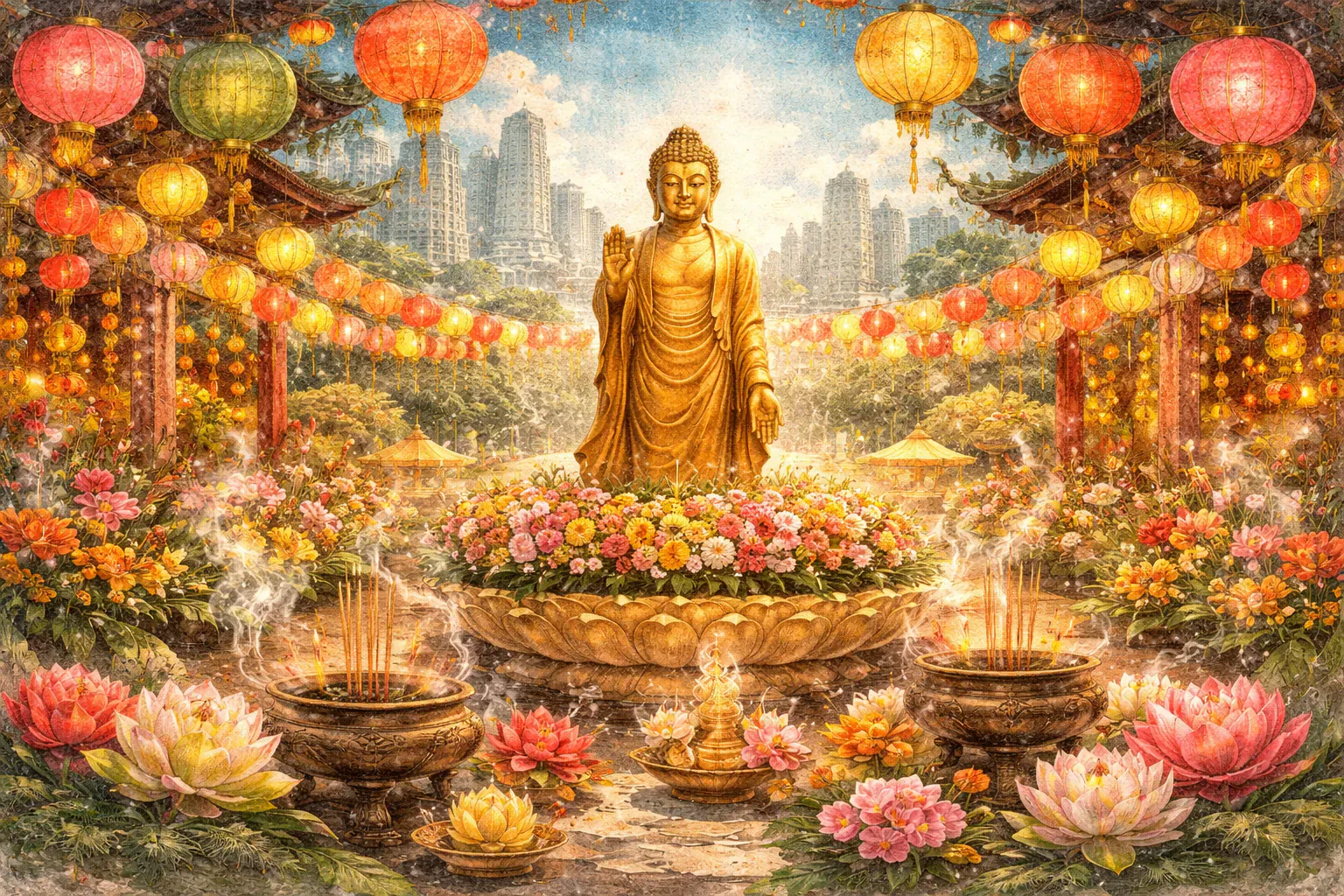
寺廟在佛誕期間常常會布置得格外莊嚴。蓮花燈、佛旗與花飾掛在殿堂之中。香爐前的煙霧慢慢升起,在陽光之下形成柔和的光影。這些畫面讓寺廟顯得既神聖又安靜。
除了宗教儀式,佛誕節也帶著慈悲與善行的意義。許多佛教團體會在這一天舉行放生活動、布施與素食活動。人們透過行善來紀念佛陀的教誨,也希望在生活中實踐慈悲與寬容。
在城市生活的人,平日很少有機會停下腳步。但在佛誕這一天,寺廟的氣氛往往讓人放慢節奏。當人們走進寺院,看見香煙與佛像,聽見鐘聲與誦經聲,心情也會變得平靜。
對很多香港人來說,佛誕不一定是一個宗教節日,而是一種文化記憶。有人小時候跟著家人到寺廟參拜,也有人記得寺院裡的素齋與茶水。這些畫面在記憶裡留下了溫和的印象。
佛誕節也提醒人們關於時間的流動。兩千多年來,佛教思想從印度傳到中國,再傳到香港與世界各地。節日的形式或許有所不同,但其中的精神卻一直延續。
當夕陽落下,寺廟的燈光慢慢亮起。香火仍然在香爐中燃燒,鐘聲在山谷或城市之間回響。這些聲音讓節日顯得格外安靜而深遠。
佛誕或許不像其他節日那樣充滿歡呼與熱鬧,但它帶著另一種力量。那是一種讓人停下來思考的力量。在忙碌與喧囂的生活之中,人們在這一天記得慈悲、平靜與善念。
當夜晚降臨,寺廟恢復平日的寧靜。香煙慢慢散去,鐘聲也逐漸停止。但佛誕留下的氣氛仍然在城市之中停留。那是一種溫柔而深遠的記憶。
每一年佛誕,人們再次走進寺院,看見蓮花與香火,也聽見鐘聲與誦經。這些畫面提醒著人們,在時間的長河之中,仍然存在一些安靜而重要的時刻。
English Version
As spring moves toward early summer, a quieter yet deeply meaningful transformation takes place across temples in Hong Kong, where Buddha’s Birthday is observed through rituals, ceremonies, and a distinctive atmosphere that contrasts with the intensity of the city’s everyday pace. Unlike large-scale festivals characterized by movement and spectacle, this occasion is marked by stillness, reflection, and a sense of spiritual focus, where temples become central spaces for gathering, offering, and contemplation. The sound of temple bells, echoing softly through courtyards and surrounding streets, sets the tone for the day, creating an auditory landscape that signals a shift from the ordinary to the sacred, inviting visitors to slow down and engage with a different rhythm of time. At the heart of the celebration is the bathing ritual, a symbolic act in which participants pour water over statues of the Buddha, representing purification, renewal, and the washing away of negativity, a gesture that carries both personal and collective meaning. This simple yet profound action transforms participation into a reflective experience, allowing individuals to connect with the spiritual significance of the festival while engaging in a shared cultural practice that has been preserved across generations. The visual environment within temples during this time is carefully arranged, with altars adorned with flowers, offerings, and ceremonial objects that enhance the sense of reverence and intention, while the presence of incense smoke adds a subtle layer of movement and fragrance that shapes the overall atmosphere. Unlike more outward-facing celebrations, Buddha’s Birthday often unfolds within enclosed or semi-enclosed spaces, creating an intimate environment where the boundary between participant and observer becomes less distinct, and where individual experience plays a central role in shaping the meaning of the event. Despite its spiritual focus, the festival also extends beyond temple walls into surrounding areas, where small-scale fairs, vegetarian food stalls, and community activities provide additional ways for people to engage with the occasion, blending religious observance with everyday social interaction. The emphasis on vegetarian food during this period reflects broader themes of compassion, restraint, and mindfulness, reinforcing the ethical dimensions of the festival and connecting dietary practice with spiritual intention. In the context of a highly urbanized environment, the persistence of such traditions highlights the coexistence of different modes of life, where moments of stillness and reflection are preserved within a city defined by speed and constant movement. The contrast between the quiet interiors of temples and the surrounding urban landscape creates a layered experience, where participants move between spaces that represent different aspects of existence, from the material to the spiritual. The festival also underscores the role of temples as cultural anchors within the community, serving not only as places of worship but also as sites of continuity, education, and collective memory, where traditions are maintained through participation rather than passive preservation. Over time, Buddha’s Birthday in Hong Kong has evolved to accommodate contemporary lifestyles while retaining its core values, allowing it to remain accessible to both devoted practitioners and casual visitors who may be drawn by curiosity or a desire for a moment of calm within the city. This adaptability contributes to its enduring relevance, ensuring that the festival continues to resonate across different generations and backgrounds. Ultimately, Buddha’s Birthday is not defined by spectacle or scale, but by its ability to create a space for reflection, connection, and renewal, where sound, ritual, and atmosphere come together to offer an experience that is both deeply personal and collectively meaningful, reminding participants that even within the density and गति of urban life, there remains room for stillness, intention, and spiritual awareness.