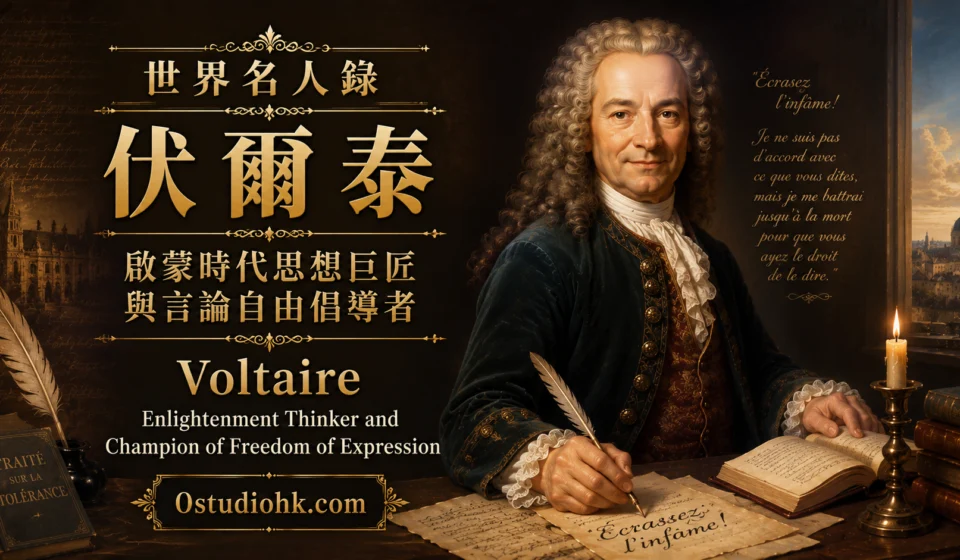
伏爾泰|啟蒙時代思想巨匠與言論自由倡導者 Voltaire | Enlightenment Thinker and Champion of Freedom of Expression

伏爾泰以犀利文字挑戰專制、宗教迫害與司法不公,倡導理性、自由與寬容。他的思想成為歐洲啟蒙運動的重要力量,並深刻影響近代民主思想。
Voltaire became one of the Enlightenment’s most powerful voices, using satire and reason to challenge intolerance and arbitrary authority. His writings helped shape modern ideas about liberty, justice, and freedom of thought.
中文版本
伏爾泰(Voltaire),本名弗朗索瓦-馬利·阿魯埃(François-Marie Arouet),於1694年出生於法國巴黎,是十八世紀歐洲啟蒙時代最具影響力的思想家、作家及哲學家之一。他的一生跨越法國君主專制逐漸受到挑戰的年代,而他最強大的武器並不是軍隊或政治權力,而是一支筆、一種幽默而尖銳的文風,以及對理性與自由的堅持。伏爾泰年輕時已經展現出卓越的文學才能,他的戲劇、詩歌及諷刺作品逐漸在巴黎社會引起注意。然而,他對權貴與政府的批評亦令自己付出代價。1717年,他因涉嫌創作諷刺攝政王的作品而被囚禁於巴士底獄,這段經歷使他更加清楚地看到言論受到權力限制的問題。出獄後,他開始使用「伏爾泰」這個名字,並逐步建立起自己的文學聲望。1726年,他與法國貴族發生衝突,遭到拘禁並最終前往英國。這次流亡反而成為他思想發展的重要轉折點。在英國期間,伏爾泰接觸到與法國截然不同的政治及思想環境。他觀察英國的議會制度、宗教環境及科學發展,並深入研究約翰·洛克與艾薩克·牛頓等人的思想。英國經驗令他更加相信理性、科學知識及有限政府的重要性。回到法國後,他出版《哲學通信》,透過介紹英國社會來反思法國的政治制度與宗教環境。作品雖然受到當局禁止,但他的思想已經廣泛流傳。伏爾泰並不是一位只在書房中談論哲學的人,他經常介入現實社會的不公事件。其中最著名的是卡拉斯案件。法國商人讓·卡拉斯被指控殺害兒子,案件帶有嚴重的宗教偏見,最終卡拉斯遭到處決。伏爾泰認為案件存在嚴重司法不公,因此利用自己的聲望與文字力量要求重新調查,最終促成案件平反。這件事充分展現他對宗教寬容與司法公正的重視,也說明他相信知識分子可以利用公共影響力挑戰不合理的權力。文學方面,伏爾泰留下大量作品,其中《老實人》尤其著名。這部作品以諷刺及黑色幽默描寫戰爭、宗教狂熱、社會階級及盲目樂觀,透過主人公坎迪德的旅程,讓讀者看見現實世界與理想主義之間的巨大差距。伏爾泰的作品之所以歷久不衰,正是因為他不只是講述故事,而是經常利用故事提出問題:如果世界並不完美,人類應該如何面對?如果權威犯錯,人民是否應該保持沉默?如果不同宗教與思想的人無法互相容忍,社會又如何可能和平共存?在政治思想上,伏爾泰反對專制權力及不合理的司法制度,但他並不完全等同於現代民主制度的倡導者。他較傾向支持開明君主制,希望由受教育、懂得理性的統治者推動改革,同時保障人民一定程度的思想與宗教自由。他尤其反對宗教狂熱與迫害,認為人不應因信仰不同而受到不公平對待。伏爾泰一生經常與當權者發生衝突,也曾在不同地方生活,但他的名聲卻越來越大。1778年,他返回巴黎,受到民眾熱烈歡迎,同年5月30日逝世,享年83歲。法國大革命後,他的遺骸被移葬巴黎先賢祠,與法國歷史上的重要人物並列。伏爾泰的影響並沒有隨着死亡而結束,他的作品及思想繼續影響歐洲啟蒙運動、法國政治文化及後來的人權思想。今天,人們談論言論自由、宗教寬容、司法公正與理性思考時,仍然會想起伏爾泰。雖然他的部分政治觀點與十八世紀的歷史環境密不可分,但他敢於質疑權威、反對迫害,以及相信理性可以改善社會的精神,依然具有跨越時代的意義。伏爾泰最重要的遺產,也許並不是某一項政治制度,而是一種思考方式:面對權威時保持懷疑,面對不公時敢於發聲,面對不同信仰時保持寬容,並相信人類可以透過知識與理性逐步改善自己的世界。這種精神使伏爾泰不只是法國啟蒙時代的一位作家,更成為世界思想史上一個代表自由思考與批判精神的重要名字。
English Version
Voltaire, born François-Marie Arouet in Paris in 1694, became one of the most recognizable intellectual figures of the European Enlightenment. He was a writer, historian, philosopher, and relentless critic of intolerance and arbitrary power. His influence did not come from holding political office or commanding armies. Instead, he built his reputation through language. Satire, essays, plays, letters, and philosophical works allowed him to question institutions that many people considered untouchable. Voltaire’s early literary success brought him fame, but it also created serious conflicts with authority. In 1717, he was imprisoned in the Bastille after writings associated with him were considered offensive to the French government. The experience reinforced his hostility toward censorship and arbitrary political power. After his release, he adopted the name Voltaire and continued developing his career as a writer and public intellectual. A confrontation with a powerful nobleman later resulted in another period of detention and eventually forced him to leave France for England in 1726. His years in England proved enormously important. He encountered a political culture with a stronger parliamentary tradition and greater religious diversity than he had known in France. He also studied the ideas of John Locke and the scientific achievements of Isaac Newton. These experiences strengthened his belief in reason, empirical knowledge, intellectual freedom, and reform. When he returned to France, Voltaire used what he had learned abroad to examine his own country’s political and religious institutions. His Letters on the English presented British society as a contrast to France and became an important work of Enlightenment criticism. Authorities reacted strongly, but attempts to suppress the book could not prevent its ideas from circulating. Voltaire was also deeply concerned with injustice outside the world of literature. One of the clearest examples was the Jean Calas affair. Calas, a Protestant merchant, was convicted and executed for the alleged murder of his son in a case that Voltaire believed had been heavily influenced by religious prejudice. Voltaire launched a campaign calling attention to the injustice, eventually helping secure a posthumous reversal of the conviction. The episode demonstrated how he viewed writing as a form of public action. For Voltaire, defending reason was not simply an abstract philosophical exercise; it meant challenging prejudice when prejudice produced real human suffering. His literary legacy is equally significant. In Candide, he used irony, absurdity, and dark humor to challenge simplistic optimism and expose the brutality of war, religious fanaticism, social inequality, and human hypocrisy. Rather than presenting a comfortable philosophical answer, he encouraged readers to question easy explanations about why suffering exists. His writing repeatedly returned to a central concern: how should human beings behave in a world filled with uncertainty and injustice? Voltaire strongly defended religious tolerance and freedom of conscience. He opposed persecution carried out in the name of religion and believed that people with different beliefs should be able to live together without violence. Politically, his position was more complicated than modern democratic ideals. He criticized absolute monarchy and arbitrary justice, yet he did not advocate universal democracy in the modern sense. He often preferred the idea of an enlightened ruler who would use reason to introduce reform while respecting intellectual and religious freedoms. This distinction is important when considering his historical legacy. Voltaire belonged to his own century, but many of the questions he raised later became central to modern political culture. He continued writing and corresponding with intellectuals throughout Europe and became one of the best-known public thinkers of his age. In 1778, he returned to Paris to an extraordinary public reception. He died there on May 30 at the age of eighty-three. After the French Revolution, his remains were transferred to the Panthéon, reflecting the symbolic importance later generations attached to his contribution to French intellectual life. Voltaire’s influence extended far beyond France. His writings helped spread Enlightenment criticism of censorship, religious persecution, judicial abuse, and unquestioned authority. His legacy can be found in later debates about civil liberties, freedom of conscience, education, justice, and the relationship between citizens and government. Yet perhaps the most enduring part of his legacy is not a single political doctrine. It is an intellectual attitude: question authority, examine evidence, resist fanaticism, defend fairness, and remain willing to reconsider beliefs. Voltaire understood that words could be dangerous to unjust power precisely because they could encourage people to think for themselves. More than two centuries after his death, that idea remains central to the meaning of intellectual freedom.
總評
伏爾泰以文字挑戰專制、宗教迫害與司法不公,將理性、寬容與自由帶入公共討論,成為啟蒙時代最具代表性的思想聲音之一。
Summary
Voltaire transformed criticism into a powerful instrument for social change. His defense of reason, tolerance, justice, and intellectual freedom remains an important part of the Enlightenment legacy.