
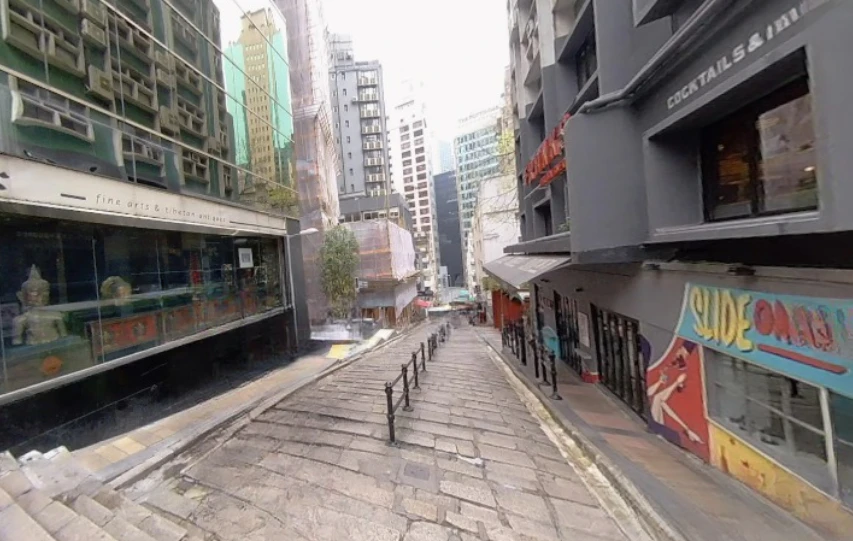
【街道筆錄】石板街(砵典乍街):中環最具標誌性的石階街道與歷史象徵 | Pottinger Street: Hong Kong’s Iconic Stone Steps Street in Central
石板街不像一般街道,它是一段被踏過無數次的石階,從舊香港走到今日,每一塊石板都記錄着城市的重量與節奏。
More than a street, Pottinger Street is a staircase of history—each worn stone step holding traces of footsteps that connect old Hong Kong with the present.
中文
石板街,即砵典乍街(Pottinger Street),位於中環核心地帶,是香港少數仍然完整保留石板階梯形式的歷史街道之一,其名稱來自香港首任總督砵甸乍,象徵香港在香港開埠初期的殖民行政背景。砵典乍街建於19世紀中期,當時中環地勢陡峭,街道設計必須順應山勢,因此以石板鋪設成階梯,方便行人上下,也形成今日極具辨識度的景觀。這些石板經過長時間磨損,表面變得光滑甚至略帶弧度,記錄着無數行人的足跡,成為一種「被使用出來的歷史」。在早期,石板街連接商業區與住宅區,是日常通勤的重要通道,附近聚集布匹店、裁縫店與各類小型商業活動,使這條街既具功能性,也充滿生活氣息。隨着香港發展,中環逐漸轉型為金融與商業中心,砵典乍街周邊環境發生巨大變化,高樓大廈與現代建築取代舊式唐樓,但石板街本身卻得以保留,成為城市中少數未被完全改造的歷史空間之一。從城市變化角度來看,石板街是一種「被保護的記憶」,它沒有隨城市更新而消失,而是被視為文化資產保存下來,使人們仍能透過身體行走去感受歷史。街道特色方面,最鮮明的就是連續的石板階梯與狹窄街道形成的視覺節奏,加上兩旁商舖與街道交錯,構成強烈的空間壓縮感與立體層次,亦因此成為攝影與電影取景的熱門地點,承載着大量關於香港的視覺記憶。今日的石板街,不只是交通通道,更是一種象徵,它讓人意識到城市並非只是向上發展的高樓,也包括那些被踏過、被保留、被記住的細節,讓歷史以最直接的方式存在於腳下。
English Version
Pottinger Street, often referred to as the Stone Slab Street, is located in the heart of Central Hong Kong and remains one of the few streets in Hong Kong that has preserved its original stone-step construction, making it a distinctive historical landmark within the modern cityscape. Named after Sir Henry Pottinger, the street reflects the early colonial administration established following the British colonization of Hong Kong. Constructed in the mid-19th century, Pottinger Street was designed to accommodate the steep terrain of Central, with stone slabs forming a continuous staircase that allowed pedestrians to move between different elevations efficiently. Over time, these stones have been worn smooth by countless footsteps, creating a tactile record of the city’s daily life—a form of history shaped not by monuments but by use. In its early years, the street functioned as an important connector between commercial and residential zones, with fabric shops, tailors, and small businesses lining its sides, contributing to a vibrant and practical urban environment. As Hong Kong evolved into a global financial hub, the surrounding area underwent extensive redevelopment, with modern high-rise buildings replacing older structures; however, Pottinger Street itself has remained largely unchanged, preserved as a heritage feature that offers a rare glimpse into the city’s past. From an urban perspective, it represents a form of protected memory, where physical space is maintained not only for its historical value but also for its ability to provide an experiential connection to earlier periods. The defining characteristics of the street include its continuous stone steps, narrow layout, and the interplay between built form and movement, creating a visually striking and immersive environment. It has also become a popular location for photography and film, embedding itself in the visual identity of Hong Kong. Today, Pottinger Street is more than just a pathway; it is a symbol of continuity, reminding us that a city is not only defined by its skyline, but also by the surfaces we walk upon and the layers of history they quietly hold beneath our feet.