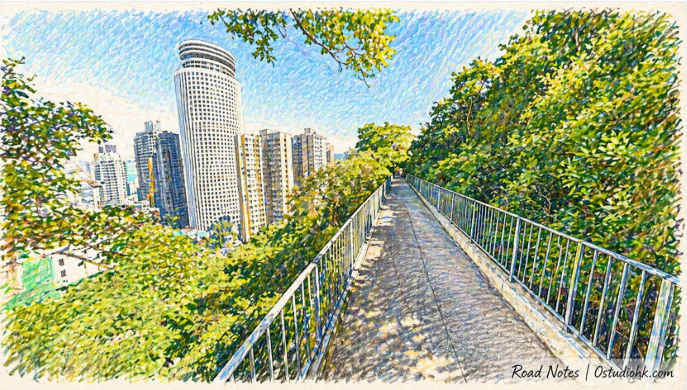
沿著半山綠蔭蜿蜒的寶雲道,城市的喧囂彷彿被隔絕,只餘腳步與風聲交織。這條道路不僅連接港島不同高度,更承載著殖民時期公共工程與城市擴展的歷史痕跡。
Winding gently along Hong Kong’s Mid-Levels, Bowen Road offers a rare hush above the city’s rush. More than a scenic path, it quietly reflects an era of colonial infrastructure that shaped how the hillside metropolis grew and connected.
中文
寶雲道位於香港島半山區,是一條沿山勢橫向鋪展的道路,既不像中環那樣繁忙,也不如山頂般遙遠,卻在城市之間形成一條獨特的過渡空間。這條道路的名字源自香港第九任港督寶雲(Sir George Bowen),他在十九世紀後期任內推動基礎建設與公共工程發展,使香港逐漸由貿易港轉向更成熟的殖民城市。寶雲道的興建,與當時政府在山腰鋪設供水設施與道路系統密切相關,尤其是著名的寶雲道輸水道(Bowen Road Aqueduct),這些設施不僅解決了城市供水問題,也為半山地區的居住發展奠定基礎。從歷史角度看,寶雲道見證了香港由殖民據點向都市化轉型的過程,早期主要服務於外籍人士與上層社會,沿路逐漸出現低密度住宅與洋房,形成與下方擁擠市區截然不同的生活節奏。隨著時間推移,這裡由昔日的殖民居住區,逐步轉變為今日結合豪宅、自然步道與公共空間的混合地帶,但其低密度與綠意依然保留,使其在高樓林立的香港顯得格外稀有。從城市變化角度來看,寶雲道是一條橫向連接不同社區的「中層脈絡」,既連接灣仔與中環,也在無形中串聯了城市不同階層的生活方式,從昔日殖民精英到今日本地居民與外籍人士並存,反映出社會結構的演變。而其最大特色,在於那條被稱為「寶雲道跑馬徑」的步行路段,平坦而長,兩旁被茂密樹木包圍,陽光透過枝葉灑落地面,形成四季變化的光影節奏;同時可遠眺維港與城市天際線,構成一種「城市與自然並存」的視覺體驗。沿途亦可見舊式護土牆、石橋與歷史設施,這些細節讓人感受到時間的沉積。今日的寶雲道,不再只是交通道路,更像是一條生活與記憶的走廊,成為跑步者、散步者與攝影者的聚集地,也是一個讓人暫時遠離城市壓力的空間。在香港這個高密度城市中,它象徵著一種平衡——在發展與自然之間,在歷史與現代之間,留下一條可以慢下來的路,而這種「慢」,或許正是寶雲道最深層的意義。
English Version
Bowen Road sits quietly along the Mid-Levels of Hong Kong Island, stretching horizontally across the hillside as a subtle yet vital connector between districts. Unlike the intensity of Central below or the exclusivity of The Peak above, it occupies an in-between realm—both physically and culturally—where the city softens into something more reflective. Named after Sir George Bowen, the ninth Governor of Hong Kong, the road traces back to a period in the late 19th century when colonial authorities were actively shaping the city’s infrastructure. During Bowen’s tenure, public works such as water supply systems and hillside roads were expanded to support a growing population, and Bowen Road became closely tied to the construction of the Bowen Road Aqueduct, a key engineering project that ensured reliable water distribution. Historically, this area developed as a residential zone for expatriates and the colonial elite, characterized by lower density housing and a quieter environment compared to the bustling urban core. Over time, however, the character of Bowen Road evolved alongside Hong Kong itself. What was once a symbol of colonial privilege has gradually transformed into a shared urban space where local residents, expatriates, and visitors coexist. Yet despite these changes, the road has retained a sense of calm that is increasingly rare in the city. Its transformation reflects broader social shifts, illustrating how Hong Kong moved from a colonial outpost to a global metropolis while still preserving fragments of its layered past. One of Bowen Road’s defining features is its famous jogging trail, often referred to as the Bowen Road Fitness Trail. Long, level, and shaded by dense greenery, it offers a unique walking experience where sunlight filters through the canopy, creating a rhythm of light and shadow that changes with the seasons. Along the way, glimpses of Victoria Harbour and the skyline emerge between the trees, reinforcing the coexistence of nature and urban density. Historical remnants such as stone retaining walls and old infrastructure quietly line the path, adding texture and depth to the environment. Today, Bowen Road is no longer just a road but a living corridor—a place where people come to run, reflect, and reconnect with a slower pace of life. In a city defined by speed and vertical growth, it represents something increasingly valuable: balance. Between development and preservation, between history and modernity, Bowen Road offers not just a route across the hillside, but a rare opportunity to pause within the city itself.
總語
寶雲道不是一條趕路的街,而是一條讓人慢慢走、慢慢看、慢慢記住香港的地方。