
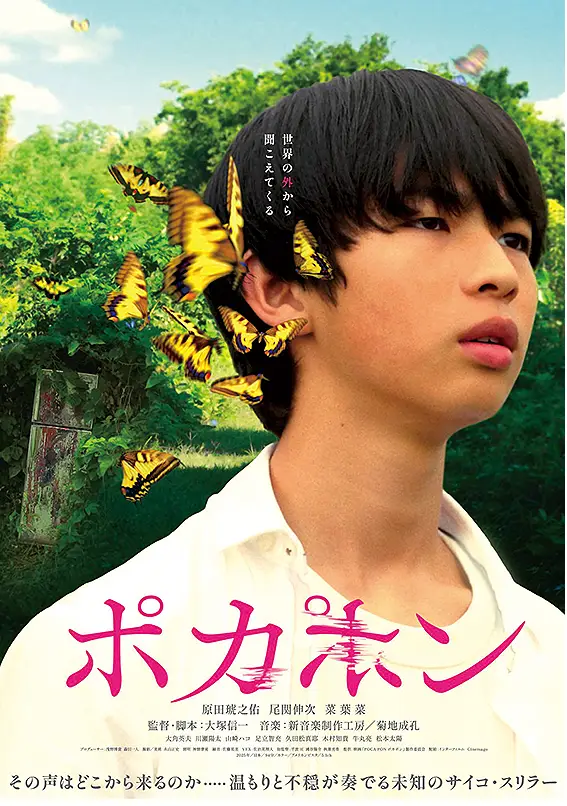
《POCA PON ポカポン》是一部難以被單一類型定義的日本電影,它同時擁有家庭劇的溫度、心理懸疑的不安,以及近乎都市傳說般的神秘氣息。導演大塚信一以一個普通團地家庭為核心,在極其平凡的生活場景中,慢慢滲入難以解釋的聲音、情緒與陰影,使觀眾逐漸被拉進一種既熟悉又詭異的情感空間。
POCA PON is a uniquely atmospheric Japanese drama that blends family tension, psychological unease, and surreal mystery into a quietly disturbing cinematic experience. Director Shinichi Otsuka constructs a world where ordinary apartment life slowly becomes infused with strange sounds, emotional fractures, and lingering fears, creating a story that feels intimate yet deeply unsettling.
電影內容
《POCA PON ポカポン》以一座地方城市的老舊團地作為舞台,描寫一個看似平凡卻逐漸被異樣氣氛籠罩的家庭。13歲的健太與10歲弟弟祐二,和母親朝子相依為命,生活條件並不寬裕。健太深知家庭困境,因此拼命讀書,希望未來能改變母親與弟弟的人生。然而對母親而言,這種過度努力似乎毫無意義。朝子總是勸他不要把人生浪費在讀書上,而是應該趁現在享受生活。這種觀念上的差異,讓母子之間形成難以言喻的距離。他們彼此其實深愛對方,卻始終無法真正理解對方的內心。電影最令人不安的元素,來自健太時常聽見的一段奇怪旋律。「ポカポン」這個像聲音又像名字的存在,總會在某些瞬間突然出現,帶著一種難以解釋的熟悉感與懷舊氣息。它像是來自記憶深處,又像是某種無形存在的低語。健太明明感到熟悉,卻始終無法回想它真正的來源。這個神秘聲音逐漸成為電影核心,它不只是超自然現象,更像象徵人內心壓抑情緒、童年創傷與無法說出口的孤獨。與此同時,團地管理人駿一的存在,也讓整個故事染上一層奇異色彩。他總是默默關心這個家庭,尤其對健太抱持特殊關注。據說他擁有某種「不思議的力量」,這種模糊而難以證實的傳聞,令健太既害怕又著迷。電影並沒有直接將駿一塑造成典型超自然角色,而是維持曖昧界線,讓觀眾無法確定究竟是真有異能,還是人們對孤獨與恐懼所產生的投射。而當團地裡開始流傳一名曾震驚社會的獵奇殺人犯就住在附近時,原本壓抑的不安情緒迅速蔓延。居民之間的猜疑與恐懼開始浮現,平靜社區逐漸出現裂痕。電影最出色之處,在於它並不依賴激烈驚悚橋段,而是透過日常生活中的細微變化,慢慢堆積出心理壓迫感。觀眾會發現,真正可怕的並非某個具體怪物,而是人與人之間逐漸無法互相信任的情緒,以及那些無法被理解的內心傷口。《POCA PON》同時也是一部關於家庭與成長的電影。健太既想逃離貧困與壓抑,又無法放下母親與弟弟。他的成熟背後其實隱藏著極度孤單,而那道「ポカポン」的聲音,也像是一種對過去與溫暖記憶的召喚。導演大塚信一延續《横須賀綺譚》中擅長的曖昧敘事風格,以介於現實與幻想之間的方式,描繪社會邊緣人物的情感狀態。電影畫面帶有濃厚昭和末期與平成初期團地文化氣息,老舊樓梯、狹窄房間與陰暗走廊形成獨特壓迫感,讓整部作品瀰漫著懷舊卻令人不安的空氣。這不是一部單純的懸疑片,也不是純粹的家庭劇,而是一場關於孤獨、記憶與人性裂縫的低語式電影體驗。
English Version
POCA PON unfolds within the aging apartment complexes of a provincial Japanese city, where a struggling single mother and her two sons attempt to maintain a fragile sense of normalcy. Thirteen-year-old Kenta carries an overwhelming sense of responsibility for his family’s future. Determined to escape poverty, he studies obsessively, believing academic success may someday provide his mother Asako and younger brother Yuji with a better life. Yet Asako dismisses his efforts, insisting that life should be enjoyed in the present rather than sacrificed for uncertain dreams. Their emotional disconnect creates a subtle but painful tension that quietly shapes the family dynamic. Beneath the surface of this domestic drama lies something stranger and more unsettling. Kenta repeatedly hears a mysterious sound or melody known only as “POCA PON.” It feels oddly nostalgic, as though connected to a forgotten memory buried deep within him. The sound appears unexpectedly, drifting between reality and imagination, becoming one of the film’s most haunting motifs. Rather than functioning as a conventional supernatural element, POCA PON symbolizes unresolved emotions, loneliness, and memories that refuse to disappear. The apartment complex’s caretaker, Shunichi, further deepens the film’s eerie atmosphere. He quietly watches over the family and appears to possess an unexplained power that fascinates Kenta. Otsuka carefully avoids giving clear answers regarding whether Shunichi truly has supernatural abilities or whether he merely represents the projections of frightened and isolated people searching for meaning in difficult lives. This ambiguity becomes central to the film’s identity. The story grows darker when rumors begin circulating that a notorious serial killer responsible for horrifying crimes years earlier may be living within the same housing complex. Fear slowly spreads among residents, and the once-familiar environment begins to feel unsafe. Neighbors become suspicious of one another, ordinary conversations gain hidden tension, and the apartment building itself transforms into a space filled with paranoia and emotional instability. What makes POCA PON especially effective is its refusal to rely on conventional horror techniques. The film creates unease through silence, routine, and emotional discomfort rather than explicit violence. Everyday scenes gradually become psychologically oppressive, allowing the audience to experience the same uncertainty as the characters. At its core, the film is deeply concerned with emotional isolation and fractured communication within families and communities. Kenta’s desire to protect his family masks profound loneliness, while Asako’s dismissive attitude toward ambition reflects exhaustion and resignation born from hardship. The mysterious melody haunting Kenta feels tied to forgotten warmth, childhood innocence, and emotional longing that can no longer be fully recovered. Director Shinichi Otsuka continues the dreamlike storytelling style seen in his earlier works, blending realism with subtle surrealism to explore the emotional lives of marginalized individuals. The visual atmosphere of aging Japanese housing complexes — narrow corridors, dim stairwells, cramped rooms, and fading urban landscapes — contributes heavily to the film’s melancholic tone. POCA PON ultimately becomes less about solving a mystery and more about exploring the invisible wounds carried by ordinary people. Quietly disturbing and emotionally layered, the film leaves viewers suspended between memory, fear, and compassion long after it ends.
影片簡介(預告片/片段)
一段神秘旋律,悄悄撕開團地家庭深藏的不安與孤獨。
A mysterious melody slowly exposes the loneliness and fear hidden within an ordinary family.
電影資料
導演:大塚信一
類型:劇情、心理懸疑、家庭、神秘
製片公司:日本獨立電影製作團隊
上映年份:2020年代
主要演員
原田琥之佑
尾關伸次
菜葉菜
川瀨陽太
山崎ハコ
總結
《POCA PON ポカポン》是一部極具氣氛與情感層次的作品,它將家庭問題、社區不安與超現實感巧妙融合,在安靜敘事中逐漸累積壓迫感。電影沒有明確解釋所有謎團,而是讓觀眾停留在曖昧與情緒之間,感受那些無法被言語說明的孤獨與傷痕。對喜歡日本獨立電影與心理系作品的觀眾而言,這是一部餘韻極強的異色之作。
Conclusion
POCA PON is an emotionally rich and atmospherically haunting film that blends family drama, psychological tension, and surreal mystery into a uniquely immersive experience. Rather than offering straightforward answers, the film invites viewers to remain within its ambiguity, exploring the hidden loneliness and emotional scars carried by ordinary people. Quietly unsettling yet deeply compassionate, it stands as a memorable work of contemporary Japanese independent cinema.