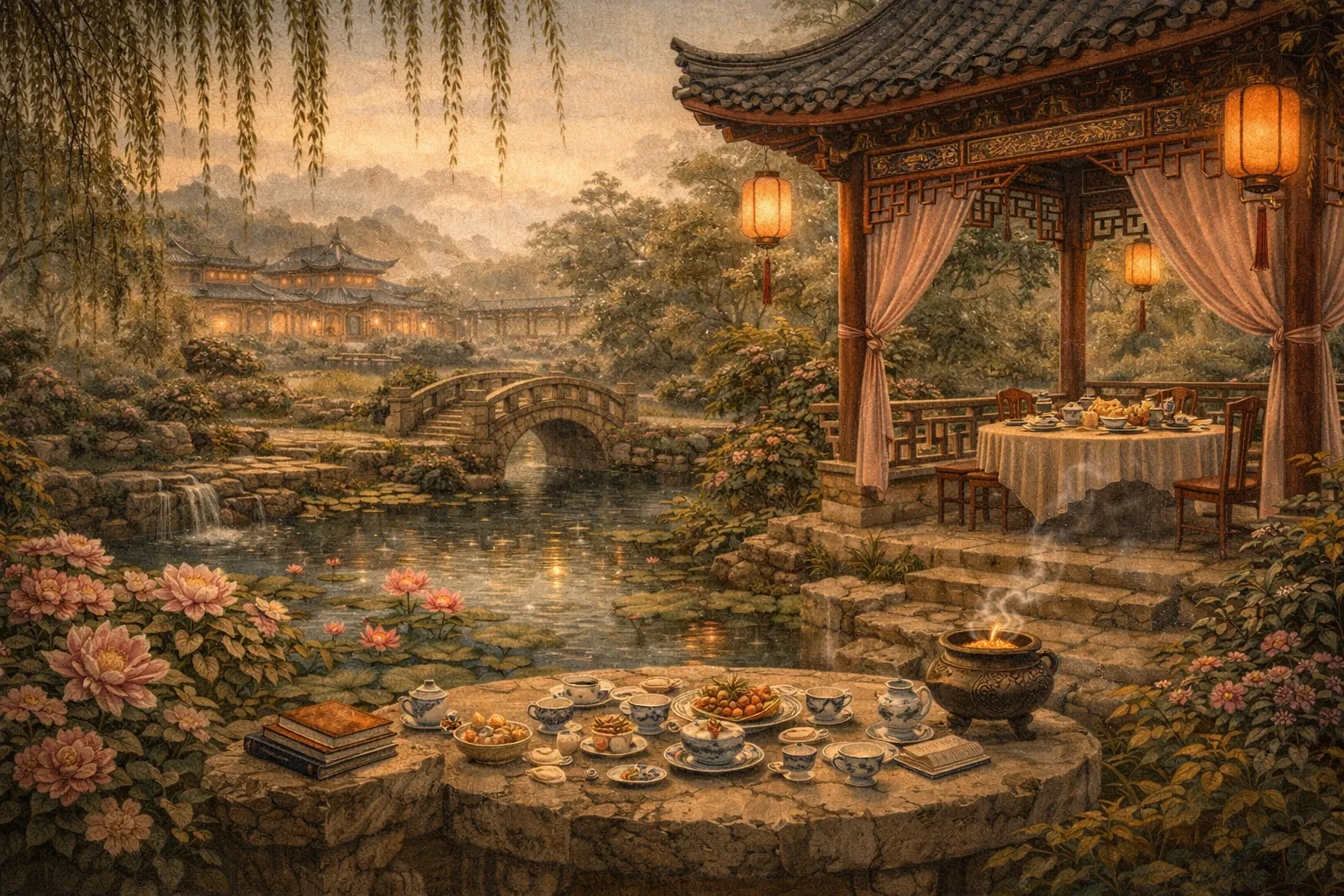
《紅樓夢》第七章|當傾斜出現,平衡就已不存在 | Dream of the Red Chamber Chapter 7: Once Imbalance Appears, Equilibrium Is Already Gone
平衡從來不是一種穩固的狀態,而是一種隨時可能傾斜的假象。《紅樓夢》第七章透過人物之間微妙的變化,呈現出關係與權力如何在不知不覺中偏移。當傾斜開始出現,表面的和諧仍在,但內裡的結構早已改變。
Balance is rarely as stable as it appears—it is often an illusion waiting to shift. In Chapter 7 of Dream of the Red Chamber, subtle changes in relationships reveal how power and emotional alignment quietly begin to tilt. Even as outward harmony remains intact, the underlying structure has already changed. This chapter captures the moment when imbalance first takes hold—long before anyone openly acknowledges it.
榮國府宅院深廣,亭台樓閣錯落有致。清晨時分,丫鬟婆子已開始忙碌。有人掃庭院,有人備茶點,整座府第井然有序。黛玉初來時常覺得繁雜,如今卻也慢慢習慣。
這日清晨,黛玉起身之後,推窗望見園中花木新綠。春意正濃,微風拂動柳枝。她不禁輕輕吟了一句詩。
不久,丫鬟來請她到賈母處請安。黛玉換了衣裳,便前往正廳。
此時賈母已端坐廳中,旁邊坐著幾位姑娘。賈寶玉也在,正與眾人說笑。見黛玉進來,他立刻起身說道:「妹妹今日來得晚些。」
黛玉笑道:「早起看花,一時忘了時辰。」
賈母聽了,笑著說:「春日賞花正好,你們年輕人多走走看看,倒也無妨。」
說話間,丫鬟端上茶點。廳中氣氛輕鬆愉快。賈母不時問起黛玉在府中的生活是否習慣,黛玉一一回答。
席間又說起府中姊妹們的學習。賈母向來重視詩書,因此常請先生來教姑娘們讀書寫字。寶玉雖不喜拘束,但對詩詞卻頗有興趣,常與姊妹們一起吟詩作對。
這日午後,寶玉邀眾人到園中散步。園中小橋流水,花木扶疏,景色極美。姑娘們一邊走,一邊談笑。
寶玉忽然提議:「今日春光正好,不如大家各作一首詩,看誰寫得最好。」
眾人聽了都覺得有趣。黛玉略微沉吟,很快便吟出幾句清雅的詩句。眾人聽了都稱讚她才情出眾。
寶玉笑道:「妹妹的詩總是最動人。」
黛玉聽了,只淡淡一笑,卻未多言。
夕陽西下時,眾人回到廳中。府中晚膳早已準備妥當。榮國府的餐桌上菜餚豐盛,銀器玉盞映著燈火,顯得格外華麗。
黛玉雖然身在其中,卻常常心生感慨。這樣的富貴生活,看似長久,卻不知是否真的能永遠持續。
夜深之後,她回到房中,窗外月色清明。她獨坐窗前,輕輕翻著詩集,心中忽然生出一絲淡淡的愁緒。
榮國府的繁華日常仍在繼續,但在這華麗景象之下,許多人的命運正在悄然改變。這座看似安穩的大家族,也將迎來一連串難以預料的波瀾。
English Version
Balance, in the Jia household, is never absolute.
It exists only as long as no one looks too closely.
In Chapter 7, something begins to tilt. Not enough to break the surface, not enough to cause disruption—but enough to alter the shape of everything beneath it.
No single moment defines the change.
It is gradual. Almost imperceptible.
A difference in attention.
A shift in tone.
A quiet redistribution of importance.
And yet, once the tilt begins, balance is already lost.
What remains is only the appearance of stability.
Those within the household continue as before, following familiar patterns, speaking in measured ways, maintaining the illusion that nothing has changed.
But something has.
Because balance is not something that can be partially broken.
It either holds—or it doesn’t.
Baoyu senses the shift in ways he cannot explain. His responses, his emotions, begin to reflect a world that no longer feels evenly arranged.
Daiyu, as always, observes more than she reveals.
She recognizes that imbalance does not announce itself.
It settles quietly,
and once it does,
everything must adjust around it.