
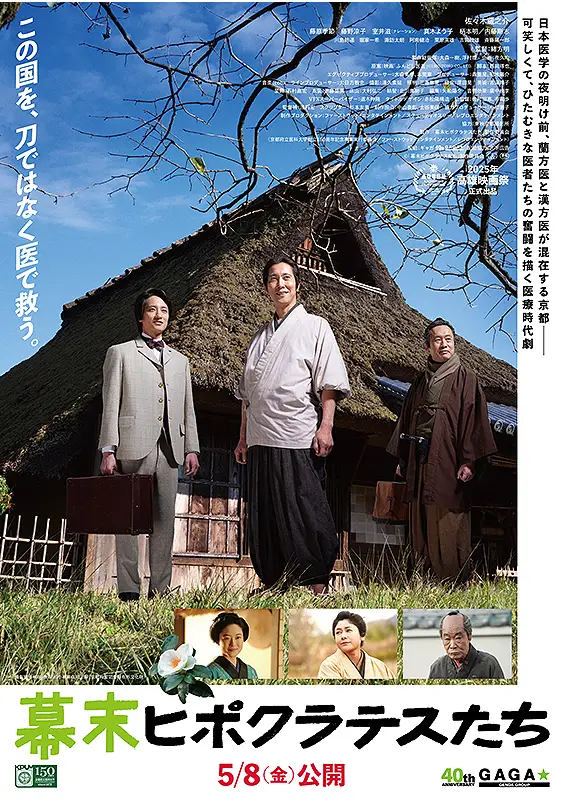
《幕末ヒポクラテスたち》以幕末京都為背景,描繪日本醫學從傳統漢方走向西洋醫學時代的動盪與衝突。電影不只是醫療題材時代劇,更透過一名村醫的視角,呈現亂世之中的人情、生命價值與對醫者使命的堅持。
Bakumatsu Hippocrates is a historical drama set during the turbulent final years of the Edo period, exploring the clash between traditional Japanese medicine and newly introduced Western medical practices. Through the story of a compassionate rural doctor, the film reflects on humanity, social change, and the meaning of healing in an era standing at the edge of modernization.
電影內容
《幕末ヒポクラテスたち》的故事發生在幕末時代的京都郊外,那是一個舊制度逐漸崩塌、新思想與西洋文化開始湧入日本的混亂年代。武士階級動盪不安,百姓生活困苦,而醫學世界也同樣面臨劇烈變革。長久以來主導日本醫療的漢方醫學,開始受到西洋醫學與蘭學知識衝擊,兩種醫療理念之間既互相排斥,也不得不共存。在這樣的背景下,電影主角大倉太吉作為一名蘭方醫,選擇以更加開放與務實的方式拯救病人。太吉住在鄉村之中,無論貧富與身分,都願意替人看病。他性格寬厚、充滿好奇心,也願意接受新知識,因此經常與保守派漢方醫玄斎發生激烈爭論。兩人既是對手,也像是兩種時代精神的化身。玄斎代表傳統與經驗,而太吉則象徵逐漸萌芽的現代醫學觀念。電影並未簡單把其中一方塑造成絕對正確,而是透過他們的衝突,展現時代轉型時人們的焦慮與迷惘。故事的重要轉折來自青年新左的出現。新左性格衝動暴烈,原本只是村中令人畏懼的年輕人,卻因受重傷而被太吉以手術救回性命。這場手術不只是醫療行為,更像是一道命運分界線,徹底改變了太吉與新左的人生。新左開始重新思考生命與自身存在,而太吉也在救人的過程中,逐漸意識到醫術背後真正重要的,不只是技術,而是理解人心。電影以大量充滿人情味的日常場景描繪村民生活,讓幕末時代不再只是歷史課本中的政治動亂,而成為一個真實有人情溫度的世界。導演緒方明延續大森一樹原本企劃的精神,把《ヒポクラテスたち》的群像氣質與醫療題材結合,使作品帶有濃厚的人文關懷。片中除了醫學之爭,也充滿關於生死、倫理與社會身份的思考。醫者究竟該忠於傳統,還是接受新時代?救人是否應該超越階級與利益?這些問題在幕末動盪背景下顯得格外沉重。佐々木蔵之介飾演的大倉太吉帶有成熟而溫暖的魅力,讓角色既像一位平凡鄉村醫生,也像一位在亂世中堅持信念的人。電影同時帶有濃烈的紀念意味,因為它承載了已故導演大森一樹未完成的遺志。許多曾與大森導演合作過的演員與工作人員再次聚集,使整部作品不只是幕末醫療故事,也像是一場對日本電影精神的傳承與致敬。《幕末ヒポクラテスたち》因此不單是時代劇,更是一部關於生命、理想與人性溫度的作品。
English Version
Bakumatsu Hippocrates is set in the final years of the Edo period, a turbulent era when Japan stood between tradition and modernization. Political unrest spread throughout the country, social hierarchies began to fracture, and Western ideas slowly entered everyday life. Medicine itself became one of the battlegrounds of this transformation. Traditional herbal practitioners coexisted uneasily with doctors studying Dutch medicine and Western surgical techniques, creating tension between long-established beliefs and emerging scientific approaches. Against this historical backdrop, the film follows Okura Taikichi, a rural doctor practicing Western-style medicine in a village outside Kyoto. Taikichi is compassionate, curious, and deeply devoted to helping ordinary people regardless of class or wealth. Unlike many doctors of his time, he values practical healing over rigid ideology, which constantly places him in conflict with the conservative herbal physician Gensai. Their arguments are not merely personal rivalries but reflections of a society struggling to decide between preserving tradition and embracing change. The film treats both perspectives with nuance, portraying each doctor as sincere in his beliefs while revealing the uncertainty and fear that accompany any period of transformation. The story shifts dramatically when Taikichi saves the life of a violent young man named Shinza through surgery. For the villagers, the operation feels almost miraculous, but for Shinza and Taikichi alike, it becomes a life-altering event. Shinza, once driven only by anger and recklessness, begins to reconsider his existence after being saved, while Taikichi grows increasingly aware that medicine is not solely about techniques or knowledge, but about understanding the emotional suffering carried by every human being. Rather than focusing only on medical procedures, the film devotes significant attention to daily village life, creating a vivid portrait of ordinary people struggling to survive during uncertain times. Director Akira Ogata preserves the humanistic spirit originally envisioned by the late filmmaker Kazuki Omori, whose unfinished project became the foundation for this work. The film blends ensemble storytelling with historical drama, emphasizing compassion, ethics, and emotional connection over spectacle. Questions surrounding duty, morality, and the purpose of medicine remain central throughout the narrative. Should doctors remain loyal to tradition, or should they pursue unfamiliar methods that may save more lives? Can healing transcend social divisions and political conflict? These themes give the film emotional depth far beyond a standard period drama. Sasaki Kuranosuke delivers a warm and grounded performance as Taikichi, portraying him as both an ordinary village physician and a quietly heroic figure trying to preserve humanity amid chaos. The movie also carries a powerful sense of legacy. Following Kazuki Omori’s death during pre-production, the project nearly disappeared entirely before Akira Ogata completed it in tribute to his mentor. The participation of actors and staff connected to Omori’s earlier films adds another emotional layer, transforming Bakumatsu Hippocrates into not only a story about medicine in the Edo era, but also a heartfelt reflection on artistic inheritance, memory, and the enduring spirit of Japanese cinema.
影片簡介(預告片/片段)
幕末亂世中的村醫,在傳統與西洋醫學衝突之間守護生命。
A compassionate doctor struggles to heal lives amid the clash between traditional and Western medicine in late Edo Japan.
電影資料
導演:緒方明
類型:時代劇、醫療、歷史、人情劇
製片公司:日本電影製作團隊
上映年份:2026
主要演員
佐々木蔵之介
內藤剛志
柄本明
室井滋
總結
《幕末ヒポクラテスたち》是一部充滿人情與歷史厚度的時代劇,它透過醫療與時代變革,描寫人在亂世中的善良與堅持。電影既是對幕末醫學黎明期的描繪,也是一封獻給已故導演大森一樹與日本電影精神的溫柔情書。
Bakumatsu Hippocrates is a deeply human historical drama that explores medicine, morality, and compassion during one of Japan’s most transformative eras. Beyond its medical themes, the film stands as a touching tribute to legacy, artistic passion, and the enduring power of kindness in uncertain times.