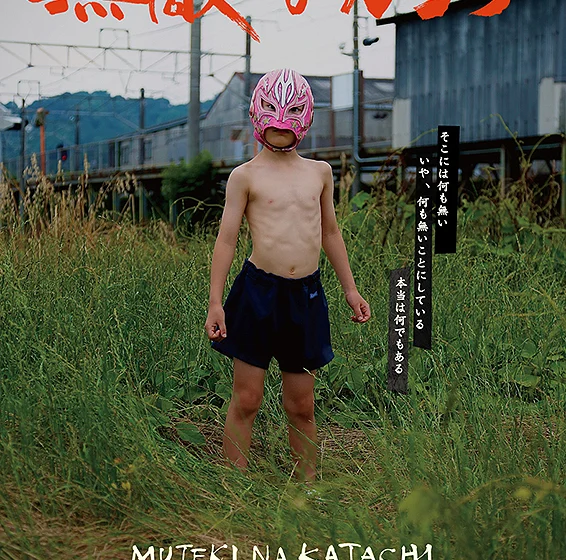
A childhood dream once seemed impossible when height stood in the way. Years later, professional wrestling brought that dream back to life. Through setbacks, perseverance and the support of others, めんたい☆キッド built a career that reached far beyond the ring before choosing retirement on his own terms.
Invincible Form is a documentary that follows the life and professional wrestling journey of めんたい☆キッド, a wrestler from Kyushu whose career grew from a childhood dream into a story of perseverance, connection and self-determination. As a boy living in a small town, Manabu Katakami dreamed of becoming a professional wrestler. Yet his height became a major obstacle in his eyes, and he eventually convinced himself that professional wrestling was not a realistic future. The dream faded into the background as he entered adolescence and spent a difficult period without a clear sense of direction. After spending time preparing for university entrance, he eventually entered university, where an unexpected encounter with a wrestling club changed the course of his life. The experience awakened something that had been buried for years. The excitement and desire he had felt as a child returned, and this time he was able to turn that feeling into a definite goal: becoming a professional wrestler. Determined to pursue the dream he had once abandoned, he eventually travelled to Mexico, where he achieved the professional debut he had long hoped for. His debut, however, was only the beginning. A career in professional wrestling brought repeated setbacks, uncertainty and difficult moments, forcing him to continue searching for his own identity both inside and outside the ring. Rather than presenting wrestling simply as a competition of victories and defeats, the documentary focuses on the human journey behind the performer. It explores how experiences, encounters and encouragement from people around him gradually shaped his career and helped him continue moving forward when circumstances could easily have caused him to give up again. Over time, めんたい☆キッド developed into a popular performer whose appeal reached beyond the traditional wrestling audience. One of the most distinctive aspects of his story is his relationship with children. Through his wrestling persona and performances, he became deeply loved by young fans and was eventually described as a wrestler who had become especially beloved by children. His popularity reached a peak, but instead of simply continuing until circumstances forced him to stop, he began to consider what kind of ending he wanted for his career. He ultimately decided to retire while he could still perform in a way that he himself could accept and feel satisfied with. That decision gives the documentary a broader meaning beyond professional wrestling. Retirement becomes not merely the end of a sporting career, but a personal choice about how one wants to complete a chapter of life. The film therefore works as both a sports documentary and a character-driven portrait of a person who once abandoned his childhood ambition, rediscovered it years later and pursued it despite the difficulties that followed. His journey from a boy who believed his physical limitations made the dream impossible, to a professional wrestler who travelled overseas for his debut, endured repeated setbacks and eventually became a performer loved by children, offers a story about persistence without reducing success to fame or victory. At its heart, Invincible Form is about finding a forgotten dream again and discovering that the path toward it may take a completely different shape from the one imagined in childhood. Directed by filmmaker and singer-songwriter Takashi Shimomotochi, whose documentary works include Kūhaku Live, 6600 Volts and Cloud Journey, the film presents めんたい☆キッド’s career as a personal history shaped by dreams, obstacles, encounters and the people who supported him. Its subject is professional wrestling, but its themes are much wider: the difficulty of finding direction, the courage to begin again, the importance of human connections, and the freedom to decide when and how to close a chapter. By following the wrestler’s journey from childhood aspiration to professional debut, public recognition and eventual retirement, the documentary creates an intimate portrait of a life lived in pursuit of something once thought impossible.
Rather than focusing only on wrestling matches, the documentary follows the person behind the performer. Childhood ambition, disappointment, a second chance, overseas debut, public recognition and a self-determined retirement come together as a portrait of perseverance, relationships and the meaning of pursuing a dream.