
長篇動畫,是怎樣一步一步誕生的? | How Long-Form Anime Was Born: The Evolution of Extended Storytelling【動漫遊】007
長篇動畫的製作過程,往往是一段漫長且充滿挑戰的旅程。它的誕生並非僅僅基於市場需求或商業計算,而是創作者、製作團隊以及觀眾之間逐漸累積的共識所促成的結果。這種共識需要時間的沉澱,並且需要所有參與者在同一時間點上達成「可以進一步推進」的信念。
Long-form anime did not appear suddenly—it emerged through gradual innovation in storytelling, production, and audience demand. From short experimental works to expansive narratives spanning years, this evolution reflects how anime grew into a medium capable of sustained emotional and narrative depth.
通常,一部長篇動畫的起點並不是完整的故事,而可能僅僅是一個世界觀、一段角色關係,甚至只是一種情緒或理念。導演或原作者會選擇透過短篇作品、漫畫、電視動畫,甚至宣傳短片來試探市場反應。這些早期作品可能並未立即吸引大批觀眾,但往往能夠觸動一小部分人,讓他們記住那份獨特的感覺。這些初期的支持者雖然不一定是最活躍或聲量最大的群體,但他們願意追隨、等待,並將作品介紹給身邊的人。
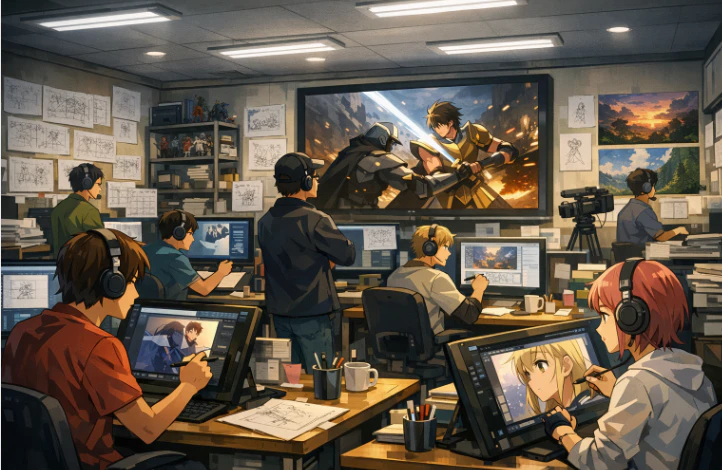
隨著支持者的逐漸累積,製作方才會認真考慮是否投入資源製作長篇動畫。畢竟電影版動畫不僅僅是延長故事時間,更是對資金、技術以及創意的一次全面考驗。畫面的細緻度需要提升,配音陣容需重新調整,音樂也需重新編排,剪輯節奏更需符合電影的敘事方式。這些都要求製作方擁有一個明確的理由:這個故事是否值得花費兩小時來講述。
觀眾在這個過程中扮演著至關重要的角色。長篇動畫之所以能夠成功,是因為它擁有一群穩定且忠實的支持者。他們不僅願意等待創作者慢慢打磨作品,甚至能包容作品可能存在的不完美。例如《ONE PIECE》早期並未立即成為國民級作品,而是透過陪伴角色成長、見證世界觀擴展,逐步獲得進入大銀幕的資格。
在現代,原創動畫要成功推出長篇電影比以往更加困難。觀眾的選擇增多,媒體平台的節奏加快,使得兩小時的專注變得更加珍貴。因此,能夠成功推出電影版的原創動畫通常是那些堅持自身節奏、不迎合潮流的作品。它們可能話題性不高,但卻能長久留存。
長篇動畫不僅僅是一件產品,更是一段創作者與觀眾之間建立信任的旅程。當一部長篇動畫真正誕生時,它已不再僅屬於導演或製作公司,而是屬於所有曾經一路支持過它的人。每次坐下觀看一部動畫電影,不妨思考一下:在這些精美畫面的背後,可能蘊含著多年的等待,以及一群從未離場的支持者。這正是長篇動畫最真實且動人的起點。
English Version
The development of long-form anime represents one of the most significant transformations in the history of Japanese animation. In its earliest stages, anime was primarily composed of short films, often limited by both technology and budget. These works were designed to be concise and self-contained, offering brief glimpses into animated storytelling rather than extended narratives. However, as the medium evolved, creators began to explore the possibility of telling stories over longer periods, gradually laying the foundation for what would become long-form anime. A crucial turning point in this evolution came with the transition to television broadcasting in the 1960s. The introduction of serialized anime created a new framework for storytelling, where narratives could unfold across multiple episodes. This shift was largely influenced by the work of Osamu Tezuka, whose creation of Astro Boy demonstrated that animation could sustain ongoing narratives while maintaining audience engagement. By adopting limited animation techniques, Tezuka made it possible to produce episodes on a regular schedule, balancing efficiency with storytelling ambition. This model allowed anime to move beyond isolated stories and toward continuous narrative development. As television anime gained popularity, the concept of long-form storytelling began to expand. Series could now explore character development, thematic depth, and complex plot structures over extended periods. Viewers formed deeper connections with characters, as they followed their journeys over weeks, months, or even years. This continuity transformed anime into a more immersive experience, where the passage of time became an integral part of the narrative. The influence of manga also played a critical role in shaping long-form anime. Many series were adapted from ongoing manga, which already provided extensive storylines and character arcs. This relationship allowed anime to extend narratives naturally, aligning with the serialized nature of the source material. The interplay between manga and anime created a feedback loop, where each medium reinforced and expanded the other, contributing to the growth of long-form storytelling. During the 1970s and 1980s, long-form anime became increasingly diverse in its genres and themes. Works such as Mobile Suit Gundam demonstrated how extended narratives could incorporate political complexity, character development, and evolving conflicts. These series showed that long-form anime was not limited to simple or repetitive storytelling, but could achieve a level of depth comparable to other narrative forms. The ability to sustain engagement over long periods became a defining strength of the medium. Technological and industrial developments further supported this evolution. As animation techniques improved and production pipelines became more efficient, studios were able to manage the demands of ongoing series more effectively. The expansion of the anime industry created a structure that could support long-term projects, including dedicated teams and resources for continuous production. This infrastructure was essential for maintaining the consistency and quality required for long-form storytelling. The emergence of home video and later digital platforms introduced new dimensions to long-form anime. Viewers were no longer limited to weekly broadcasts; they could revisit episodes, catch up on missed content, and engage with stories at their own pace. In the modern era, platforms such as Netflix and Crunchyroll have further expanded these possibilities, making long-form anime accessible to a global audience. This accessibility has reinforced the appeal of extended narratives, allowing viewers to immerse themselves in stories without interruption. Despite these advancements, the essence of long-form anime remains rooted in its early innovations. It is defined not only by its length, but by its ability to sustain emotional and narrative engagement over time. The gradual development of characters, the unfolding of complex plots, and the accumulation of thematic depth all contribute to its enduring appeal. Long-form anime invites viewers to invest time and attention, offering a richer and more layered experience in return. Ultimately, the birth of long-form anime is a story of adaptation and ambition. It reflects the desire to move beyond limitations and explore the full potential of animated storytelling. From its origins in short films to its current status as a global phenomenon, long-form anime demonstrates how a medium can evolve to meet the changing needs and expectations of its audience. It is not just a format, but a way of experiencing stories—one that continues to grow and transform alongside the viewers who follow it.