
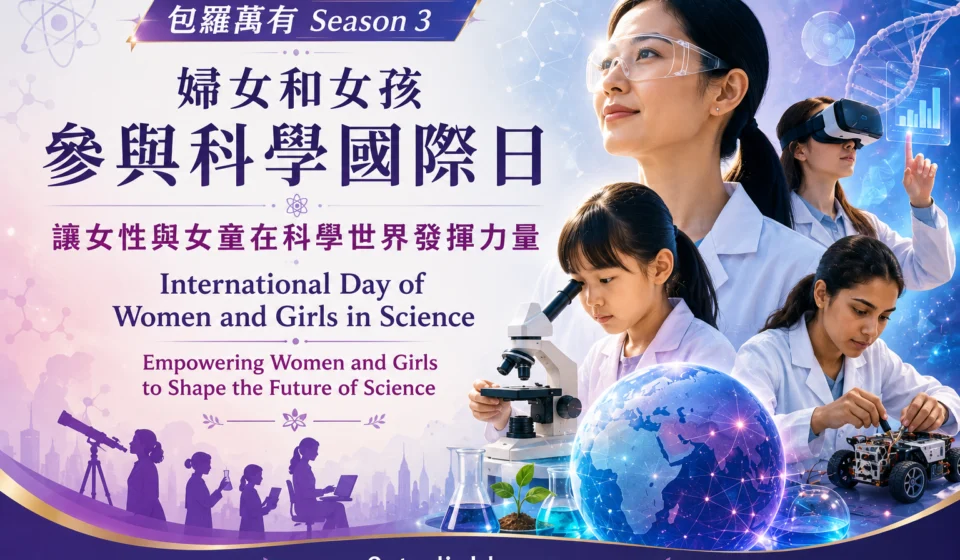
包羅萬有 Season 3 | 婦女和女孩參與科學國際日|讓女性與女童在科學世界發揮力量 | International Day of Women and Girls in Science|Empowering Women and Girls to Shape the Future of Science
每年2月11日的婦女和女孩參與科學國際日,提醒世界打破性別障礙,讓女性與女童平等參與科學、科技、工程與數學。
English:Observed every 11 February, this international day calls for a future where women and girls can participate fully in science, technology, engineering and mathematics.
中文版本
每年2月11日是婦女和女孩參與科學國際日,這個國際日由聯合國大會於2015年通過第70/212號決議設立,目的是肯定婦女和女童在科學領域的重要貢獻,並提高全球對性別平等與科學發展之間關係的認識。聯合國指出,科學、科技、工程及數學(STEM)對應對氣候變化、公共衞生、能源、糧食安全、數碼轉型及其他全球挑戰具有關鍵作用,因此如果世界上一半人口仍然受到教育、資源、職業機會及社會偏見等因素限制,科學本身也會失去大量人才和不同角度。 從歷史角度來看,女性從來不是科學世界的旁觀者。無論是天文學、物理學、化學、生物學、醫學、數學,還是後來發展迅速的電腦科學及人工智能,都有女性研究人員留下重要成果。然而,歷史上的女性科學家往往需要面對比男性更高的門檻,包括教育機會有限、研究資源不足、學術制度中的性別偏見,以及社會對女性角色的傳統期待。即使現代社會已經比過去進步,性別差距仍然存在。聯合國及聯合國教科文組織(UNESCO)指出,女性目前仍只佔全球研究人員不到三分之一,而STEM相關教育及職業領域亦存在明顯的性別比例差距。 UNESCO資料顯示,全球女性研究人員比例約為33.3%,STEM相關畢業生之中女性約佔35%,而G20國家的STEM職位中女性只佔約22%,STEM領導職位的女性比例更低。這些數字並不代表女性缺乏科學能力,而是反映出許多女孩在成長過程中仍然可能遇到不同程度的障礙。最早的影響甚至可能在學校出現。當孩子仍然年幼時,他們會逐漸形成對「甚麼工作適合男孩、甚麼工作適合女孩」的觀念。如果女孩從小接觸到的環境令她認為科學、數學、工程或電腦主要屬於男性領域,她日後選擇相關科目的可能性便可能受到影響。因此,婦女和女孩參與科學國際日的重要訊息之一,就是性別平等不能等到女性成年後才開始處理,而應該從教育和成長階段開始。聯合國在2026年的訊息中也特別強調,及早介入和公平教育對縮小科學領域的性別差距十分重要,應該讓每一名女孩都能想像自己未來成為STEM專業人士的可能。2026年的國際婦女和女童參與科學日更把人工智能帶到討論中心。聯合國公布的2026年主題為「協同人工智能、社會科學、STEM與金融:為婦女和女孩建立包容的未來」(Synergizing AI, Social Science, STEM and Finance: Building Inclusive Futures for Women and Girls),把人工智能、社會科學、STEM及金融視為可以互相配合的四個重要支柱,希望利用科技創新同時處理性別不平等及可持續發展問題。(un.org) UNESCO在2026年同樣以縮小科學領域的性別差距為核心,巴黎總部的活動主題則為「From Vision to Impact: Redefining STEM by Closing the Gender Gap」,即由願景走向實際影響,重新思考如何透過縮小性別差距建立更具包容性的STEM環境。活動特別關注健康研究、網絡安全、人工智能及科學創業等領域,並分享已經證明有效的實際做法。人工智能之所以值得特別關注,是因為它既可以成為縮小差距的工具,也可能在缺乏性別平衡的情況下把既有偏見帶入新的科技系統。如果設計人工智能的人員、提供數據的人員以及決定科技政策的人員缺乏多元背景,系統可能無法充分反映不同群體的需要,甚至把社會原有的偏見轉化成數碼時代的新問題。聯合國秘書長安東尼奧・古特雷斯在2026年的訊息中指出,女性在數據及人工智能相關職業中的比例只有約26%,雲端運算領域更只有約12%,女性在科技領導位置上的不足,可能令數碼工具中的偏見更加難以被發現和修正。因此,讓更多女性進入科學與科技領域,不只是為了增加女性職業選擇,而是直接影響科技本身的質量。當不同背景的人共同參與研究、設計產品、建立數據模型及制定政策,便有更多機會發現原本容易被忽略的問題。醫療研究是一個很好的例子。不同性別在疾病表現、健康需求和醫療經驗方面可能存在差異,如果研究長期缺乏足夠多元的參與者,科學研究的結果便可能無法完全反映所有人的需要。因此,女性參與科學並不是單純的「女性議題」,而是科學質量與社會利益的問題。當更多女性成為醫生、研究人員、工程師、資料科學家、人工智能專家、氣候科學家及科研領導者,整個社會可以獲得更廣泛的人才和觀點。另一方面,女孩需要的不只是「有人告訴她們科學很重要」,而是實際接觸科學的機會。實驗室、博物館、科學活動、編程課程、機械人項目、天文觀察以及STEM教育,都可以讓女孩親身體驗科學並不是課本上的抽象公式,而是一種探索世界的方法。當女孩能夠自己做實驗、提出問題、犯錯、重新嘗試並找到答案,她們對科學的興趣便可以由被動學習轉化為真正的探索。老師、家長和社會亦可以透過日常鼓勵減少「性別適合甚麼科目」的刻板印象。孩子需要知道,喜歡數學並不代表不像女孩,喜歡電腦也不代表一定要成為某一種人;科學是一個任何有好奇心的人都可以參與的世界。另一方面,女性即使成功進入科學領域,也可能在職業發展過程中遇到新的障礙。研究經費、升職機會、學術領導位置、工作與家庭平衡,以及職場文化,都可能影響女性能否長期留在科研道路上。聯合國2026年的訊息指出,女性在STEM領域仍然受到研究資金不足、性別刻板印象和歧視性工作環境等因素限制。因此,單純鼓勵女孩「選讀STEM」並不足夠。如果一個女孩經過多年教育成為優秀科學家,最後卻因為缺乏研究資源或不公平的職場環境而離開科研界,問題仍然沒有真正解決。真正的性別平等需要從教育一路延伸至招聘、研究資助、職業晉升、領導階層以及科研政策。這也是為甚麼婦女和女孩參與科學國際日並不只是在表揚女性科學家,而是在討論整個科學系統應該如何變得更加公平。UNESCO長期推動「縮小科學性別差距」的工作,並透過STEM教育、研究政策、開放科學以及女性科研項目等不同方式,鼓勵女性更加充分參與科學、科技及創新。女性科學家的角色亦可以成為下一代的重要榜樣。當一名女孩看到與自己相似背景的女性正在做科研、操作望遠鏡、設計機械人、研究疾病、分析氣候數據或開發人工智能,她會更容易相信「這也是我可以做的事情」。榜樣的力量不一定需要是世界著名的科學家,一名學校老師、一名大學研究員、一名實驗室技術人員、一名工程師,甚至是一名在科技公司工作的女性,都可以讓女孩看到不同的可能性。這些日常可見的角色,有時比一個遙遠的歷史人物更加容易讓年輕人產生連結。科學本身也需要這種多元性。科學不是由某一個性別、某一個國家或某一種文化獨自完成,而是由不同時代、不同地區和不同背景的人共同建立。當世界面對氣候變化、流行病、能源轉型、糧食安全、太空探索、網絡安全及人工智能等複雜問題時,沒有任何一個群體可以獨自提供所有答案。讓更多女性和女孩參與科學,就是讓更多人才加入解決全球問題的行列。這也解釋了為甚麼聯合國把科學性別平等與可持續發展放在一起討論。2026年的聯合國活動把經濟繁榮、社會正義和環境完整性列為可持續發展的重要支柱,而人工智能、社會科學、STEM和金融之間的協同,可以為女性主導的創新、科研教育及更具性別回應性的科技政策提供新的可能。從更廣闊的角度看,婦女和女孩參與科學國際日其實是在問一個非常簡單的問題:未來的科學,應該由誰一起創造?如果答案只是少數人,那麼科技發展便可能忽略大量社會需要;如果答案是所有有能力、有興趣及有機會的人,那麼科學就可以更加多元、更具創意,也更能回應真實世界。讓女孩有機會學習科學,不代表她們最後一定要成為科學家,而是讓她們擁有選擇的權利。她可以成為醫生、工程師、程式設計師、研究員、教師、企業家,也可以最後選擇完全不同的道路;重要的是,這個選擇不應該在她還未嘗試之前便被性別刻板印象替她作出。對女性而言亦然。科學職業應該讓她們可以憑能力、興趣和努力發展,而不是因為性別而被低估。2026年的國際訊息提醒世界,女性在科學領域的參與不只是公平問題,也是人類能否充分利用人才、改善創新質量及解決全球挑戰的重要條件。 因此,婦女和女孩參與科學國際日最值得留下的訊息,也許不是「女性也可以做科學」,因為女性早已在科學中作出無數貢獻,而是「科學需要女性」。世界需要讓女孩從小保持好奇,需要讓她們有公平的教育,需要讓女性研究人員獲得合理資源,需要建立不因性別而限制發展的工作環境,也需要讓女性在人工智能、科技創新和科研決策中擁有真正的發言權。當一個女孩抬頭望向星空時,她不應該先問自己「這是不是男孩子的世界」,而應該可以直接問:「我想知道那顆星是甚麼。」當她對機械、電腦、化學、數學或生物產生興趣時,她應該獲得探索的機會。因為科學真正需要的,從來不是某一種性別,而是好奇心、想像力、耐心、勇氣以及願意尋找答案的人。讓更多婦女和女孩進入科學,就是讓人類的未來擁有更多可能。
English Version
The International Day of Women and Girls in Science is observed every year on 11 February and was established by the United Nations General Assembly in 2015 through resolution A/RES/70/212. The observance recognizes the achievements of women in science while drawing attention to the continuing gender gap across science, technology, engineering and mathematics. Science and innovation are central to addressing some of humanity’s most difficult challenges, including climate change, public health, energy, food security, digital transformation and sustainable development. If women and girls continue to face barriers that prevent them from entering, remaining in or leading scientific fields, the world is effectively limiting its own pool of talent and ideas.Women have always contributed to scientific progress, even when institutions did not give them equal recognition or opportunity. Across astronomy, mathematics, physics, chemistry, biology, medicine and later computer science and technology, women have made discoveries that changed how humanity understands the world. Yet many female scientists throughout history had to work against restrictions that their male colleagues did not face, including limited access to education, research institutions, funding, professional networks and academic recognition. Although opportunities have expanded considerably in many parts of the world, the gender gap has not disappeared. UNESCO reports that women still account for only about one third of researchers globally. Women represent around 33.3 percent of researchers worldwide, approximately 35 percent of STEM graduates, and only about 22 percent of STEM jobs in G20 countries. Women are also significantly under-represented in STEM leadership. These figures do not indicate a lack of ability or interest among women. Instead, they reveal how social expectations, educational opportunities, financial resources, workplace cultures and stereotypes can shape the choices available to girls and women. Some of the barriers begin very early. Children gradually develop ideas about which subjects or careers are supposedly appropriate for boys and girls. If a girl repeatedly receives the message that mathematics, engineering, computers or science are mainly male domains, she may become less likely to imagine herself pursuing them later. This is why gender equality in science cannot begin only when women enter the workforce. It has to start with childhood education, encouragement and the freedom to explore. The United Nations emphasized in its 2026 message that early interventions and equitable education are essential for closing gender gaps and ensuring that every girl can imagine a future in STEM. The 2026 observance places particular attention on the relationship between science, emerging technology and inclusive development. The United Nations theme is “Synergizing AI, Social Science, STEM and Finance: Building Inclusive Futures for Women and Girls.” It presents artificial intelligence, social science, STEM and finance as four areas that can work together to accelerate inclusive and sustainable development. UNESCO’s 2026 programme at its Paris headquarters uses the theme “From Vision to Impact: Redefining STEM by Closing the Gender Gap,” focusing on practical solutions that can turn commitments into measurable change. Its discussions highlight health research, cybersecurity, artificial intelligence and scientific entrepreneurship, showing how gender equality can be advanced through concrete institutional and professional practices rather than through statements alone. Artificial intelligence is particularly important because it can either help reduce inequality or reproduce existing biases. AI systems depend on data, algorithms, design choices and the people who develop and govern them. If women are missing from research teams, technology companies, leadership positions and policy discussions, important perspectives may be overlooked. The problem is not simply that fewer women work in technology. A lack of diversity can influence the quality and fairness of the technology itself. The UN Secretary-General’s 2026 message notes that women represent only about 26 percent of the workforce in data and artificial intelligence and about 12 percent in cloud computing. It warns that the absence of women’s voices, particularly in leadership, can allow biases to become embedded in digital tools and produce real-world consequences. This is why increasing women’s participation in science is not merely a question of employment equality. It is also a question of scientific quality. When people from different backgrounds contribute to research, product development, data analysis and policy design, they can identify problems that a less diverse group might overlook. Health research provides a clear example. Differences in biology, health experiences and social conditions can affect the way diseases are experienced and treated. Research that does not adequately consider diverse populations may fail to produce knowledge that works equally well for everyone. Women participating in scientific research can therefore contribute not only to representation but also to better questions, better evidence and better solutions. The same principle applies to climate science, engineering, cybersecurity, space research and artificial intelligence. Complex global problems rarely have simple answers, and solving them requires a wide range of expertise and perspectives. Girls also need opportunities to experience science rather than simply being told that science is important. Laboratories, museums, science clubs, coding programmes, robotics projects, astronomy activities and hands-on experiments can transform science from an abstract school subject into a way of exploring the world. When a girl can ask a question, build something, test an idea, make a mistake and try again, she begins to experience the process of scientific discovery. Parents, teachers and communities can reinforce this by avoiding assumptions about which subjects are “for boys” or “for girls.” A girl who enjoys mathematics should not feel that she is somehow unusual. A girl interested in computers should not have to justify why technology appeals to her. Science is not a male profession or a female profession. It is a human activity built around curiosity, evidence and the desire to understand how things work. Yet encouraging girls to enter STEM is only part of the challenge. Women who successfully enter scientific fields may still encounter barriers later in their careers. Research funding, promotion opportunities, leadership positions, workplace culture and the ability to balance professional and family responsibilities can influence whether women remain in scientific careers. The United Nations’ 2026 message identifies insufficient research funding, gender stereotypes and discriminatory workplace practices among the barriers that continue to hold women back in STEM.This means that telling girls to “choose STEM” is not enough. A student can work hard, obtain advanced qualifications and become an excellent scientist, yet still leave the field if she encounters an environment where opportunities are unfair or support is limited. Real progress requires action throughout the entire scientific system, from education and recruitment to research funding, promotion, leadership and policy. That is why the International Day of Women and Girls in Science is about more than celebrating successful female scientists. It asks whether the institutions that produce scientific knowledge are themselves inclusive and fair. UNESCO has made gender equality in science a long-term priority and supports initiatives involving STEM education, research policy, open science and programmes that recognize and support women researchers. Role models are another important part of the picture. When a girl sees a woman who is a scientist, engineer, programmer, doctor, astronomer, data specialist or technology entrepreneur, she can more easily imagine herself in a similar role. The role model does not have to be a globally famous scientist. A teacher, university researcher, laboratory technician, engineer or technology professional can make the same difference through everyday visibility. Sometimes seeing someone nearby succeed can be more powerful than hearing about a historical figure from another era. Science itself benefits from this diversity. Scientific progress has never belonged to one gender, one country or one culture. It has been built over generations by people with different experiences and ways of thinking. As humanity faces climate change, pandemics, energy transitions, food insecurity, cybersecurity risks and the rapid development of artificial intelligence, no single group can provide every answer. Bringing more women and girls into science means bringing more human talent into the effort to solve these problems. This is also why gender equality and sustainable development are increasingly discussed together. The 2026 UN programme connects science and innovation with economic prosperity, social justice and environmental integrity, while the proposed cooperation between AI, social science, STEM and finance offers new possibilities for women-led innovation, inclusive research and gender-responsive technology policy. From a broader perspective, the International Day of Women and Girls in Science asks a simple but important question: who gets to help create the science of the future? If scientific progress is shaped by only a narrow section of society, important needs and experiences may remain invisible. If people with different backgrounds and perspectives are able to participate, science can become more innovative, relevant and responsive to real-world problems. Giving girls access to science does not mean that every girl must become a scientist. It means she should have the freedom to discover whether science interests her before stereotypes make the decision for her. She may become a doctor, engineer, programmer, researcher, teacher, entrepreneur or choose an entirely different path. What matters is that gender should not close the door before she has had the opportunity to explore. The same principle applies to women already working in science. Their careers should be shaped by ability, curiosity, achievement and opportunity rather than assumptions about gender. The 2026 international message makes clear that women’s participation in science is not only about fairness. It is also about making full use of human talent, improving innovation and strengthening humanity’s ability to respond to global challenges.Perhaps the most important message of this international day is therefore not simply that “women can do science.” Women have already demonstrated that repeatedly. The deeper message is that science needs women and girls. The world needs girls to remain curious, students to have equitable educational opportunities, women researchers to receive fair access to funding, workplaces to remove discriminatory barriers, and women to have meaningful voices in the development of artificial intelligence, technology and scientific policy. When a girl looks at the night sky, she should not have to wonder whether astronomy is a world meant for someone else. She should be free to ask what the stars are, how they formed and what might exist beyond them. When she becomes fascinated by mathematics, biology, chemistry, computers or engineering, she should be given the opportunity to explore that curiosity. Science does not need a particular gender. It needs curiosity, imagination, persistence, courage and people willing to keep searching for answers. Creating a world where more women and girls can participate in science therefore means creating a future with more possibilities for everyone.
總評
中文版本:婦女和女孩參與科學國際日提醒我們,讓女性平等參與科學並不只是性別公平,更是釋放人才、提升創新能力,以及共同解決全球挑戰的重要力量。
English:The International Day of Women and Girls in Science reminds us that inclusion is more than a matter of equality. When women and girls can fully participate in science, humanity gains more talent, perspectives and possibilities for the future.