
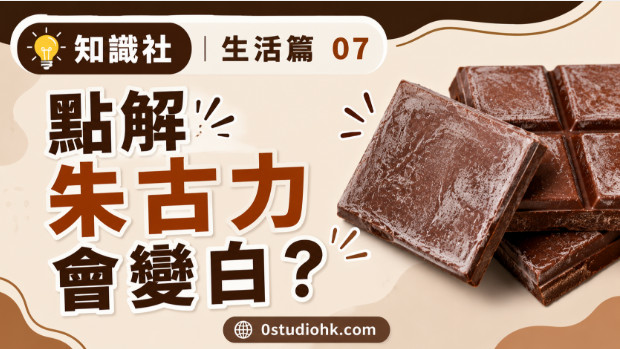
知識社|生活篇 07|點解朱古力會變白?|Knowledge Club | Life 07 | Why Does Chocolate Turn White?

放久了的朱古力,有時表面會出現一層白白的粉末,令人以為已經發霉或變壞。其實,大部分情況下這種現象並不是發霉,而是朱古力自然產生的物理變化。
Have you ever found a chocolate bar covered with a white coating and wondered if it had gone bad? In most cases, the answer is no. The white layer is usually a natural change in the chocolate rather than mold.
中文版本
不少人打開放了一段時間的朱古力時,都會發現表面出現一層白白的痕跡,甚至因此把整塊朱古力丟掉。事實上,這種現象大多稱為「朱古力起霜」,主要分為糖霜和油脂霜兩種,通常不代表食品已經變壞。最常見的是油脂霜。朱古力中的可可脂在溫度變化下會慢慢融化,再重新凝固到表面,形成一層灰白色或白色薄膜。這種情況通常發生在朱古力曾經受熱,又再次冷卻的環境,例如夏天運輸、放在車內或反覆放入雪櫃後取出。雖然外觀有所改變,但只要保存期間沒有受污染或超過保存期限,一般仍可安全食用,只是口感可能沒有原來般幼滑。另一種是糖霜,當朱古力放置於潮濕環境時,空氣中的水分會凝結在表面,溶解少量糖分。待水分蒸發後,糖便會重新結晶,形成白色粗糙的顆粒。糖霜雖然影響外觀及口感,但同樣並非發霉。真正的發霉通常會出現綠色、藍色或黑色霉菌斑點,並伴隨異味,此時便應立即棄掉,不宜食用。為了減少朱古力起霜,最好將朱古力存放於攝氏十五至二十度、陰涼乾爽及避免陽光直射的地方,亦應避免頻繁改變存放溫度。如果需要放入雪櫃,可先密封包裝,取出後待回復室溫再打開,減少水氣凝結。高品質朱古力由於含有較高比例天然可可脂,反而更容易出現油脂霜,因此看到表面變白,未必代表品質差,相反有時更反映天然成分較高。原來一層白色薄膜背後,反映的是可可脂結晶、糖分變化及保存環境之間的關係,也是食品科學中十分常見的現象。
English Version
A white coating on chocolate often worries consumers, but it is usually harmless. Food scientists refer to this phenomenon as “chocolate bloom,” a natural change that affects appearance rather than safety. There are two main types of bloom: fat bloom and sugar bloom. Fat bloom is the more common form. Chocolate contains cocoa butter, which can melt when exposed to warm temperatures. As the chocolate cools again, some of the cocoa butter migrates to the surface and crystallizes into a pale, whitish layer. This often happens when chocolate experiences repeated temperature changes during shipping, storage, or when it is moved in and out of a refrigerator. Although the surface may no longer look smooth and glossy, the chocolate is generally still safe to eat if it has been stored properly and remains within its expiration date. Sugar bloom develops differently. When chocolate is exposed to moisture, tiny droplets of water dissolve sugar on the surface. As the moisture evaporates, the sugar recrystallizes into a rough white coating. Like fat bloom, sugar bloom mainly affects texture and appearance instead of food safety. Mold, however, is a completely different issue. Real mold usually appears as fuzzy green, blue, or black spots and may produce an unpleasant smell, indicating that the product should be discarded. Proper storage greatly reduces the chance of bloom. Chocolate is best kept in a cool, dry place with stable temperatures, ideally between 15°C and 20°C. It should be protected from direct sunlight and excessive humidity. If refrigeration is necessary, sealing the chocolate in an airtight container and allowing it to return to room temperature before opening helps prevent condensation. Interestingly, premium chocolates with higher cocoa butter content may be more likely to develop fat bloom because they contain more natural cocoa fat. What appears to be a flaw is often simply evidence of the chocolate’s natural ingredients reacting to changes in temperature and humidity, making chocolate bloom a fascinating example of everyday food science.
總評
朱古力變白大多屬於油脂霜或糖霜,是保存環境造成的自然現象,通常不代表已經變壞,只要妥善保存,仍可安心食用。
The white coating on chocolate is usually a harmless result of natural changes in cocoa butter or sugar. Proper storage helps preserve both its appearance and texture.