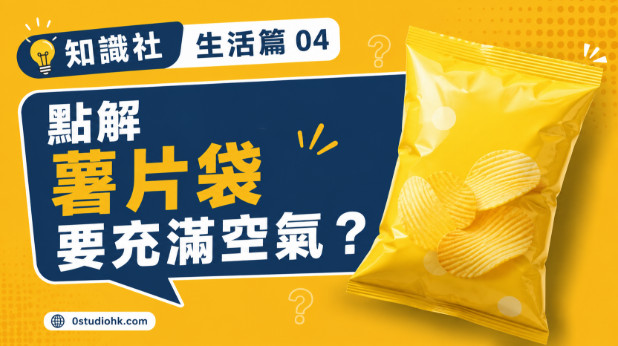
知識社|生活篇 04|點解薯片袋要充滿空氣?|Knowledge Club | Life 04 | Why Are Potato Chip Bags Filled with Air?
薯片袋看起來總是鼓鼓的,不少人都以為品牌故意「偷空間」,其實袋內的空氣並不是普通空氣,而是保護薯片的重要設計。沒有它,薯片送到你手上時,很可能已經變成碎片。
When opening a bag of potato chips, many people wonder why so much of it seems to contain “air.” It may look wasteful, but that space actually serves an important purpose. Without it, most chips would arrive crushed before reaching store shelves.
中文版本
不少人第一次打開薯片時,都曾經抱怨過「半包都是空氣」。甚至有人認為品牌故意把包裝做得很大,讓消費者誤以為買得更多。然而,薯片袋裡真正裝的並不是普通空氣,而是一種稱為氮氣(Nitrogen)的惰性氣體。食品工廠在包裝完成後,會把袋內的氧氣抽走,再注入氮氣。原因十分簡單,氧氣容易令油脂氧化,令薯片失去香脆口感,更可能產生油耗味,縮短保存期限。氮氣則沒有活性,不會與食物產生化學反應,因此能有效保持薯片的新鮮與風味。除了防止變質之外,袋中的氮氣還有另一個非常重要的功能,就是充當「保護氣墊」。薯片本身十分薄而且容易碎裂,在工廠、貨車、貨倉以及超市之間,需要經過長途運輸和多次搬運。如果包裝是真空狀態,每一次受到擠壓,薯片都會直接承受壓力,到達消費者手中時可能只剩下碎屑。充滿氮氣後,袋內形成一個柔軟的緩衝空間,能吸收外來衝擊,大大降低薯片破碎的機會。因此,袋子看起來雖然比較大,但其實是保護產品品質的一部分。另外,不同品牌的薯片包裝大小也並非完全相同,每家公司都會根據薯片厚度、重量、運輸距離及包裝設計作出調整,而不少國家亦規定包裝必須清楚標示淨重量,消費者真正購買的是重量而不是袋子的體積,所以即使袋子大小不同,只要重量標示一致,便符合商品標準。除了薯片之外,玉米片、爆谷、餅乾及部分零食都會採用相同的充氮包裝技術,以延長保存時間及提升運輸安全。近年亦有品牌開始研究更環保的包裝材料,希望在保護食品之餘,同時減少塑膠使用及降低碳排放。原來那看似「多餘」的一袋空氣,其實是食品科學、物流運輸及品質管理共同努力的成果,也是每一片完整香脆薯片背後的重要功臣。
English Version
Many people joke that a bag of potato chips is “mostly air,” assuming the oversized package is simply a marketing trick. In reality, the empty-looking space is one of the reasons the chips stay fresh and intact. The gas inside the bag is not ordinary air but nitrogen, an inert gas widely used in the food industry. During production, manufacturers remove most of the oxygen from the package before filling it with nitrogen. Oxygen reacts with oils inside potato chips, causing them to become stale, lose their crisp texture, and eventually develop unpleasant flavors. Nitrogen, on the other hand, is chemically stable and does not react with the food, allowing the chips to maintain their taste and freshness for much longer. The gas also acts as a protective cushion. Potato chips are extremely fragile, and every bag experiences vibrations, stacking pressure, and impacts while traveling from the factory to distribution centers, supermarkets, and finally to consumers. Without the cushion created by nitrogen, many chips would break into tiny pieces long before reaching the shelf. The inflated package absorbs shocks during transportation, helping preserve the product’s appearance and quality. This is why chip bags often look larger than expected—they are designed to protect the contents rather than create an illusion. Regulations in many countries also require manufacturers to display the net weight clearly, meaning customers are purchasing the amount of food listed on the label, not the volume of the package itself. Different brands may choose different bag sizes depending on chip thickness, product weight, transportation methods, and packaging design, but the labeled weight remains the key measurement. Nitrogen flushing is not limited to potato chips. It is also commonly used for tortilla chips, popcorn, crackers, roasted nuts, and many other packaged snacks that benefit from longer shelf life and better protection during shipping. As packaging technology continues to improve, manufacturers are also exploring recyclable materials and more sustainable designs to reduce environmental impact while maintaining food safety. What appears to be “extra air” is actually a carefully engineered solution developed through food science, packaging technology, and logistics, ensuring that consumers enjoy crispy chips instead of a bag full of crumbs.
總評
薯片袋裡的「空氣」並非浪費,而是利用氮氣保鮮與防撞的科學設計。看似簡單的包裝,其實結合了食品保存、運輸及品質管理等多方面技術。
The space inside a potato chip bag is not empty by accident. It is a practical engineering solution that keeps snacks fresh, protects them during transport, and delivers better quality to consumers.