
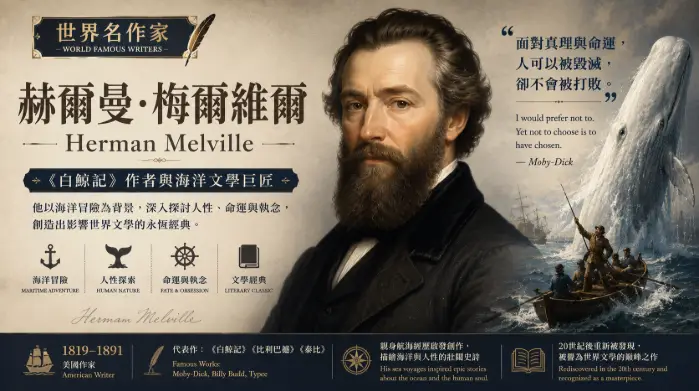
赫爾曼·梅爾維爾是美國文學史上最具傳奇色彩的小說家之一,他以浩瀚海洋、孤獨靈魂與人性執念為核心,創作出影響世界文學的經典作品《白鯨記》。他的文字融合冒險、哲學與命運思考,展現十九世紀文學最深沉的力量。
Herman Melville stands among the most influential figures in American literature. Through stories of the sea, obsession, isolation, and the mysteries of human nature, he created timeless narratives that continue to shape modern storytelling. His masterpiece Moby-Dick transformed maritime adventure into a profound exploration of destiny and the human spirit.
中文
赫爾曼·梅爾維爾於1819年出生於美國紐約,在動盪與變化快速的十九世紀成長。年幼時父親早逝,家庭經濟陷入困難,迫使他很早便接觸社會與勞動生活。這些現實壓力塑造了他對人生艱辛與命運無常的深刻理解,也成為他日後文學創作的重要養分。年輕時的梅爾維爾曾當過教師、銀行職員與船員,最終選擇踏上海洋。他長時間在捕鯨船與商船工作,航行過南太平洋與世界多地,親身體驗海上的孤獨、危險與未知。這段漂泊經歷不僅讓他見識不同文化,也讓他對人類在大自然面前的渺小產生強烈感受。返回美國後,他開始把海上經歷寫成小說,初期作品以冒險與異國風情吸引大量讀者,逐漸在文壇嶄露頭角。然而真正奠定他文學地位的,卻是後來出版的《白鯨記》。這部作品表面上描述捕鯨船追逐巨大白鯨的故事,實際上卻蘊含極其複雜的哲學與象徵意義。小說中的亞哈船長被復仇與執念吞噬,他不惜犧牲一切也要追逐白鯨,而白鯨則象徵自然、命運、未知甚至人類無法理解的宇宙力量。梅爾維爾透過壯闊海洋與瘋狂追逐,深入描寫人性中的恐懼、孤獨與欲望。《白鯨記》在當時並未受到廣泛理解,過於龐雜的結構與哲學內容讓許多讀者難以接受,導致梅爾維爾晚年長期被忽視。他後來轉任海關工作,文學聲望逐漸沉寂。然而在二十世紀後,文學界重新發現《白鯨記》的價值,認為它不只是冒險小說,更是探討生命本質與人類命運的偉大經典。梅爾維爾的作品充滿深層象徵與思想張力,他擅長描寫人在龐大世界中的孤立感,以及對未知事物既恐懼又渴望的矛盾心理。他筆下的大海不只是背景,而像是一種吞噬一切的存在,映照出人類內心深處最真實的情感與黑暗。除了《白鯨記》外,他的《比利巴德》《泰比》等作品同樣展現對權力、道德與自由的思考。赫爾曼·梅爾維爾最終成為美國文學史上最重要的作家之一,他的創作影響後來無數小說家、電影與現代文化。直到今天,《白鯨記》仍被視為世界文學中最具思想深度與象徵力量的小說之一,而梅爾維爾也成為描寫海洋與人性最偉大的文學代表人物。
English Version
Born in New York City in 1819, Herman Melville grew up during a period of rapid expansion and uncertainty in the United States. His childhood was marked by hardship after the early death of his father left the family struggling financially. These difficult experiences shaped his understanding of instability, ambition, and survival, themes that later became central to his fiction. As a young man, Melville worked various jobs before turning toward the sea, a decision that transformed his life forever. He spent years aboard merchant vessels and whaling ships, traveling through the Pacific and encountering distant cultures, dangerous storms, and the harsh realities of maritime life. The ocean became more than scenery to him; it evolved into a symbol of mystery, power, and the unknowable forces surrounding human existence. When Melville returned to America, he began writing novels inspired by his adventures at sea. His early books attracted attention with their vivid depictions of exotic islands and thrilling voyages, quickly establishing him as a promising author. Yet his ambition reached far beyond simple adventure stories. In 1851, he published Moby-Dick, the novel that would eventually define his legacy. At its surface, the story follows Captain Ahab’s obsessive hunt for the giant white whale that once destroyed him. Beneath the narrative, however, lies a complex meditation on fate, revenge, madness, religion, and humanity’s struggle against forces beyond comprehension. Ahab’s relentless pursuit of the whale becomes a portrait of obsession consuming the human soul. The white whale itself shifts constantly in meaning, appearing at times as nature, destiny, evil, or even the silence of the universe. Melville combined encyclopedic knowledge of whaling with philosophical reflection and poetic intensity, creating a work unlike anything readers had seen before. During his lifetime, many critics failed to appreciate the novel’s depth. Its unconventional structure and dense symbolism confused audiences, and Melville gradually faded from literary prominence. To support himself, he later worked as a customs inspector while continuing to write in relative obscurity. Decades after his death, scholars and readers rediscovered Moby-Dick and recognized it as one of the greatest achievements in world literature. Melville’s writing captured the loneliness of individuals confronting a vast and indifferent universe. His stories often explored moral conflict, authority, fear, and the fragile boundary between civilization and chaos. The sea in his fiction behaves almost like a living force, reflecting the hidden emotions and obsessions within humanity itself. Beyond Moby-Dick, works such as Billy Budd and Typee further revealed his fascination with justice, freedom, and the complexity of human behavior. Today, Herman Melville is celebrated not only as a master storyteller of the ocean but also as a visionary thinker whose literary imagination reshaped American fiction. His influence continues across novels, cinema, philosophy, and modern culture, while Moby-Dick remains one of the most powerful and symbolically rich novels ever written.