
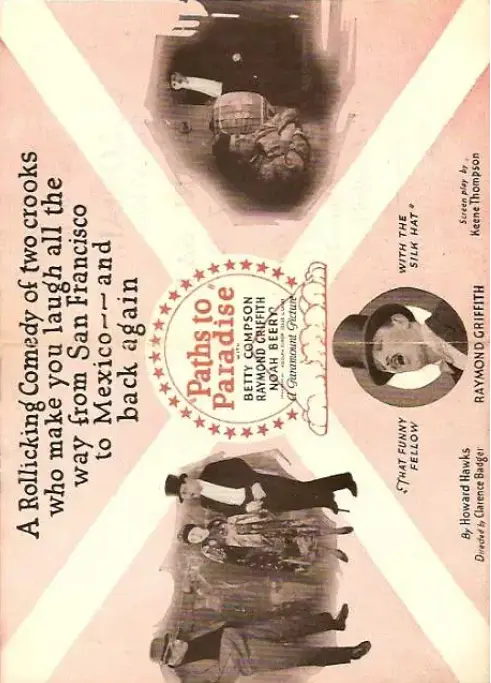
《Paths to Paradise》是一部1925年的英國默片犯罪喜劇,由Clarence G. Badger執導,並由默片時代極具代表性的喜劇明星Betty Balfour主演。電影融合犯罪、愛情與幽默元素,以珠寶盜賊世界作為背景,在輕鬆與緊張之間建立出獨特節奏,展現二十年代默片娛樂電影的迷人風格。
Directed by Clarence G. Badger and starring silent-era icon Betty Balfour, Paths to Paradise is a lively 1925 British silent crime comedy filled with charm, deception, romance, and adventure. Combining the glamour of jewel theft with playful humor and emotional misunderstandings, the film captures the energetic spirit of entertainment cinema during the silent era.
電影內容
《Paths to Paradise》的故事圍繞兩名珠寶盜賊展開,他們遊走於倫敦社交圈與犯罪世界之間,以機智、偽裝與巧妙手段尋找下一次目標。與一般帶有黑暗氣氛的犯罪電影不同,這部作品採取較輕鬆幽默的風格,讓角色即使身處危險環境,也始終保持某種近乎遊戲般的輕快感。電影中的主角並非冷酷罪犯,而更像活在都市邊緣的冒險家。他們對財富充滿渴望,卻同時保有幽默感與情感連結,因此觀眾往往不會將他們視為真正邪惡的人物。故事隨著一次珠寶盜竊計畫展開,角色們開始在不同身份與關係之間來回穿梭。假身份、錯誤訊息與不斷升級的誤會構成整部電影的重要推動力。當警方逐漸逼近,而角色間的信任與情感也開始動搖時,電影便在喜劇與懸疑之間取得微妙平衡。影片其中一個最吸引人的地方,是它對二十年代都市生活的描繪。華麗派對、上流社交場所與倫敦夜生活構成充滿時代感的背景,而珠寶與財富則象徵那個年代對奢華與成功的追求。角色們穿梭於富人世界與地下犯罪圈之間,形成兩種社會階層的有趣對比。導演利用默片特有的視覺節奏,透過快速場景切換、誇張動作與細膩表情營造娛樂效果。由於沒有對白,角色之間的情感與緊張關係更多依靠肢體與眼神表達,讓整部電影帶有鮮明舞台感與視覺喜劇特色。《Paths to Paradise》除了是一部犯罪喜劇,也隱約呈現出對自由與命運的想像。角色們不願受社會規則束縛,他們以偷竊與冒險尋求刺激,同時也追求某種屬於自己的“天堂之路”。然而,當情感介入後,原本只屬於利益與遊戲的世界開始變得複雜。電影因此不只是描述犯罪計畫,更是在描寫角色如何於危險與情感之間重新理解自己。即使放在今日來看,《Paths to Paradise》依然保留著早期犯罪喜劇特有的魅力。它不像後來黑色電影般沉重,而是以輕巧節奏與迷人角色塑造出帶有浪漫色彩的犯罪世界,讓觀眾感受到默片時代獨有的娛樂魅力與都市幻想。
English Version
Paths to Paradise centers on two jewel thieves navigating the glamorous yet dangerous world of crime and high society in 1920s London. Unlike darker crime dramas that focus on violence and moral decay, this film approaches criminal life with humor, charm, and a sense of playful adventure. The protagonists are not portrayed as ruthless villains but rather as clever outsiders who survive through wit, disguise, and improvisation. Their world feels less like a brutal underworld and more like an elaborate social game where identity constantly shifts and appearances can never be trusted. The story begins with a carefully planned jewel theft, but the situation quickly becomes more complicated as misunderstandings, romantic tensions, and unexpected obstacles emerge. The characters move between luxurious social events, crowded city streets, and secretive criminal encounters while attempting to stay ahead of the authorities. As police investigations tighten and personal relationships become increasingly emotional, the film balances suspense with comedy in a surprisingly elegant way. One of the film’s most appealing qualities is its depiction of urban life during the 1920s. Lavish parties, fashionable clothing, sparkling jewels, and energetic nightlife create an atmosphere of sophistication mixed with hidden danger. Wealth and luxury are everywhere, yet the film constantly reminds viewers that behind elegance lies deception and performance. The thieves themselves exist between social classes, entering elite spaces while never truly belonging to them. This dual existence gives the film a sense of movement and instability that perfectly suits its themes. Director Clarence G. Badger uses silent-era visual storytelling techniques to maintain energy throughout the narrative. Fast pacing, exaggerated reactions, expressive gestures, and carefully timed comedic situations allow emotions and tension to emerge without spoken dialogue. The chemistry between the characters becomes central to the story, especially as romance complicates what initially appeared to be a purely criminal partnership. Beneath the humor and excitement lies a subtle reflection on freedom and identity. The characters resist ordinary social expectations, choosing risk and adventure over stability. Their “paths to paradise” are not necessarily moral or respectable, but they represent a longing for independence, excitement, and emotional fulfillment. However, the deeper the characters become involved with one another, the harder it becomes to separate personal feelings from criminal ambition. This emotional complexity gives the film unexpected warmth beneath its playful surface. Even today, Paths to Paradise remains entertaining because it captures a lighter, more romantic vision of crime cinema before the darker tones of later gangster and noir films emerged. Its combination of comedy, suspense, and charm continues to reflect the unique energy of silent-era storytelling.
影片簡介(預告片/片段)
兩名珠寶大盜在愛情與危險之間,踏上一場充滿誤會的冒險。
Two jewel thieves navigate romance, deception, and danger in a glamorous silent-era adventure.
電影資料
導演:Clarence G. Badger
類型:犯罪、喜劇、愛情、默片
製片公司:Ideal Films
上映年份:1925
主要演員
Betty Balfour
Ronald Colman
Noah Beery
Cyril Chadwick
總結
《Paths to Paradise》是一部充滿二十年代都市魅力的默片犯罪喜劇,它透過珠寶大盜與上流社會之間的交錯關係,描繪冒險、愛情與身份錯置的娛樂世界。電影以輕鬆節奏結合懸疑與幽默,也展現出默片時代犯罪喜劇獨特而迷人的風格。
Paths to Paradise remains a stylish and entertaining silent crime comedy that blends romance, suspense, and playful deception within the glamorous atmosphere of the 1920s. Through charming thieves, mistaken identities, and emotional complications, the film captures the adventurous spirit and visual elegance of silent-era cinema.