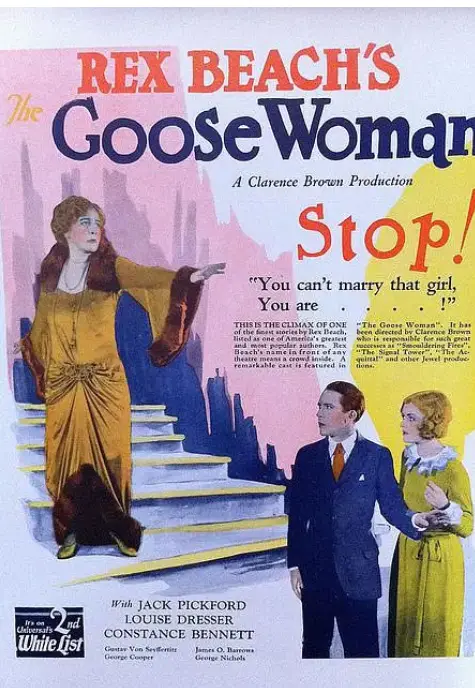
《鵝婦人》是1925年美國默片時代極具代表性的心理犯罪電影,由擅長黑暗戲劇與人物心理描寫的導演Clarence Brown執導,並由傳奇女演員Louise Dresser主演。電影融合懸疑、犯罪與家庭悲劇元素,以一宗謀殺案為核心,深入描寫一位失意女性在貧困、悔恨與母子關係中的情感掙扎。影片以濃厚陰鬱氣氛與成熟心理刻畫,被視為1920年代最出色的默片劇情作品之一。
Released in 1925, The Goose Woman stands as one of the most compelling psychological crime dramas of the silent era. Directed by Clarence Brown and starring Louise Dresser in a celebrated performance, the film combines murder mystery, emotional tragedy, and social realism into a haunting portrait of guilt, desperation, and fractured family relationships. Its mature storytelling and dark emotional atmosphere made it one of the defining dramatic films of 1920s Hollywood.
電影內容
《鵝婦人》的故事圍繞一位曾經擁有音樂天賦與光明前途的女人展開。她年輕時原本是一名備受期待的歌劇歌手,但因感情與人生選擇逐漸失去事業與理想。多年後,她淪落至社會底層,以養鵝維生,因此被人稱為「鵝婦人」。她酗酒、孤獨,與唯一的兒子關係緊張,內心充滿對過去失敗人生的悔恨。某日,一名知名男子遭到謀殺,而鵝婦人意外捲入案件之中。為了擺脫貧困與重新獲得關注,她開始利用案件編造故事,甚至讓自己成為媒體焦點。然而隨著真相逐漸浮現,她與兒子之間隱藏的秘密與情感衝突也開始被揭開。電影最大的特色,在於它並非單純犯罪推理,而是對人物心理與情感創傷的深刻描寫。主角並不是典型善良人物,她自私、虛榮、酗酒,甚至會利用謊言操控輿論,但電影同時又讓觀眾看見她內心深處的孤獨與脆弱。Louise Dresser的演出極具感染力,她成功塑造一位既令人同情又令人不安的女性角色。片中的母子關係尤其重要。兩人長年因誤解與失望而疏離,但彼此之間其實仍存在難以切斷的情感聯繫。這種壓抑關係讓電影充滿悲劇色彩,也令案件背後帶有更深層情感重量。電影同時反映1920年代媒體文化與社會輿論的力量。主角利用記者與大眾對醜聞的興趣試圖改變命運,而新聞媒體則把案件變成娛樂與消費對象。這種對媒體操控與名聲渴望的描寫,在當時相當前衛,也讓電影帶有強烈現代感。導演Clarence Brown以細膩光影與寫實場景營造壓抑氣氛,角色臉上的疲憊與陰影成為情感的重要表達。與一般誇張默片不同,本片演出方式更接近後來的心理劇與黑色電影。影片中的罪行不只是法律問題,更象徵角色內心長久累積的悔恨與失敗感。電影在懸疑之中逐漸展現母愛、愧疚與救贖,使故事超越一般犯罪電影範疇。《鵝婦人》不只是默片時代的懸疑作品,更是一部關於人性弱點與情感傷痕的深刻悲劇。即使經過百年,它對家庭關係、媒體文化與個人崩潰的描寫依然充滿力量。
English Version
The Goose Woman tells the story of a once-promising opera singer whose life has collapsed into poverty, bitterness, and isolation. Years earlier, she possessed talent, beauty, and ambition, but emotional failures and personal choices gradually destroyed her future. By the time the film begins, she survives by raising geese in near-poverty, earning the mocking nickname “The Goose Woman.” She is lonely, alcoholic, resentful, and emotionally estranged from her only son. Beneath her harsh exterior lies a lifetime of disappointment and regret. Her life changes dramatically when a wealthy man is murdered nearby and she becomes connected to the investigation. Seeing an opportunity to escape obscurity and financial desperation, she manipulates the situation by fabricating stories and drawing media attention toward herself. As the murder mystery develops, long-hidden truths about her family and her relationship with her son slowly emerge, transforming the story into a deeply emotional psychological drama. What makes the film remarkable is its refusal to portray its central character as either purely innocent or purely villainous. The Goose Woman is selfish, manipulative, and deeply flawed, yet the film also reveals her emotional pain and vulnerability with extraordinary empathy. Louise Dresser delivers a powerful performance filled with emotional complexity, allowing viewers to understand the character’s loneliness even while being disturbed by her actions. The strained relationship between mother and son forms the emotional core of the narrative. Years of disappointment, misunderstanding, and emotional distance have damaged their bond, but traces of love and dependence remain beneath the bitterness. This emotional tension gives the murder mystery a tragic human dimension far beyond ordinary suspense storytelling. The film also contains a striking commentary on media culture and public fascination with scandal. The protagonist realizes that newspapers and public curiosity can be manipulated, turning personal tragedy into spectacle and profit. For a 1925 film, this portrayal of sensational journalism feels surprisingly modern. Director Clarence Brown reinforces the emotional atmosphere through careful lighting, intimate close-ups, and realistic environments that emphasize exhaustion and emotional decay. Unlike many silent melodramas that relied on exaggerated acting, The Goose Woman uses subtle emotional expression and psychological realism, anticipating elements later associated with film noir and modern character-driven drama. Crime within the film becomes more than a legal issue; it symbolizes buried guilt, emotional collapse, and the destructive consequences of unresolved pain. As the truth emerges, themes of motherhood, shame, redemption, and emotional responsibility gradually come into focus. The film ultimately becomes less about solving a murder and more about confronting emotional wounds that have shaped an entire lifetime. Nearly a century later, The Goose Woman remains a remarkably mature and emotionally unsettling film, proving how silent cinema could explore complex human psychology with depth and sophistication.
影片簡介(預告片/片段)
一宗謀殺案揭開母子關係與人生失敗的沉重秘密。
A haunting silent drama where murder exposes guilt, regret, and fractured family bonds.
電影資料
導演:Clarence Brown
類型:劇情、犯罪、懸疑、默片
製片公司:Universal Pictures
上映年份:1925
主要演員
Louise Dresser
Jack Pickford
Constance Bennett
George Nichols
總結
《鵝婦人》是默片時代最成熟而陰鬱的心理劇之一,它透過一宗謀殺案描寫失敗人生、母子情感與媒體操控。電影對人物內心的細膩刻畫與強烈悲劇氣氛,使其成為1920年代美國默片的重要經典。
The Goose Woman remains one of silent cinema’s most emotionally complex dramas, blending psychological realism with crime and tragedy. Its exploration of guilt, motherhood, media sensationalism, and emotional decay continues to feel powerful and unexpectedly modern today.