聊齋志異:咬鬼奇談與人性恐懼解析 | Strange Tale of Biting Ghosts: Fear and Human Nature in Liaozhai

夜深人靜之時,人心最易生怖。古書記錄異事,不僅為鬼魅,更為映照人性幽暗與膽怯。
In the stillness of night, fear finds its way into the human heart. Strange tales are not just about ghosts, but reflections of hidden human anxieties.
中文版本
書生王生,性情剛直而膽氣過人,居於荒郊舊宅。此宅久無人住,鄰里皆言鬧鬼,夜間常聞異聲,似哭似笑,令人不寒而慄。王生卻不信邪,認為不過是人心作祟,遂毅然遷入。
初至之夜,風雨交加,屋瓦作響。至三更時分,忽聞門外有低聲呼喚,似女子啜泣。王生起身開門,只見庭中空無一人,唯有枯樹搖影,似人似鬼。他心中微動,卻仍自持鎮定,關門復坐。
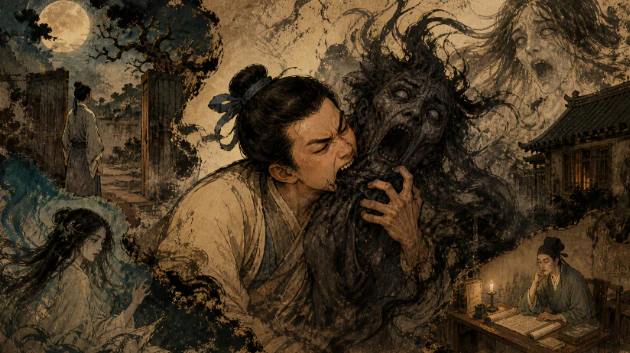
未幾,燭火忽暗,室內陰氣逼人。一道黑影自牆角緩緩浮現,形體模糊,面目猙獰,雙目如火。王生心中驚駭,卻強忍不退。那影子逐漸逼近,張口欲噬,似要吞人精氣。
王生忽然怒喝:「人尚不畏,何懼鬼邪!」遂挺身向前,竟一口咬向黑影。其舉出人意料,那鬼似未料人敢反擊,驚聲怪叫。王生咬住不放,只覺口中冰冷刺骨,如啖寒鐵,卻仍死死咬住。
鬼影掙扎,形體漸散,發出淒厲之聲。須臾之間,竟化作一縷黑煙,消散於空。王生鬆口,滿口腥寒,卻見四周恢復寂靜。自此之後,宅中再無異象。
翌日,鄰人聞其經歷,無不驚嘆。有老者嘆曰:「鬼魅本虛,畏人之氣。人若心正膽壯,鬼自退散。」王生聞言,默然點首。
然夜深之時,王生獨坐燈下,回想昨夜之事,仍覺心有餘悸。他忽然明白,真正可怖者,非鬼也,而是人心之恐。若心生懼,則萬物皆鬼;若心無懼,則鬼亦為虛。
此後王生行事更加謹慎,亦不再輕言無畏。他知膽氣固然重要,然人心之穩,方為真正之盾。
故事傳開,人皆稱奇。有人笑其狂,有人敬其勇。但在靜夜之中,仍有人不敢獨行於荒宅,因為他們所懼的,從來不只是鬼。
English Version
Wang Sheng was known for his bold spirit and unyielding temperament. When he chose to move into an abandoned house on the outskirts of town, the locals warned him repeatedly. They spoke of strange cries in the night—half laughter, half sorrow—that chilled even the bravest souls. Wang dismissed them all as superstition born of fear.
On his first night, a storm swept across the land. Rain battered the roof, and wind howled through the cracks like distant whispers. Near midnight, he heard a faint sobbing outside his door, soft yet persistent. When he opened it, the courtyard lay empty, shadows swaying beneath a dead tree.
He returned inside, unsettled but determined. Moments later, the candlelight dimmed without cause. The air turned heavy, suffocating. From the darkest corner of the room, a shape began to form—vague at first, then grotesque. Its eyes glowed faintly, its presence oppressive.
The apparition drifted closer, stretching a distorted mouth as if to consume him. Wang felt a surge of fear rise within him, primal and overwhelming. Yet instead of retreating, something fierce awakened in him.
“Why should a man fear what is not alive?” he shouted.
In a sudden act of defiance, Wang lunged forward and bit the ghost.
The sensation was indescribable—icy, metallic, unnatural. It felt as though he had sunk his teeth into frozen iron. Yet he refused to let go. The ghost shrieked, a sound of disbelief and agony intertwined, struggling violently as its form began to unravel.
The more Wang resisted, the weaker the apparition became. Its body flickered, collapsing into wisps of black smoke before vanishing entirely into the air.
Silence returned.
Breathing heavily, Wang stood alone in the dim room, his mouth filled with a chilling residue. But the presence was gone. From that night onward, no disturbances ever returned to the house.
The next day, the villagers gathered to hear his account. Some laughed in disbelief; others stared in awe. An old man spoke quietly, “Ghosts are empty things. They thrive on fear. Stand firm, and they dissolve.”
Wang nodded, but deep inside, he knew something had shifted.
That night, sitting alone again, he replayed the encounter in his mind. The fear he had felt was real—terrifyingly real. And yet, it was that very fear he had turned against the unknown.
He realized then: the true horror was not the ghost, but the fear within oneself. When fear takes hold, shadows become monsters. When courage prevails, even monsters fade.
From that day on, Wang was no longer reckless. He remained brave, but with a deeper understanding—courage was not the absence of fear, but the mastery of it.
And though his story spread far and wide, turning into legend, one truth lingered quietly: long after the ghost had vanished, people still feared the dark.